Project planning guide
Before you build
Use the reference image and planning notes as a starting point. Confirm dimensions, loads, materials, local codes, and site conditions before purchasing or cutting.
- Garden Projects
- 8 reference images
- Print-friendly guide
A serving tray is a small woodworking project where balanced handles, a rigid bottom, and smooth cleanable corners matter more than decorative weight. Outdoor use adds moisture and food-contact considerations, so the tray should return indoors after service.
Classic Raised-Edge Tray
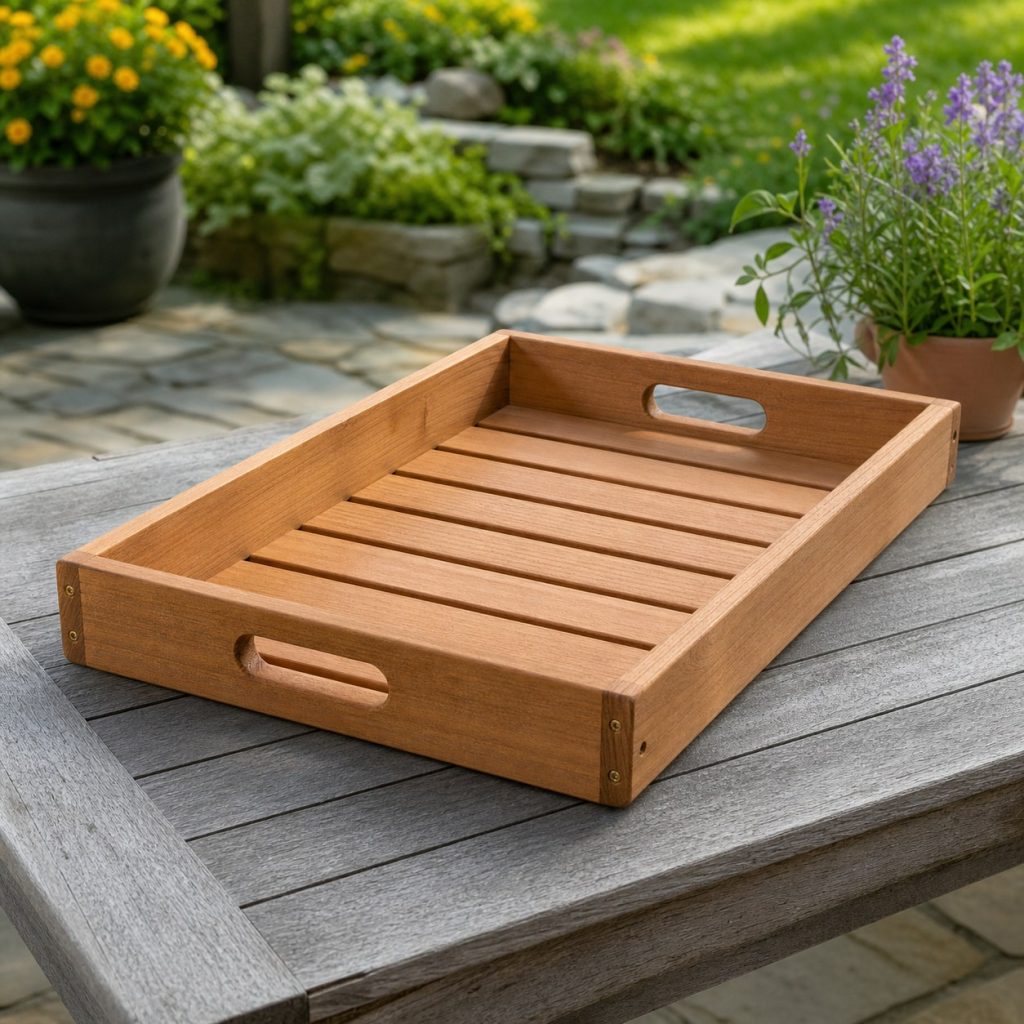
A captured plywood bottom and continuous side rails create a rigid lightweight tray. Do not overload a tray or carry hot liquids where a spill could injure someone; verify handle joints, bottom support, finish use, food-contact liners, edge smoothness, and user capacity.
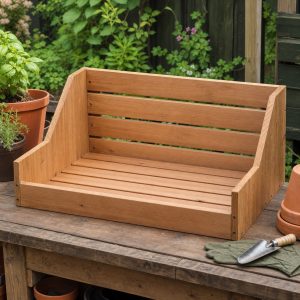
Slatted Outdoor Tray
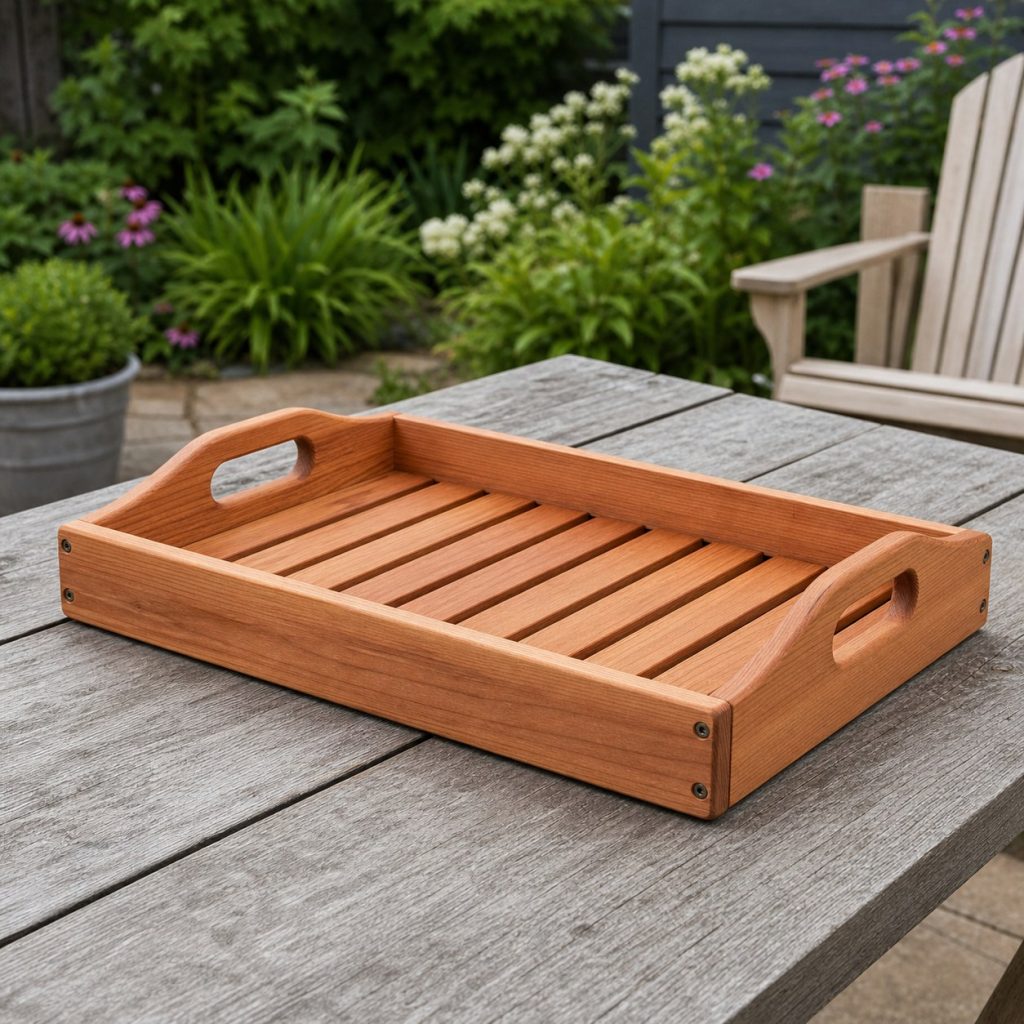
Slats suit dry outdoor service when gaps do not destabilize cups or trap food debris.
Inset-Handle Tray
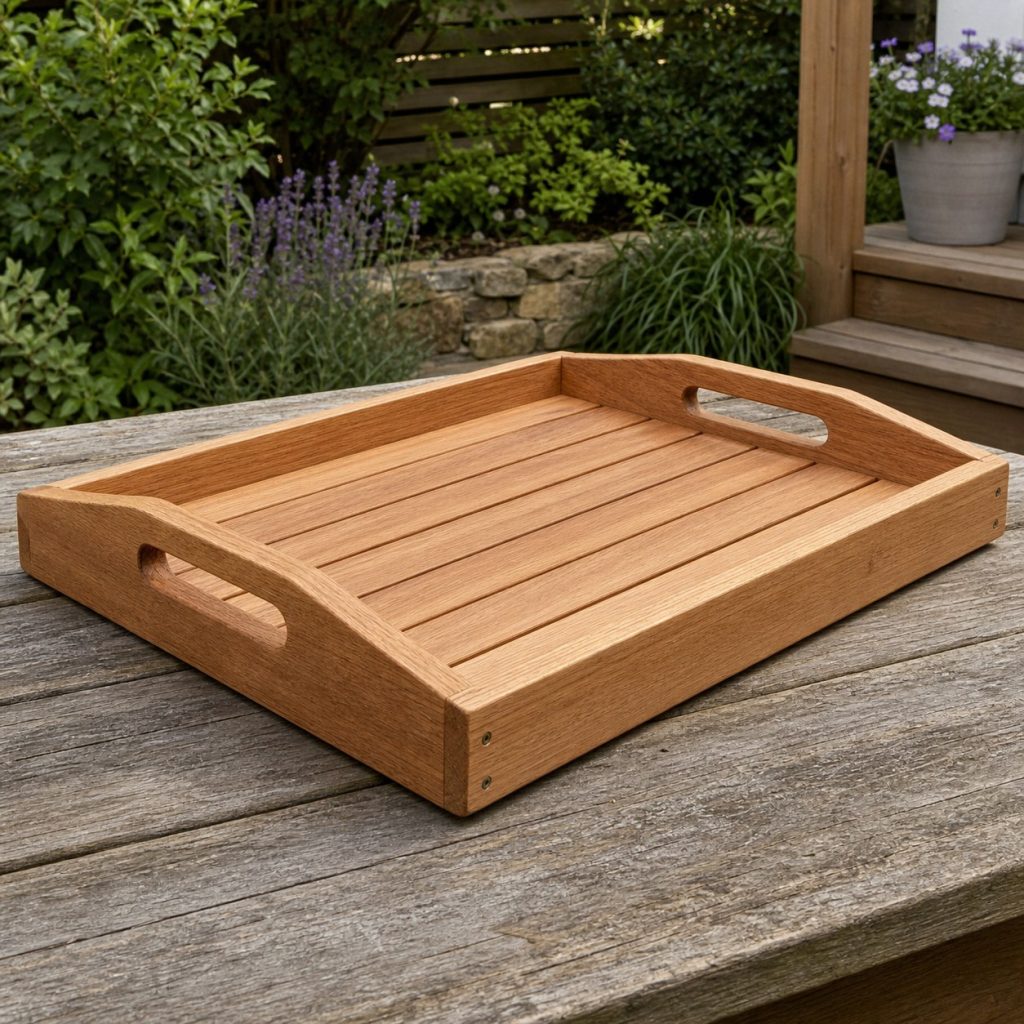
Generous grip openings need rounded edges and enough material above and below.
Round Garden Tray
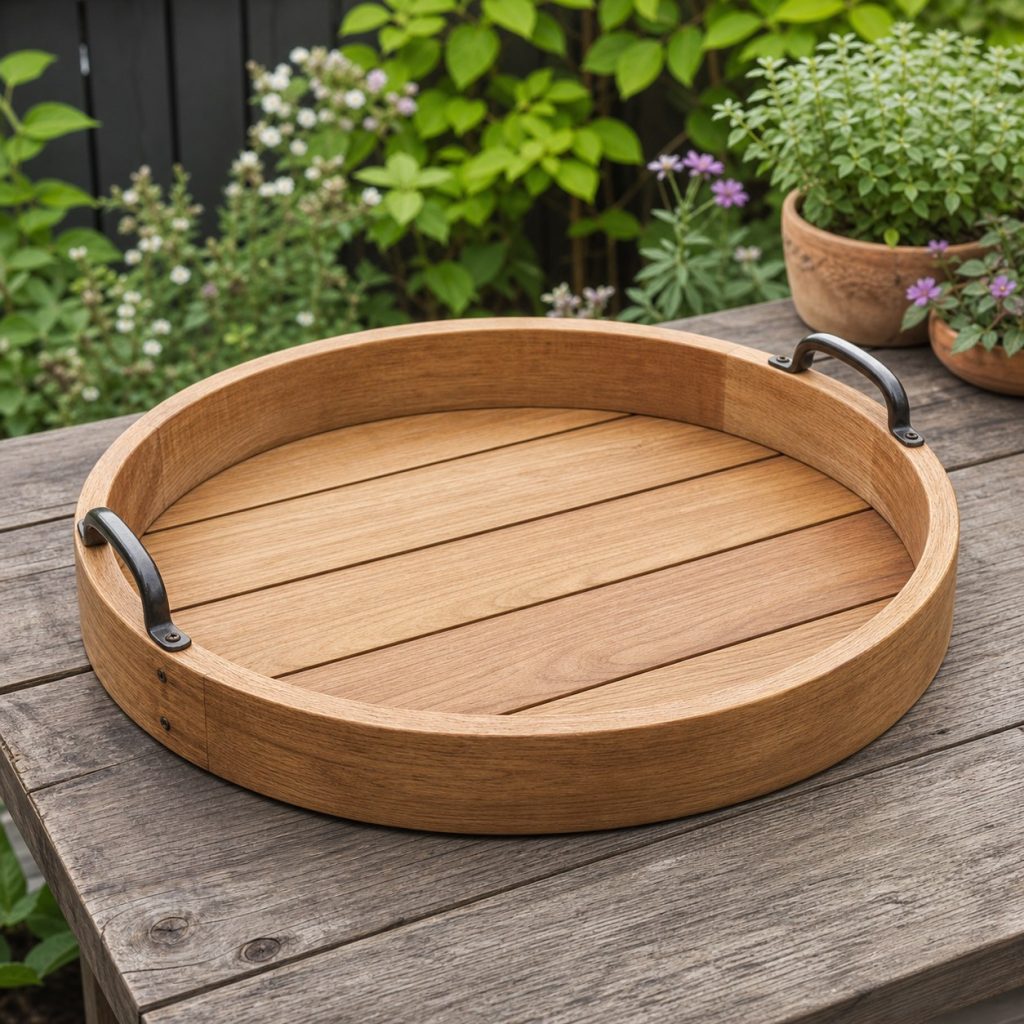
Segmented or bent rims require strong joints and a flat supported bottom.
Tray With Removable Liner
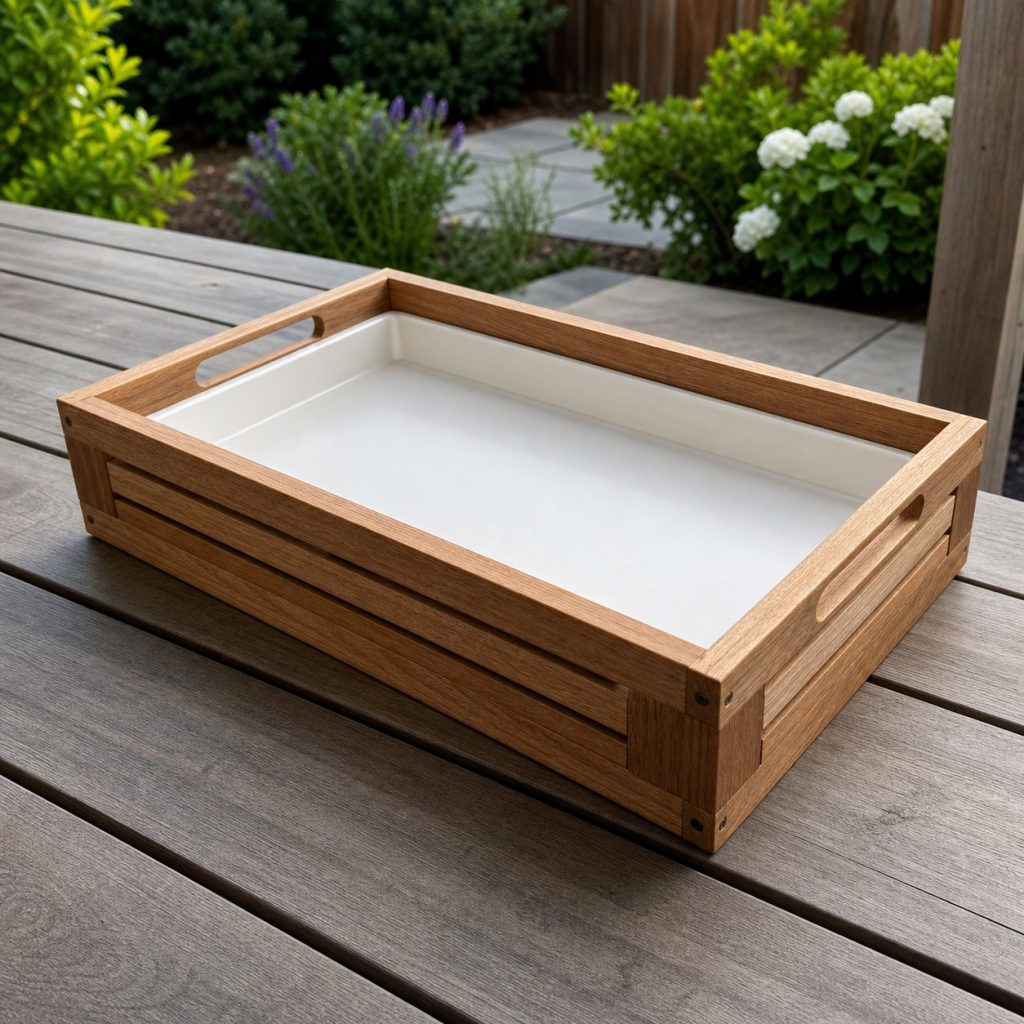
A removable liner separates spills from the wood and must sit securely without rattling.
Folding-Leg Breakfast Tray
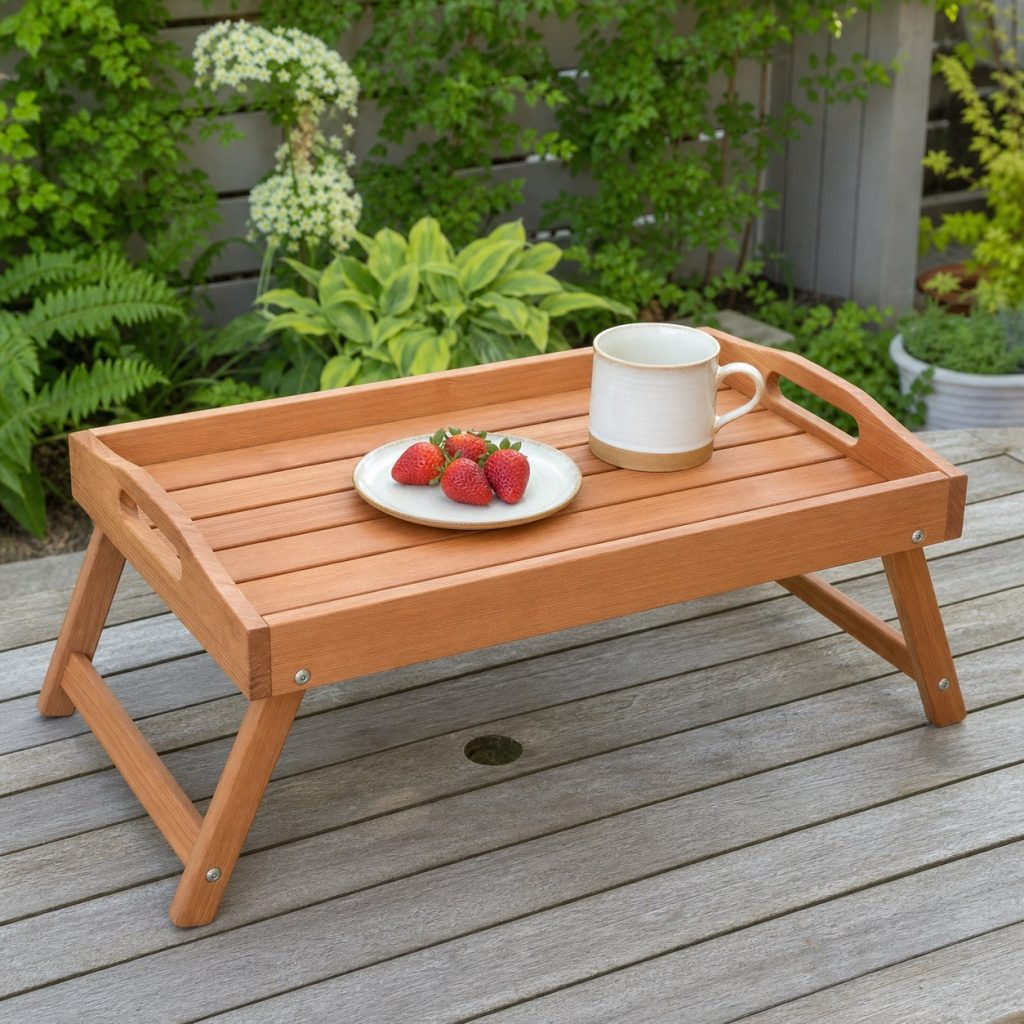
Legs need positive stops and controlled pinch points and should not imply use as seating.
Handled Drink Caddy Tray
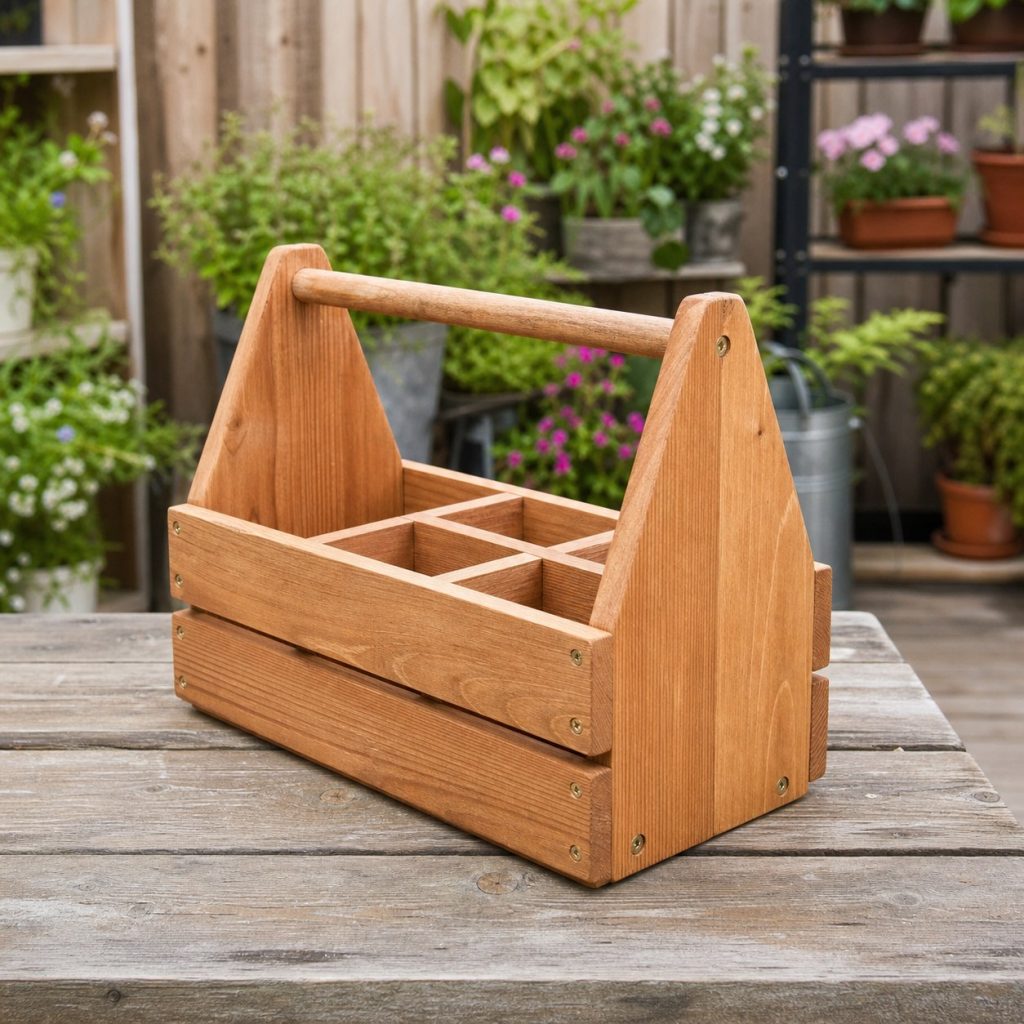
The central handle needs a direct load path and balanced compartment arrangement.
Corner, Handle, and Finish Details
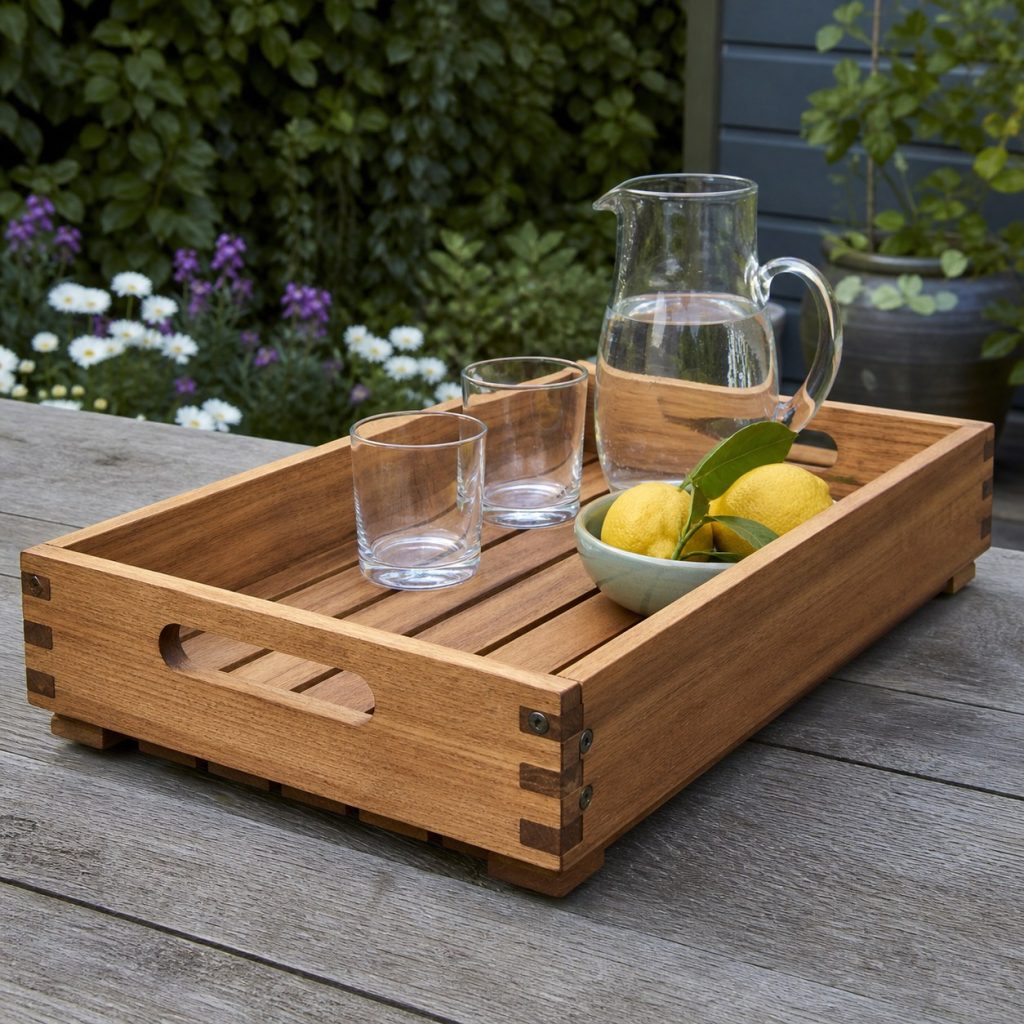
Dry fitting and a gradual weighted carry test expose flex, sharp edges, and poor balance.
Planning checklist
- Limit size to a manageable loaded weight.
- Use handles with continuous strong grain and secure joints.
- Support the bottom across its full span.
- Round corners and use a suitable fully cured finish.
- Carry cautiously and store the tray indoors.
These woodworking concepts and generated images are planning inspiration, not measured drawings, cut lists, tested furniture plans, load ratings, engineered structures, accessibility designs, playground certifications, or utility instructions. Verify dimensions, ergonomics, lumber grade and treatment, grain direction, joint design, fastener and preservative compatibility, structural and wind loads, stability, sharp and pinch hazards, finish labels, equipment instructions, accessibility, permits, and local requirements for the actual project. Use appropriate personal protective equipment and qualified engineers, electricians, plumbers, accessibility specialists, and other licensed professionals where the work or hazards require them.
Frequently asked questions
Can a wooden tray hold hot cookware?
Only use it within the finish and material temperature limits and with appropriate trivets; avoid carrying dangerously hot items.
Is a slatted tray good for drinks?
Only when vessel bases remain fully supported and the tray stays level. A solid liner may be safer.
How should it be cleaned?
Follow the finish instructions, avoid soaking or dishwashers unless specifically permitted, and dry the tray completely.