Project planning guide
Before you build
Use the reference image and planning notes as a starting point. Confirm dimensions, loads, materials, local codes, and site conditions before purchasing or cutting.
- Garden Projects
- 8 reference images
- Print-friendly guide
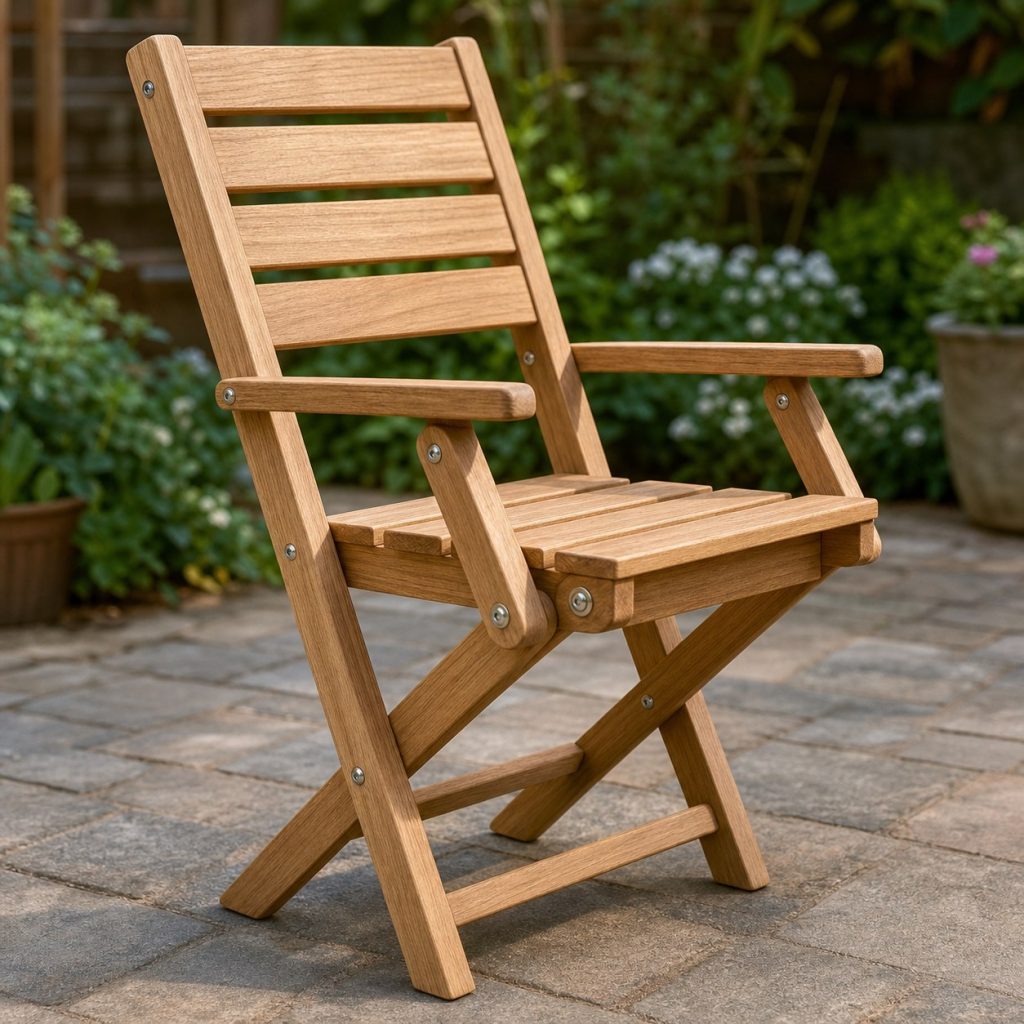
A folding chair is an advanced woodworking project because moving frames must lock into a stable seating position without trapping fingers or loosening under repeated use. These concepts focus on simple pivots, positive stops, matched side frames, and inspectable hardware.
Classic Slatted Folding Chair
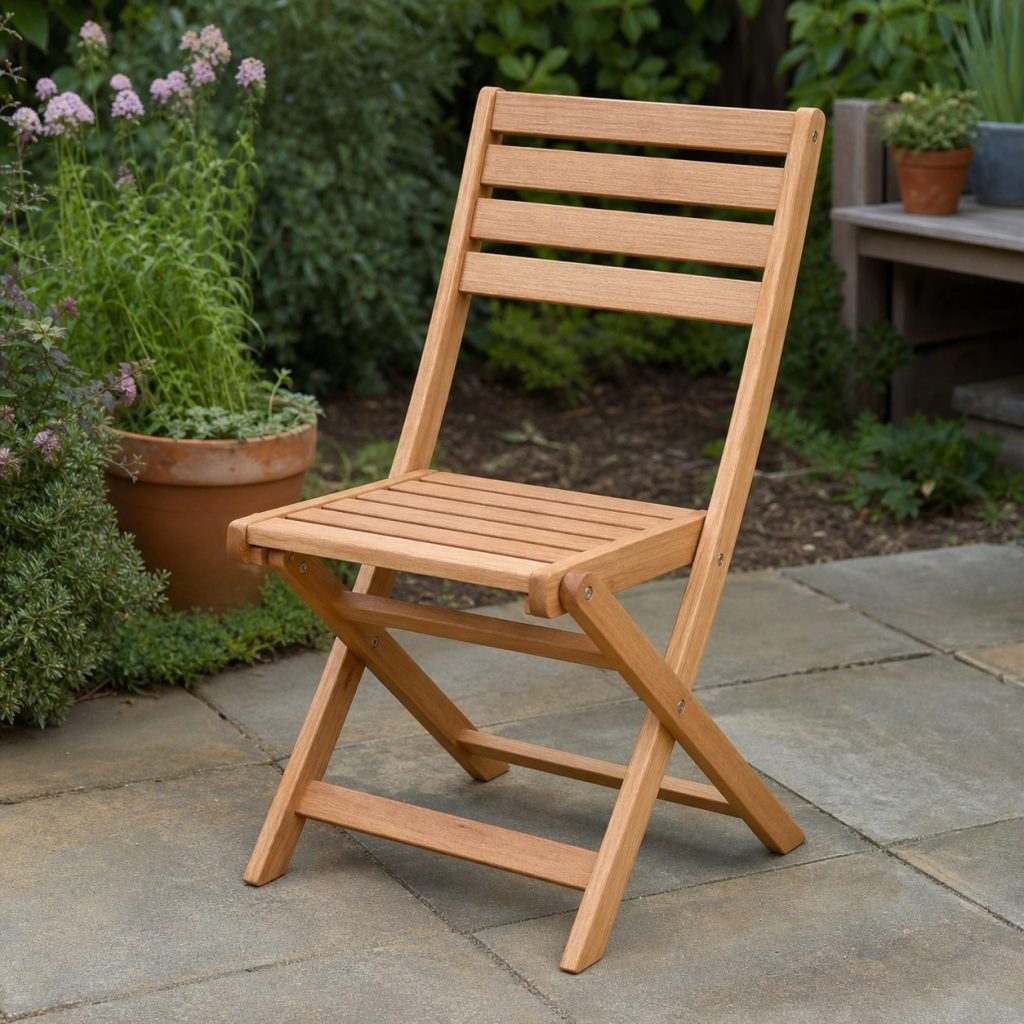
Matched side templates keep the pivot locations and seat angle consistent. Generated images are concepts rather than tested furniture plans; verify load capacity, pivot and stop design, stability, pinch and shear clearances, hardware retention, user fit, lumber, and finish.
Director-Style Wood Frame
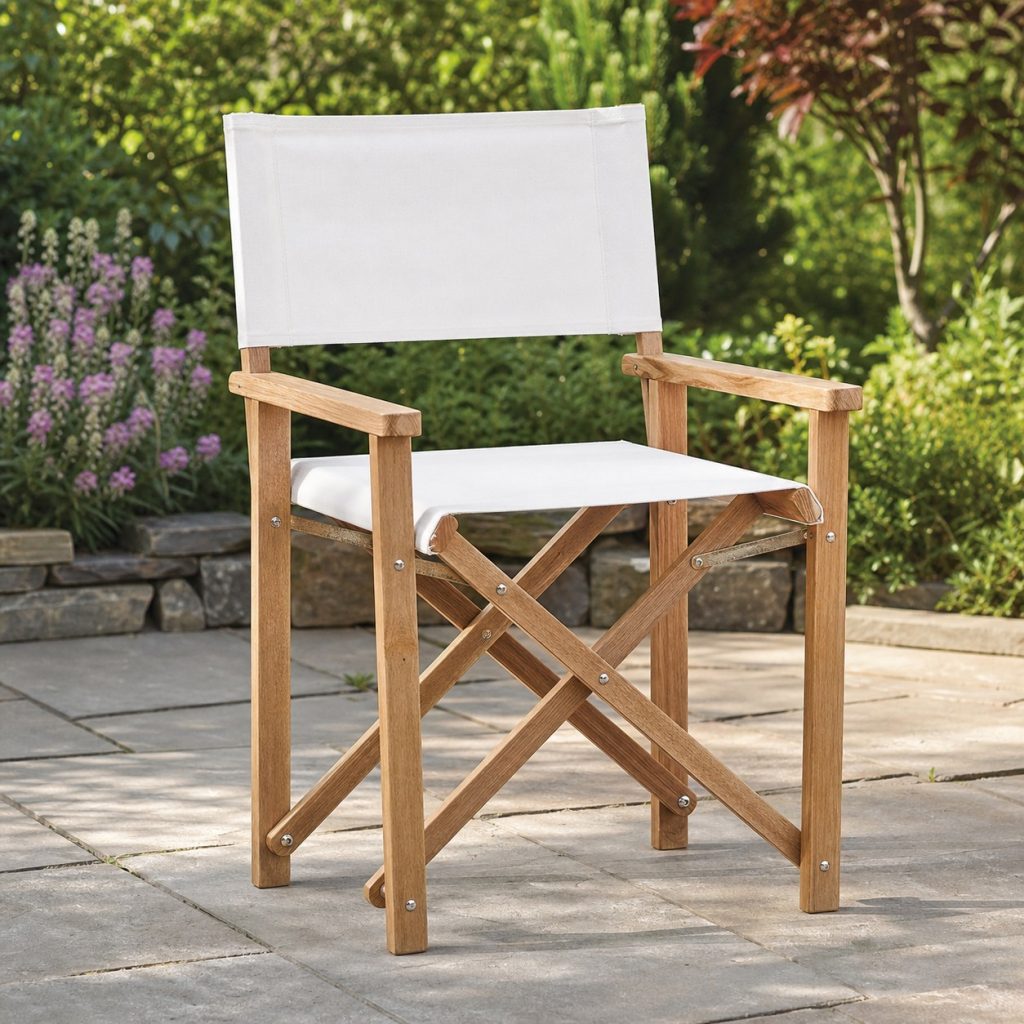
The wood frame needs positive spread control and fabric specifically designed and attached for the intended load.
Compact Bistro Folding Chair
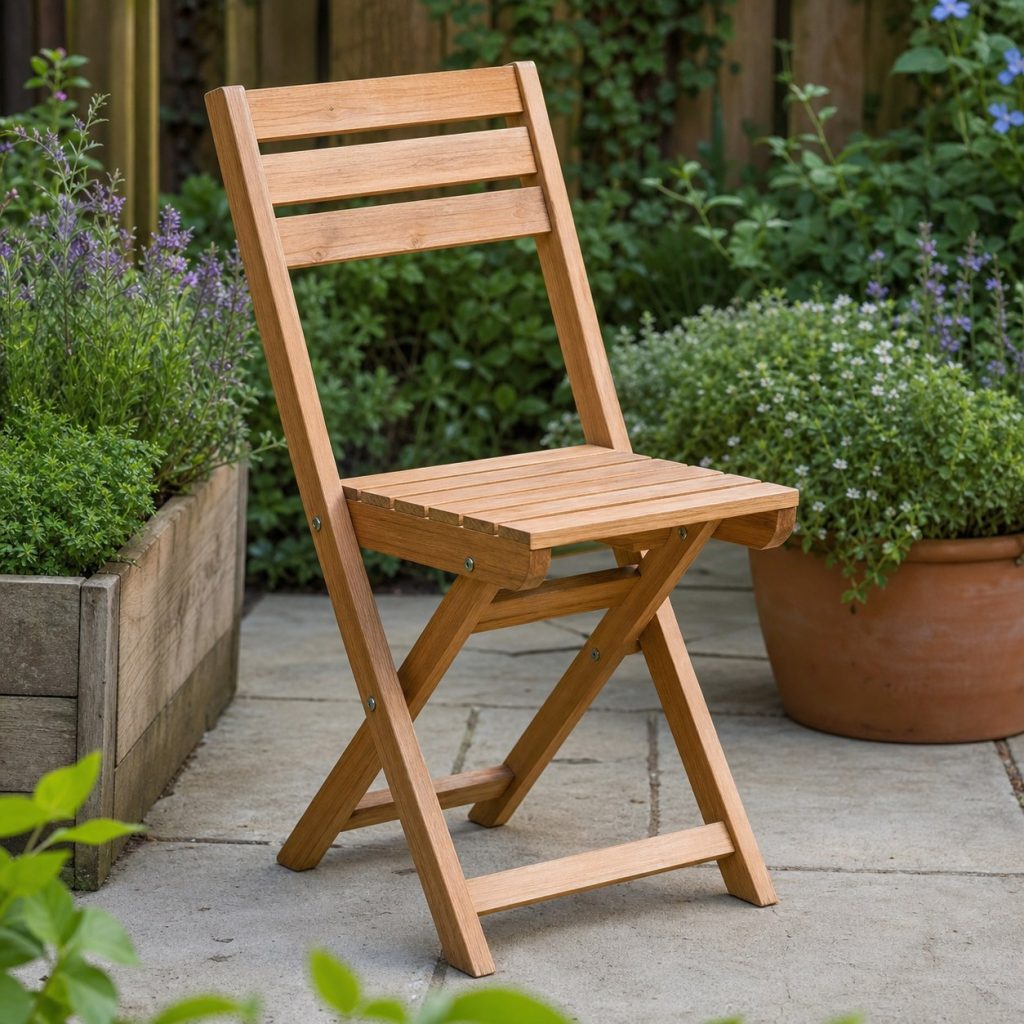
Compact proportions still require a broad enough footprint and locked open geometry.
High-Back Folding Chair
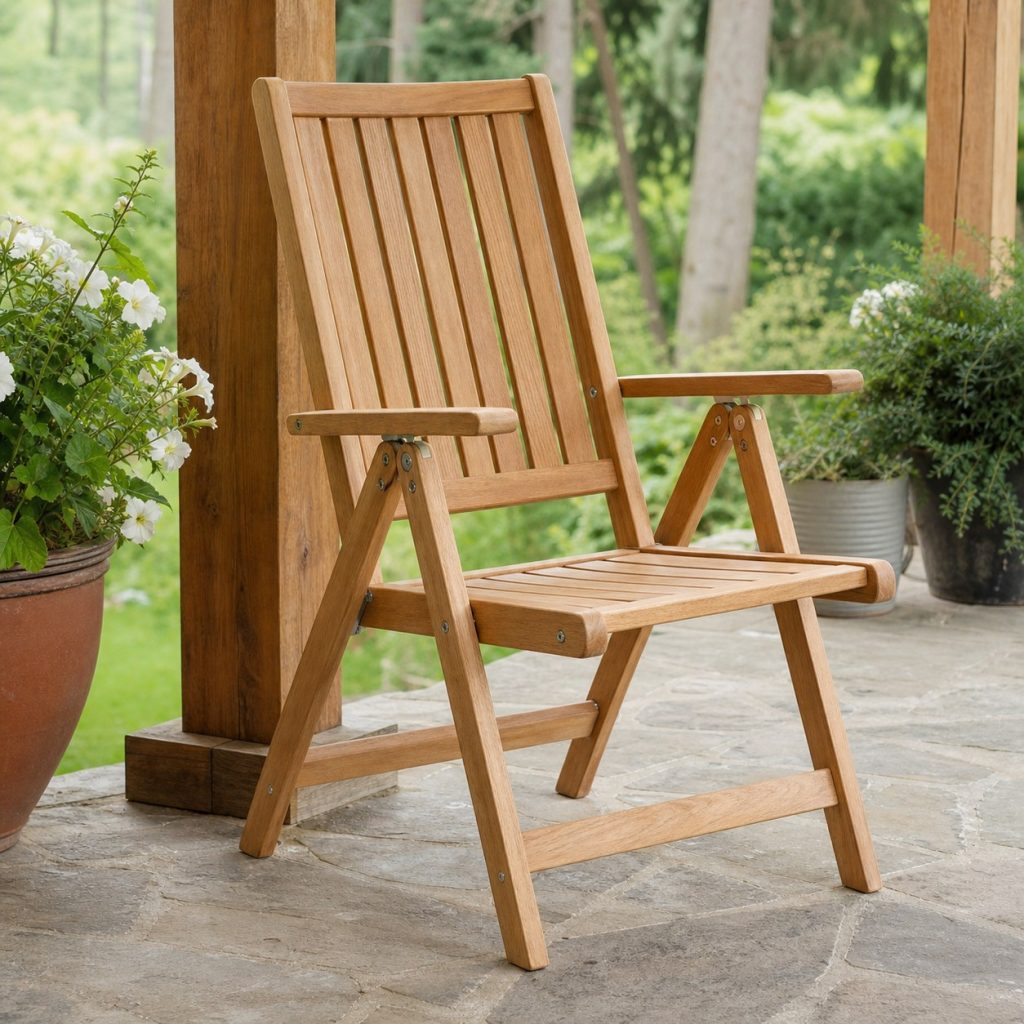
A taller back increases leverage at the pivots and needs strong continuous rails.
Armless Folding Garden Chair

Removing arms simplifies folding while increasing the importance of safe hand placement during setup.
Folding Chair With Arms
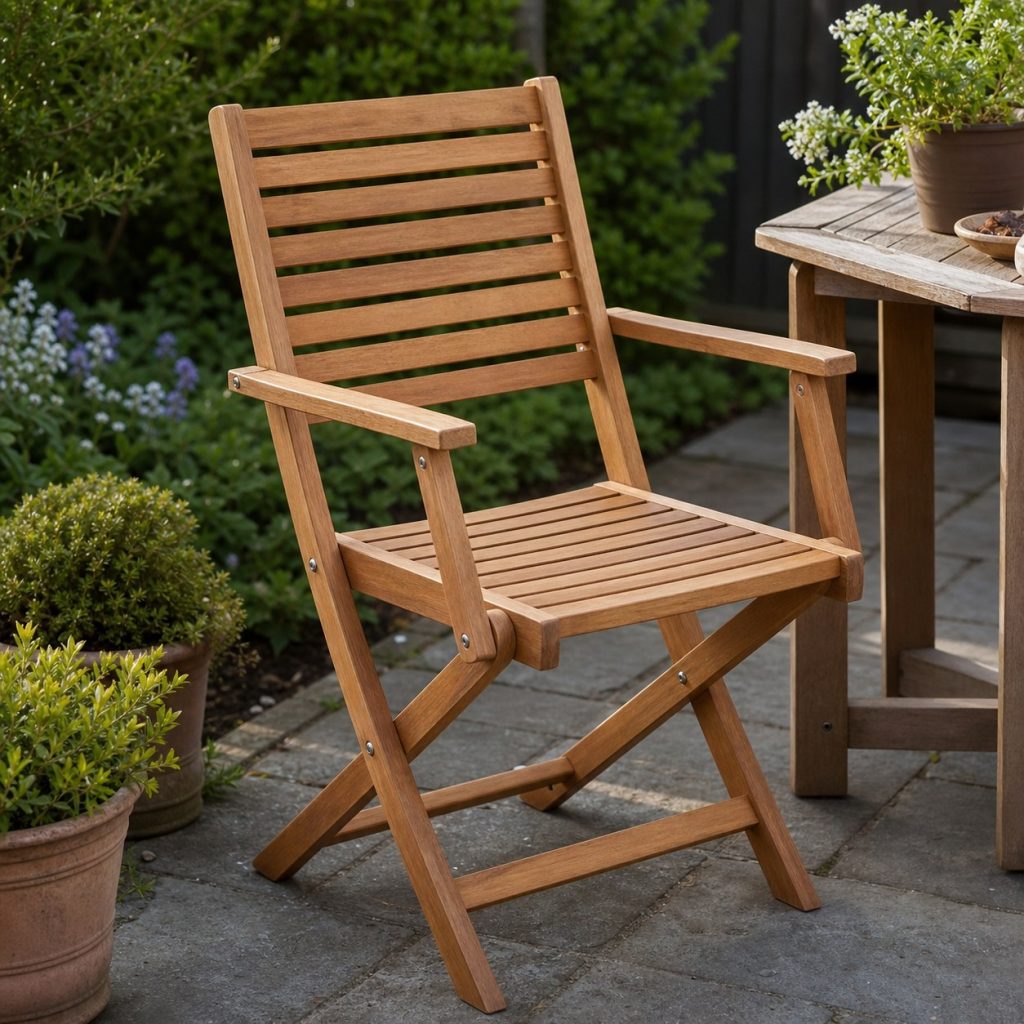
Arm movement must remain coordinated with the frame without creating a finger trap.
Fold-Flat Storage Position
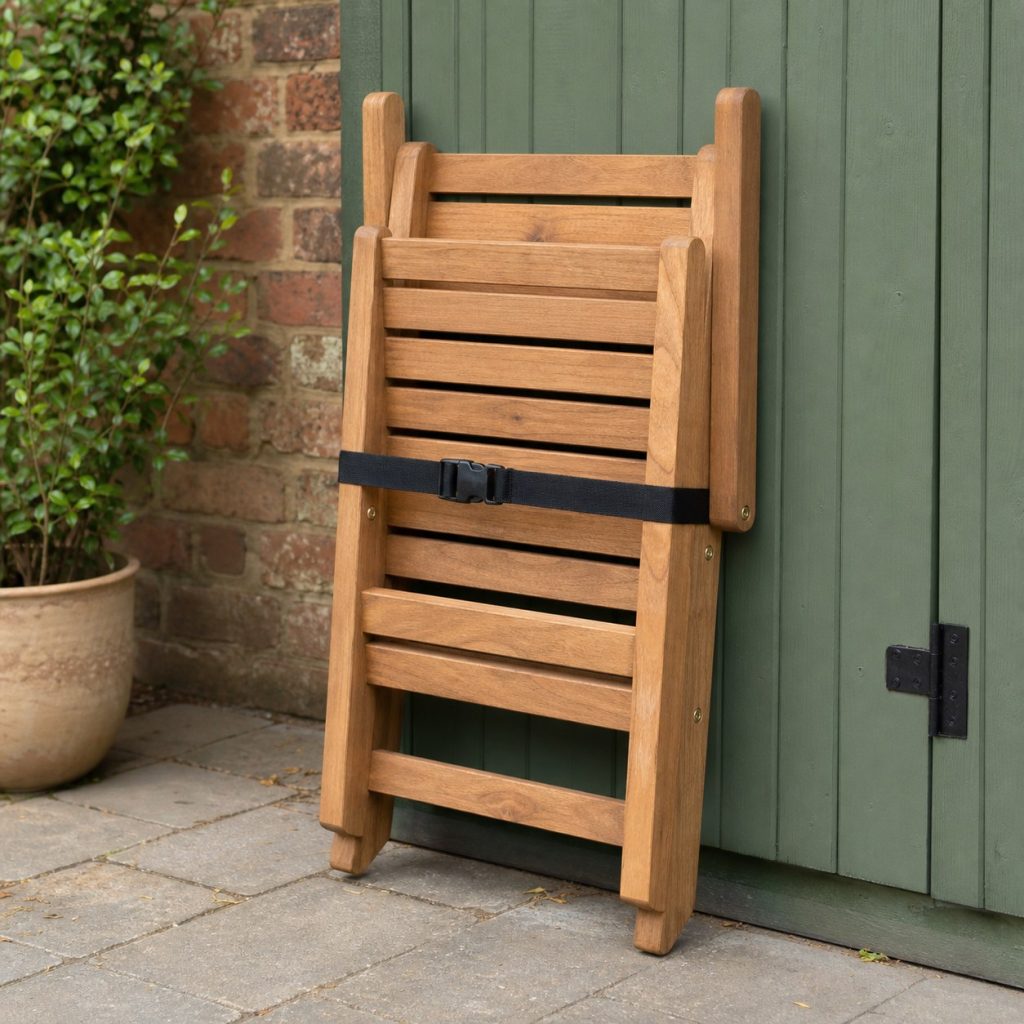
A folded chair needs a retention catch or storage method that prevents unexpected opening.
Pivot, Stop, and Clearance Details
A full-scale mock-up exposes binding, weak bearing areas, loose pivots, and pinch zones before final assembly.
Planning checklist
- Build matched side frames from one full-size template.
- Use through-fastened pivots with positive retention.
- Provide positive open-position stops.
- Control pinch points throughout the folding path.
- Test stability and joints cautiously before use.
These woodworking concepts and generated images are planning inspiration, not measured drawings, cut lists, tested furniture plans, load ratings, engineered structures, accessibility designs, playground certifications, or utility instructions. Verify dimensions, ergonomics, lumber grade and treatment, grain direction, joint design, fastener and preservative compatibility, structural and wind loads, stability, sharp and pinch hazards, finish labels, equipment instructions, accessibility, permits, and local requirements for the actual project. Use appropriate personal protective equipment and qualified engineers, electricians, plumbers, accessibility specialists, and other licensed professionals where the work or hazards require them.
Frequently asked questions
Can ordinary wood screws serve as pivots?
No. Use hardware and joint details specifically designed for repeated movement and the intended load.
How do I reduce pinch hazards?
Map the complete folding path, provide deliberate clearances or guards, and keep hands away from crossing members during setup.
Can the chair remain outdoors?
Store it dry and follow the lumber, hardware, and finish maintenance requirements; moving joints need frequent inspection.