Project planning guide
Before you build
Use the reference image and planning notes as a starting point. Confirm dimensions, loads, materials, local codes, and site conditions before purchasing or cutting.
- Garden Projects
- 8 reference images
- Print-friendly guide
A narrow outdoor console table can organize a patio wall, hold planters, or provide temporary serving space. Its shallow footprint makes anti-racking joinery and tip resistance more important than on a broad dining table.
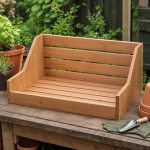
Classic Slatted Console
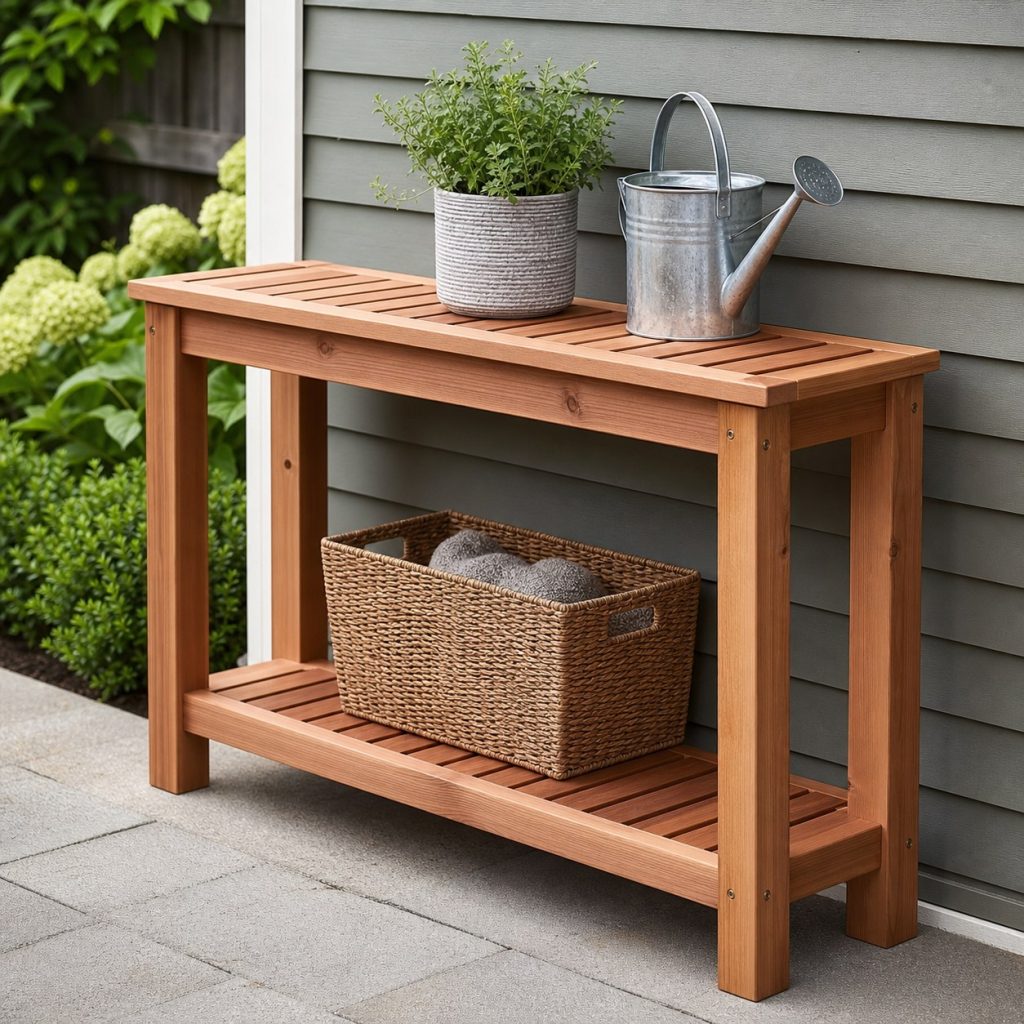
A lower stretcher and back rail resist racking while top gaps release water. Verify stability, wall attachment, wind exposure, surface loads, child-climbing hazards, clear routes, lumber, fasteners, and finish; a narrow table is not a seat or step.
Console With Lower Shelf
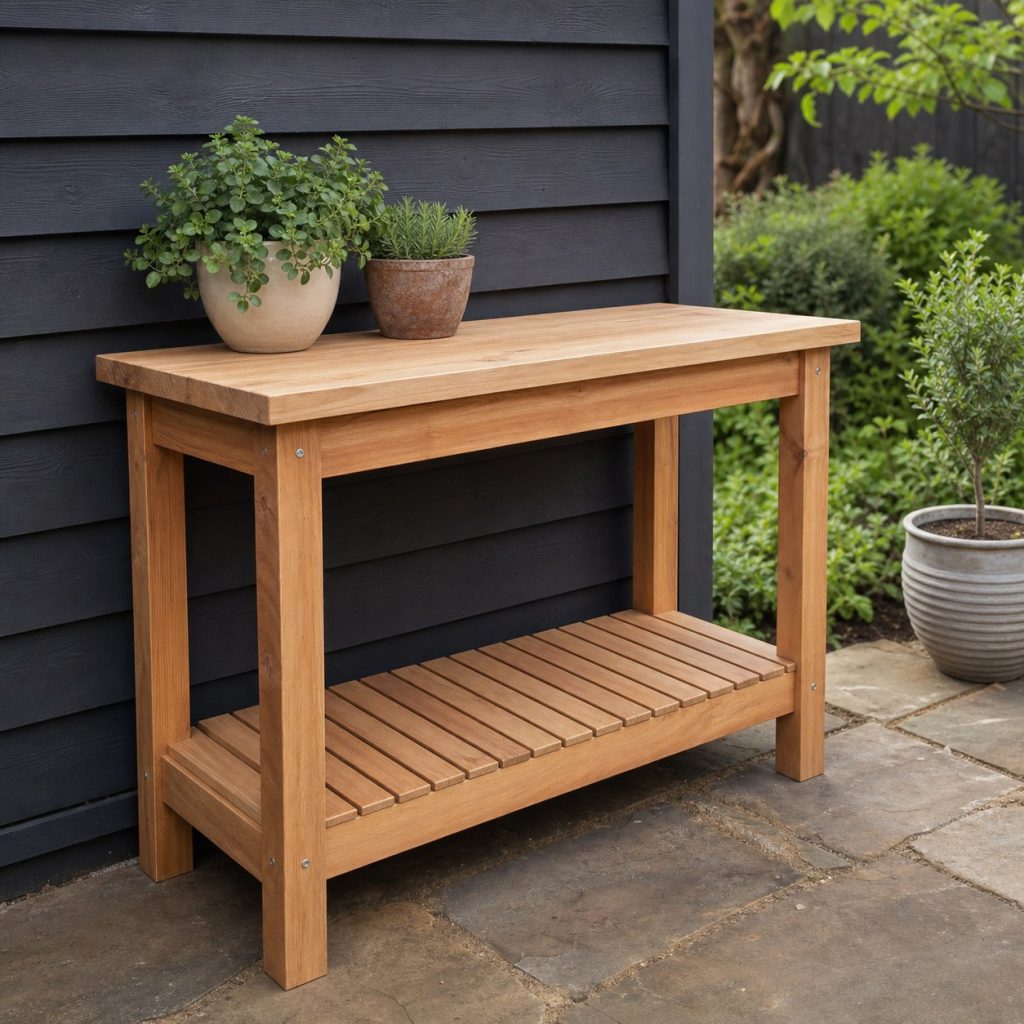
The shelf can brace the legs when its joinery supports both vertical load and racking resistance.
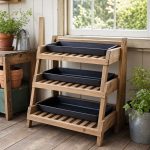
Two-Tier Plant Console
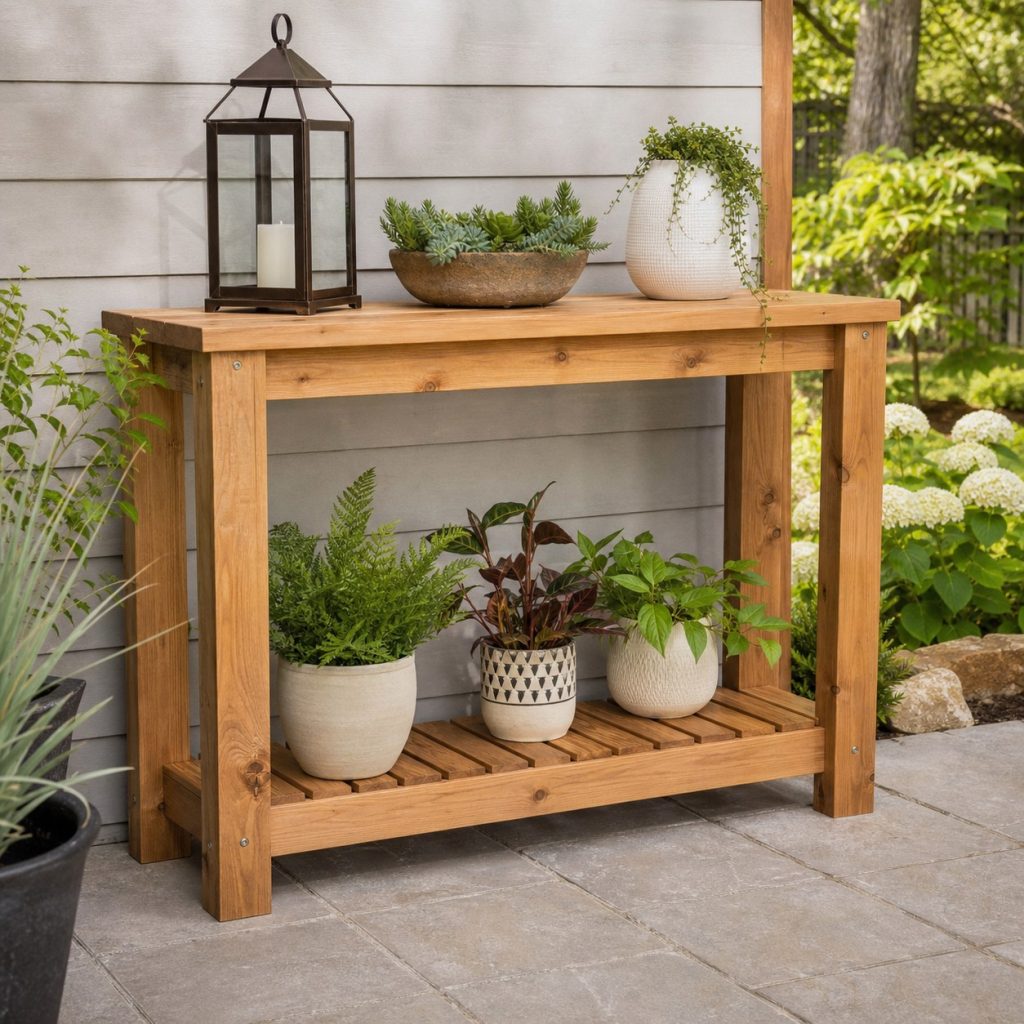
Two tiers distribute planters only when saturated weights and frame capacity are considered.
Open-Back Serving Console
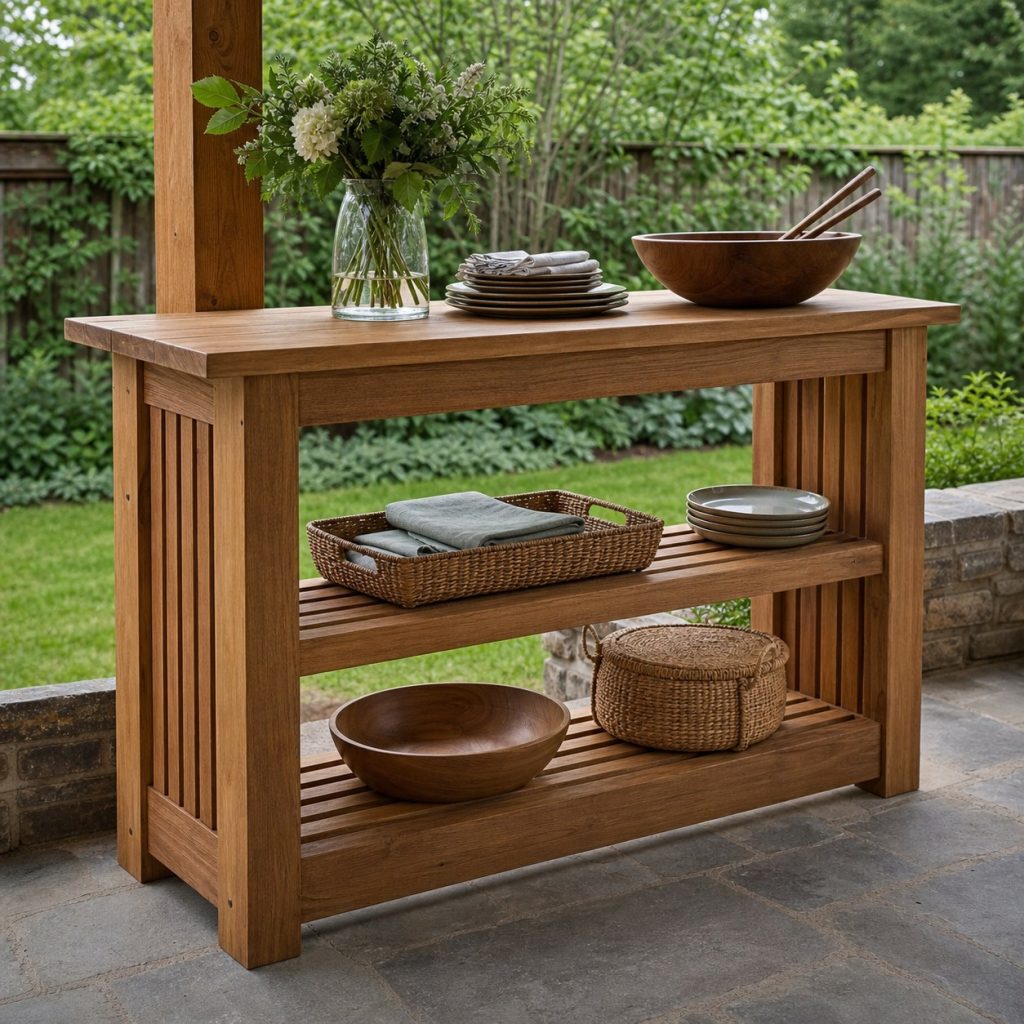
An open back needs substantial side frames or diagonal bracing to stay square.
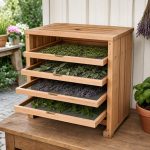
Drawer-Free Garden Console
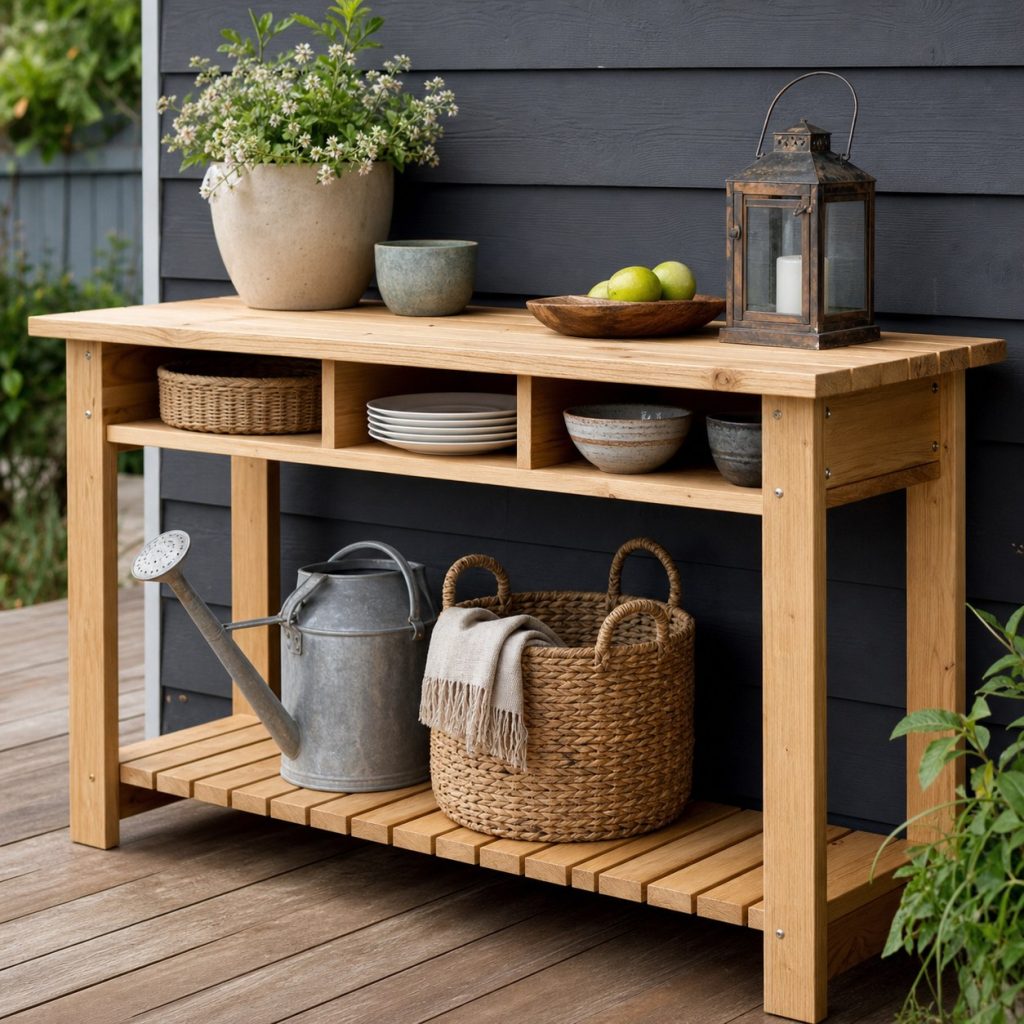
Open cubbies avoid swollen outdoor drawers while maintaining ventilation and drainage.
Trestle Console Table
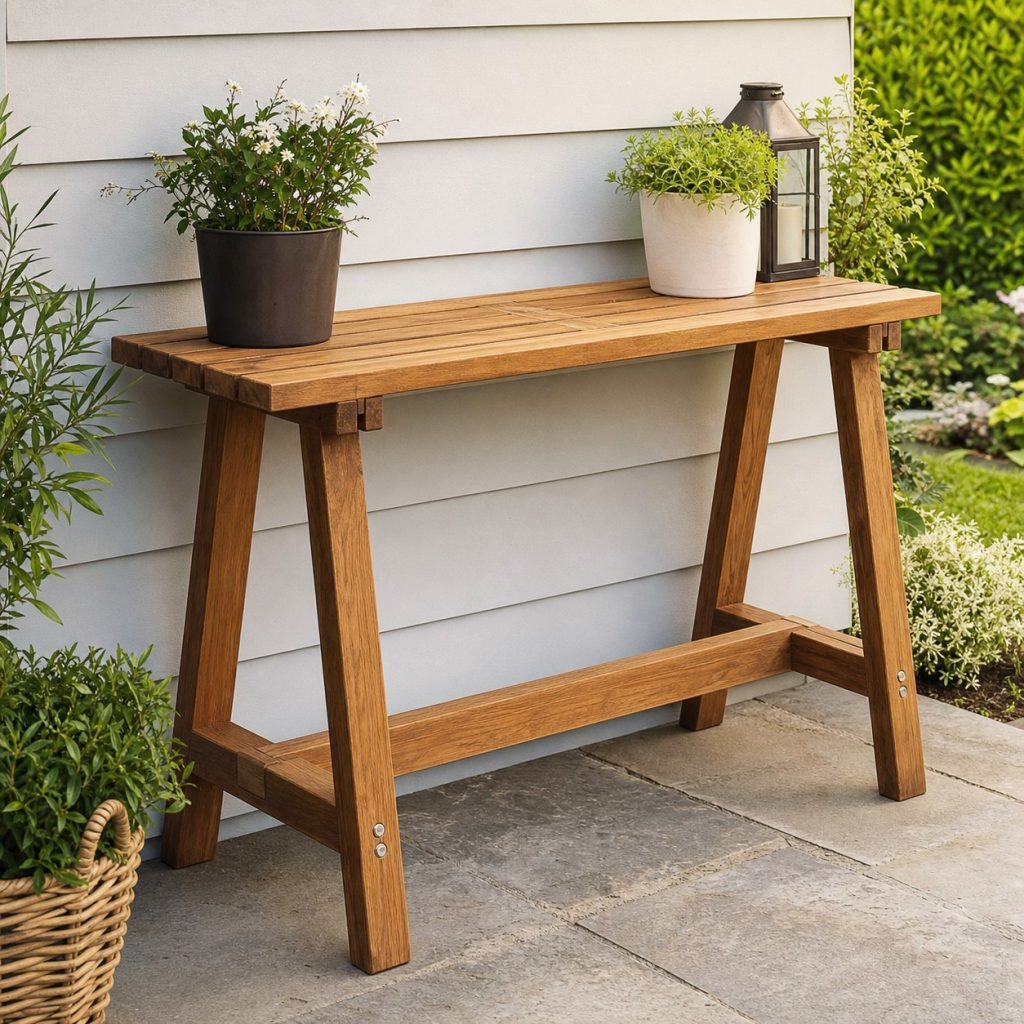
A locked stretcher connection prevents the end frames from spreading or twisting.
Painted Entry Console
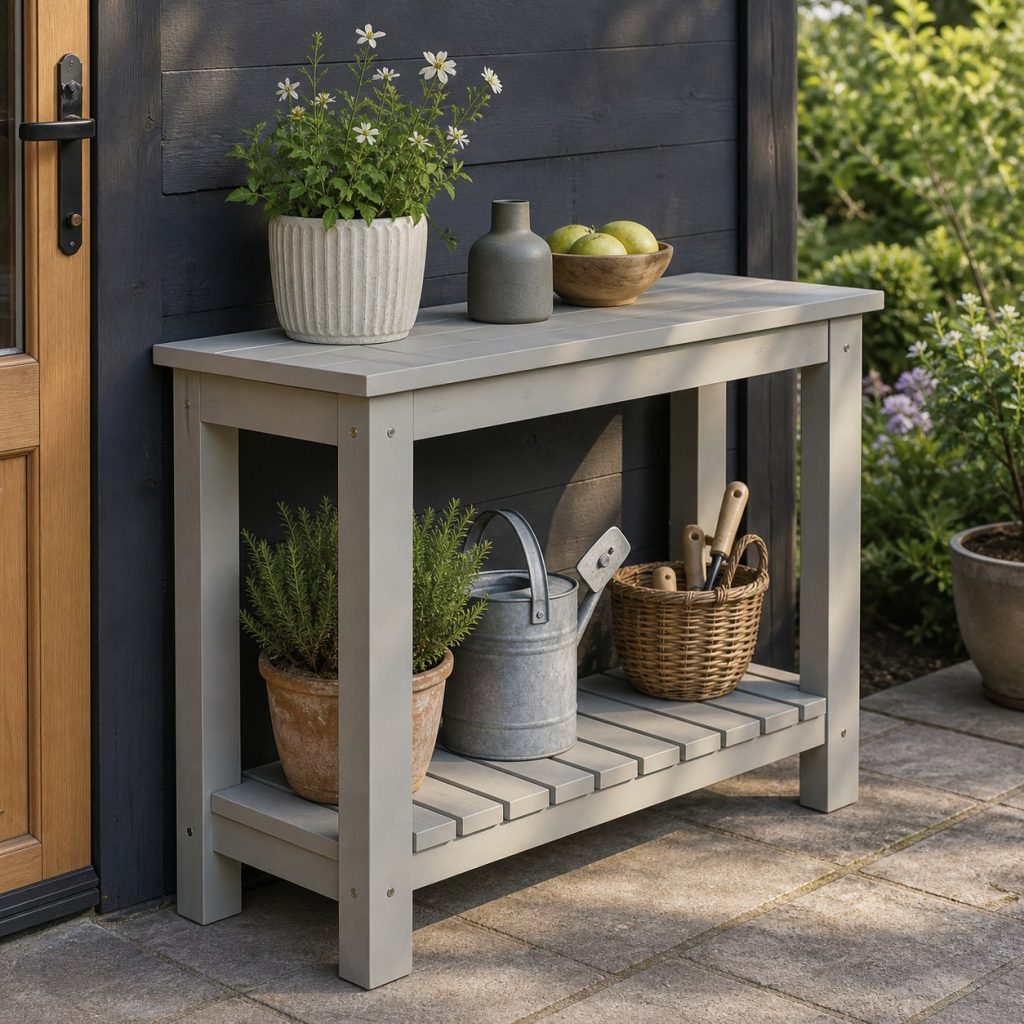
Complete coating and clearance from siding help both the furniture and building dry.
Apron, Shelf, and Foot Details
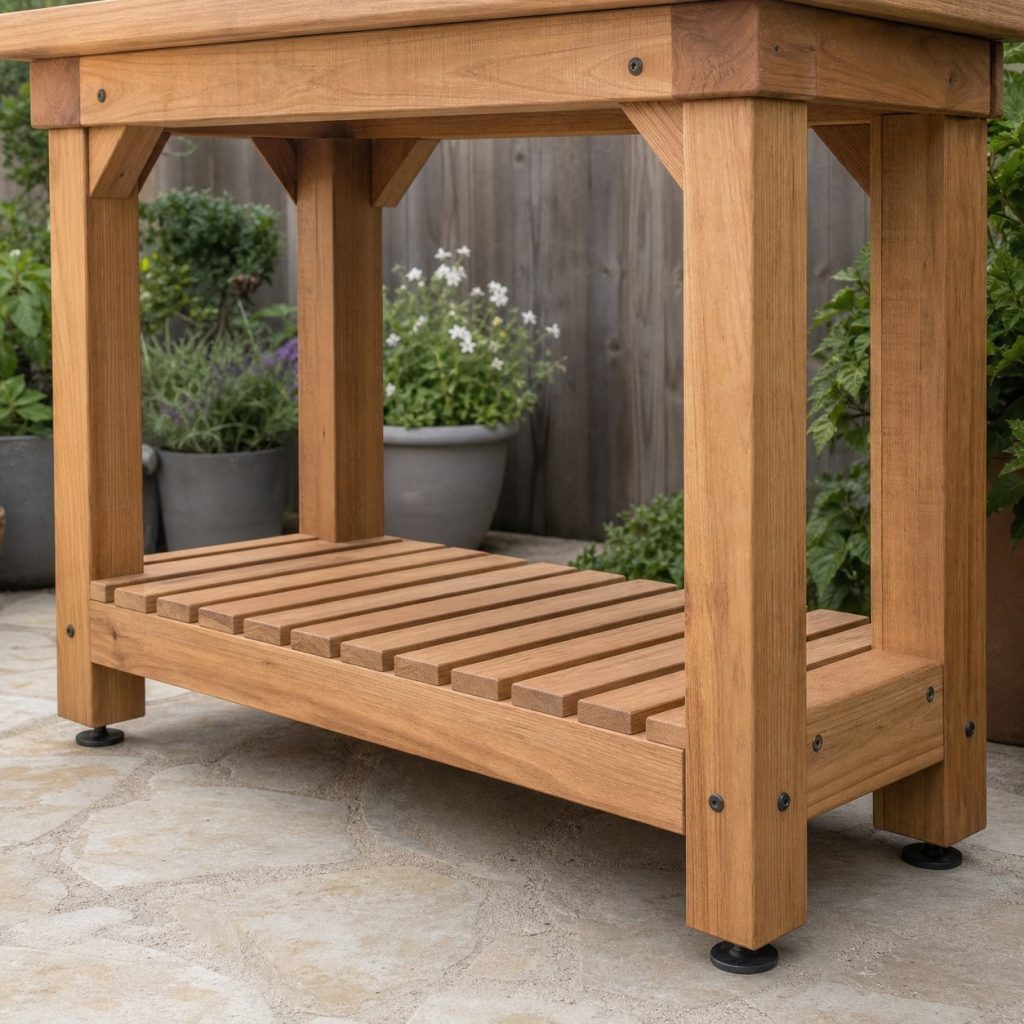
A dry fit confirms square frames, even feet, usable wall clearance, and drainable joints.
Planning checklist
- Keep the footprint deep enough for the intended height.
- Brace the narrow frame against racking and tipping.
- Calculate planter and serving loads.
- Maintain clearance from siding, doors, and walking routes.
- Never use the console as seating or a step.
These woodworking concepts and generated images are planning inspiration, not measured drawings, cut lists, tested furniture plans, load ratings, engineered structures, accessibility designs, playground certifications, or utility instructions. Verify dimensions, ergonomics, lumber grade and treatment, grain direction, joint design, fastener and preservative compatibility, structural and wind loads, stability, sharp and pinch hazards, finish labels, equipment instructions, accessibility, permits, and local requirements for the actual project. Use appropriate personal protective equipment and qualified engineers, electricians, plumbers, accessibility specialists, and other licensed professionals where the work or hazards require them.
Frequently asked questions
Does a patio console need wall anchoring?
Site conditions and geometry determine that. Use an approved attachment without damaging cladding or hidden utilities.
Can I add drawers?
Outdoor drawers often bind from moisture. Use suitable materials, clearances, drainage, and sheltered placement if included.
What should go on the lower shelf?
Only loads within the verified capacity and arranged so they do not make the narrow table unstable.