Project planning guide
Before you build
Use the reference image and planning notes as a starting point. Confirm dimensions, loads, materials, local codes, and site conditions before purchasing or cutting.
- Garden Projects
- 8 reference images
- Print-friendly guide
Outdoor shelves organize plants without the deep stagger of a tiered stand, making them useful along sheds, fences, patios, and potting areas. The design still needs to carry saturated containers, resist racking and wind, drain from one level to the next, and keep moisture away from walls and feet.
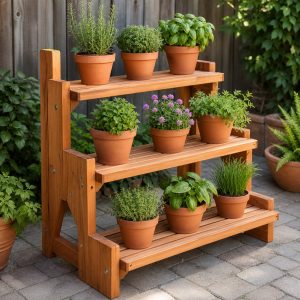
Freestanding Three-Shelf Rack
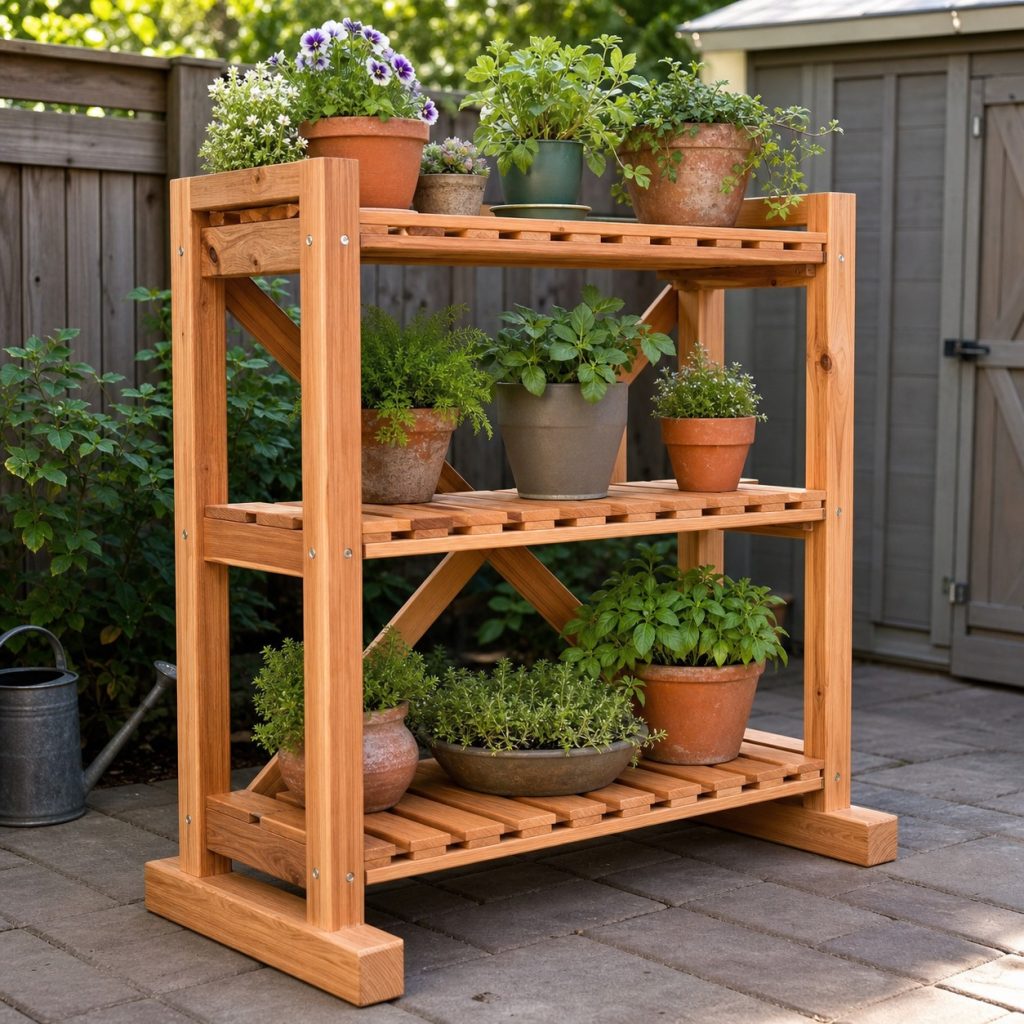
A rectangular rack provides maximum shelf area for its footprint. Build two square side frames, connect them with full-width rails, and add a diagonal brace across the back. Keep shelf spans modest and distribute containers instead of clustering weight at the center.
Wall-Mounted Shed Shelves
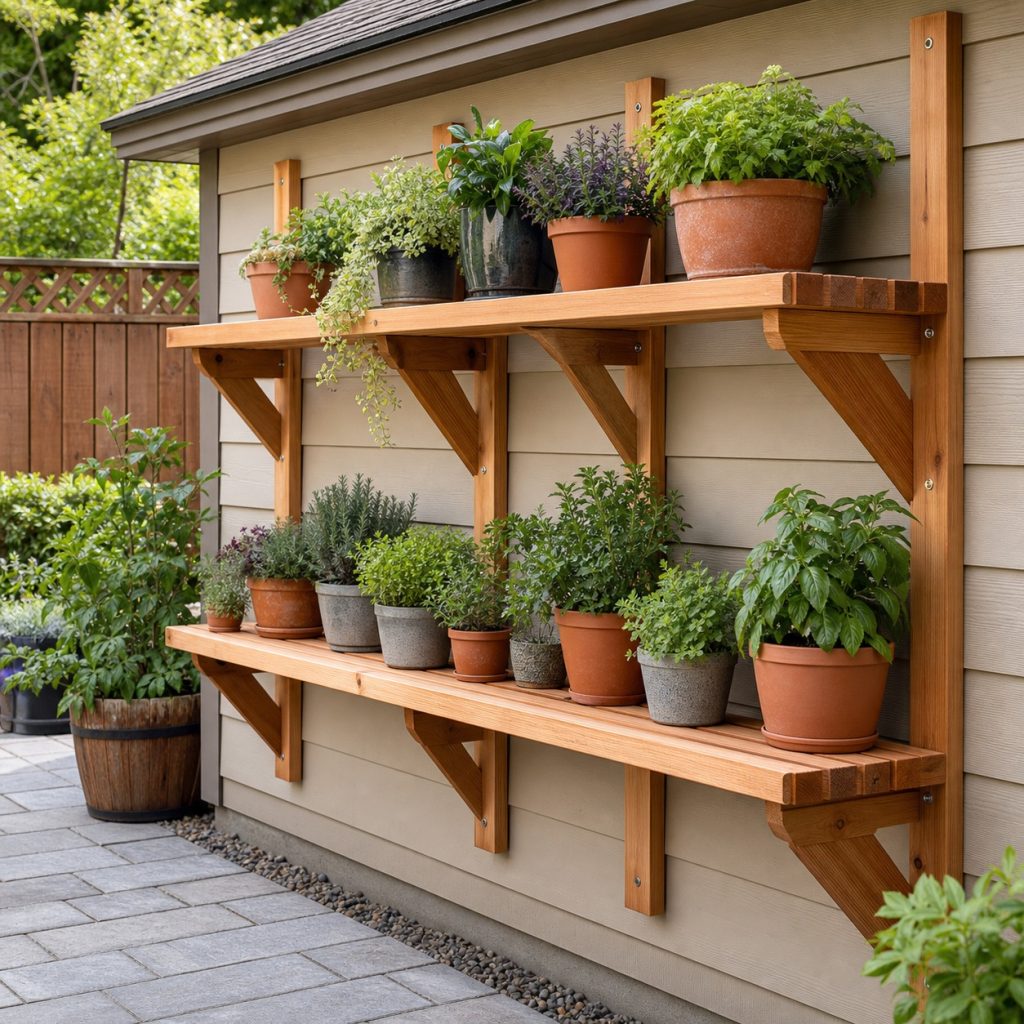
Wall shelves leave the floor clear but transfer every load into the building. Fasten vertical rails to verified framing or masonry, preserve the wall drainage plane, and leave a cleaning gap. Use multiple brackets beneath long shelves and keep pots away from door swings.
Corner Plant Shelves
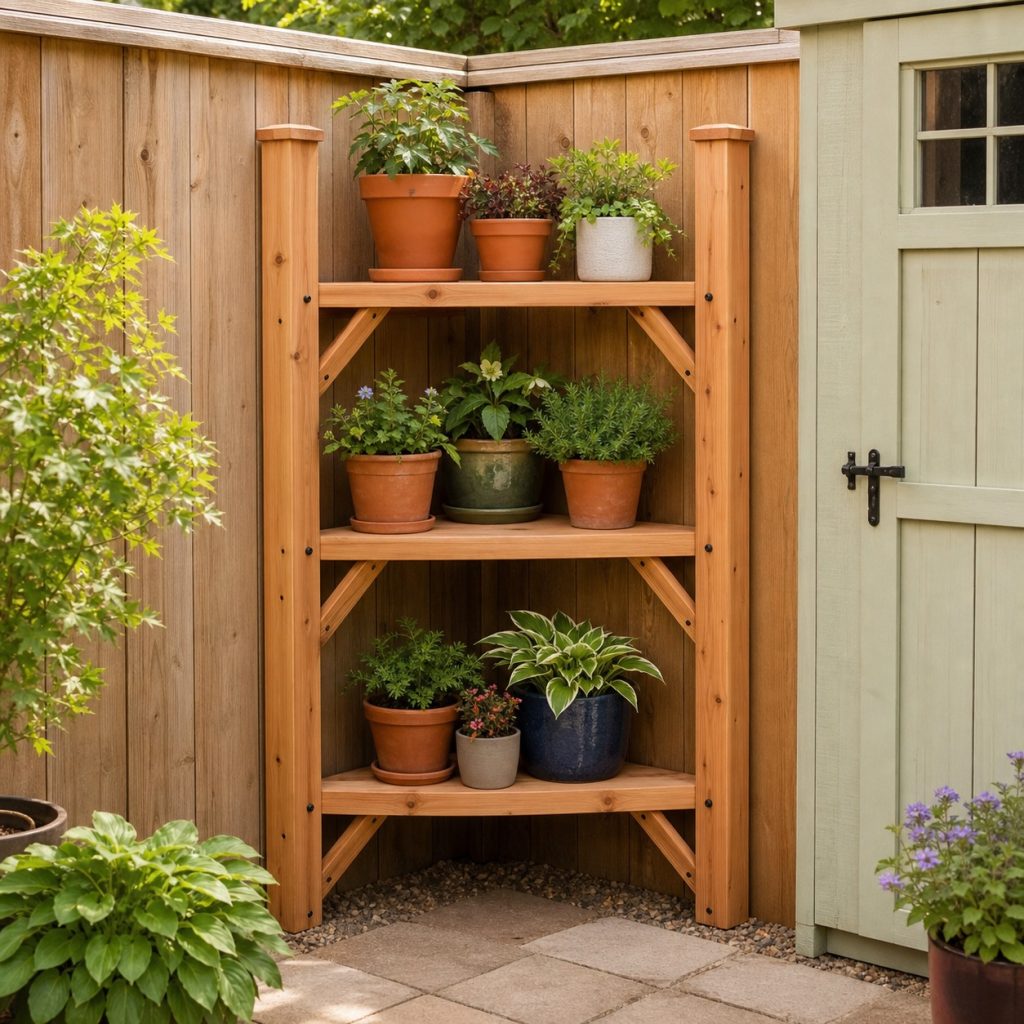
Corner shelves can use triangular surfaces or two short straight runs. Support the front edge, connect both legs to complete frames, and avoid attaching heavy shelves only to fence boards. Confirm that the corner remains reachable for watering and cleaning.
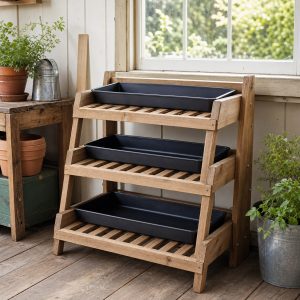
Outdoor Propagation Shelf
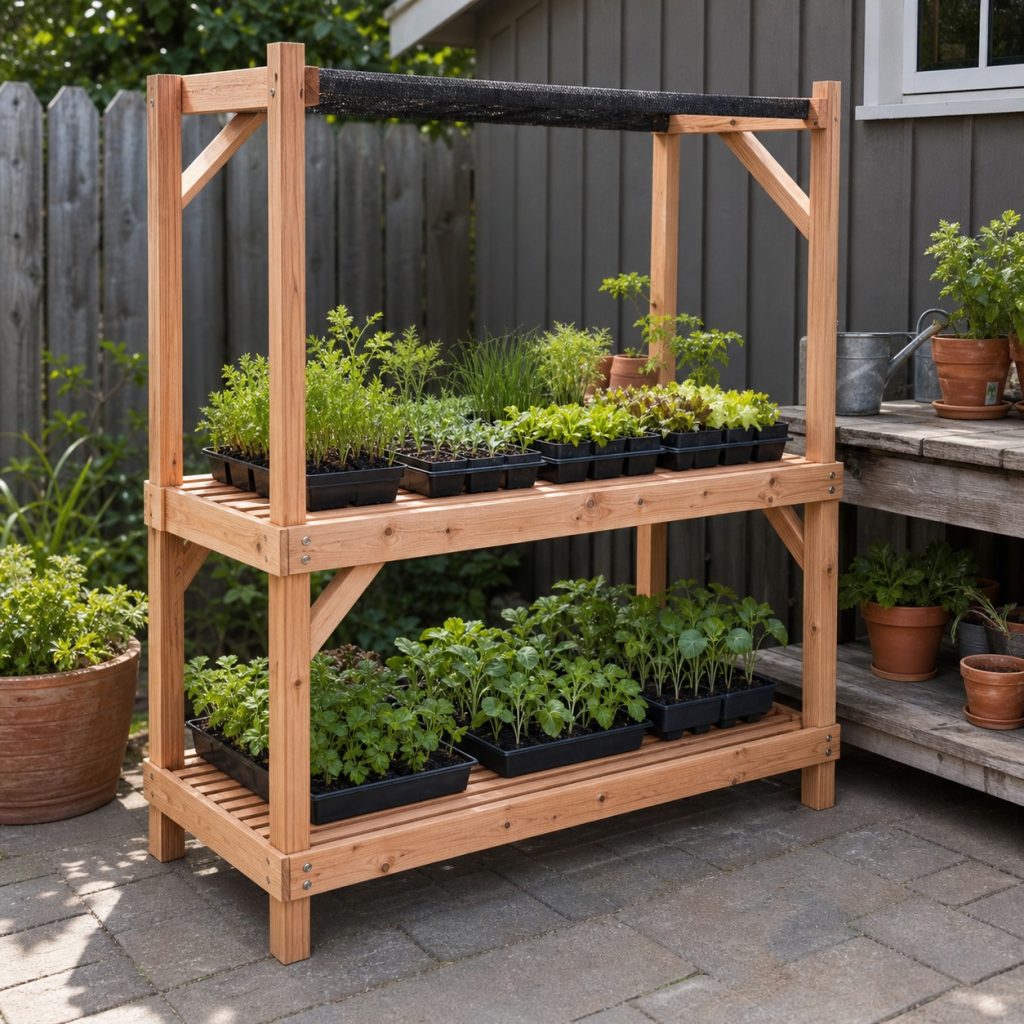
A low propagation rack can hold seedling trays near a potting bench. Size shelves to full trays, provide drainage and airflow, and make any shade frame removable before wind. Watering equipment and electrical heat mats require separate appropriate outdoor planning.
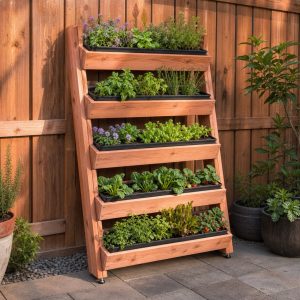
Secured Ladder Shelf
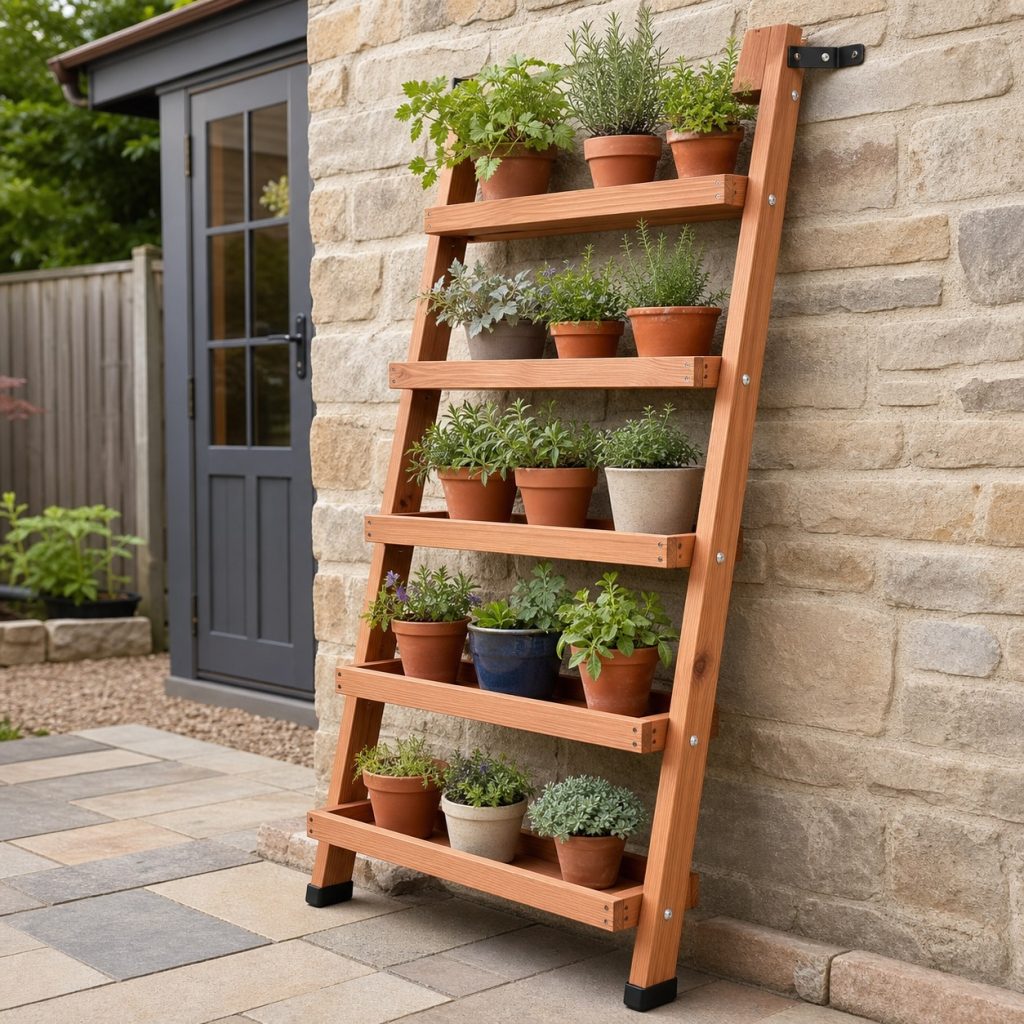
Graduated shelves keep upper pots visible but raise the center of gravity. Anchor the rails to suitable structure, install front lips, and reserve the top for small containers. Maintain a clear base so feet do not become trip hazards.
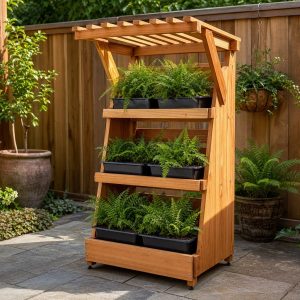
Modular Two-Level Shelves
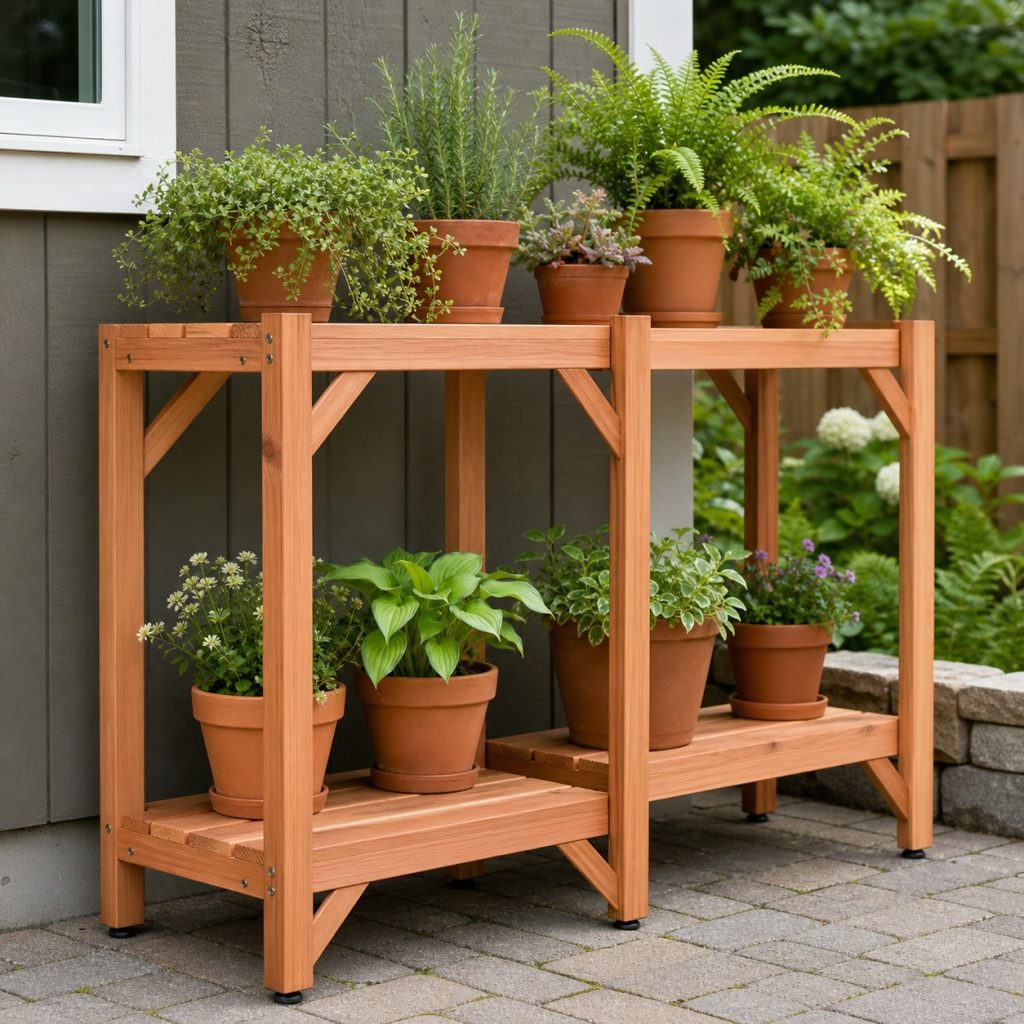
Small independent modules are easier to move, repair, and rearrange. Give each unit complete side frames and bracing rather than depending on its neighbor. Align them only after checking the patio slope and use shims or adjustable feet designed for exterior loads.
Build and Brace the Frame
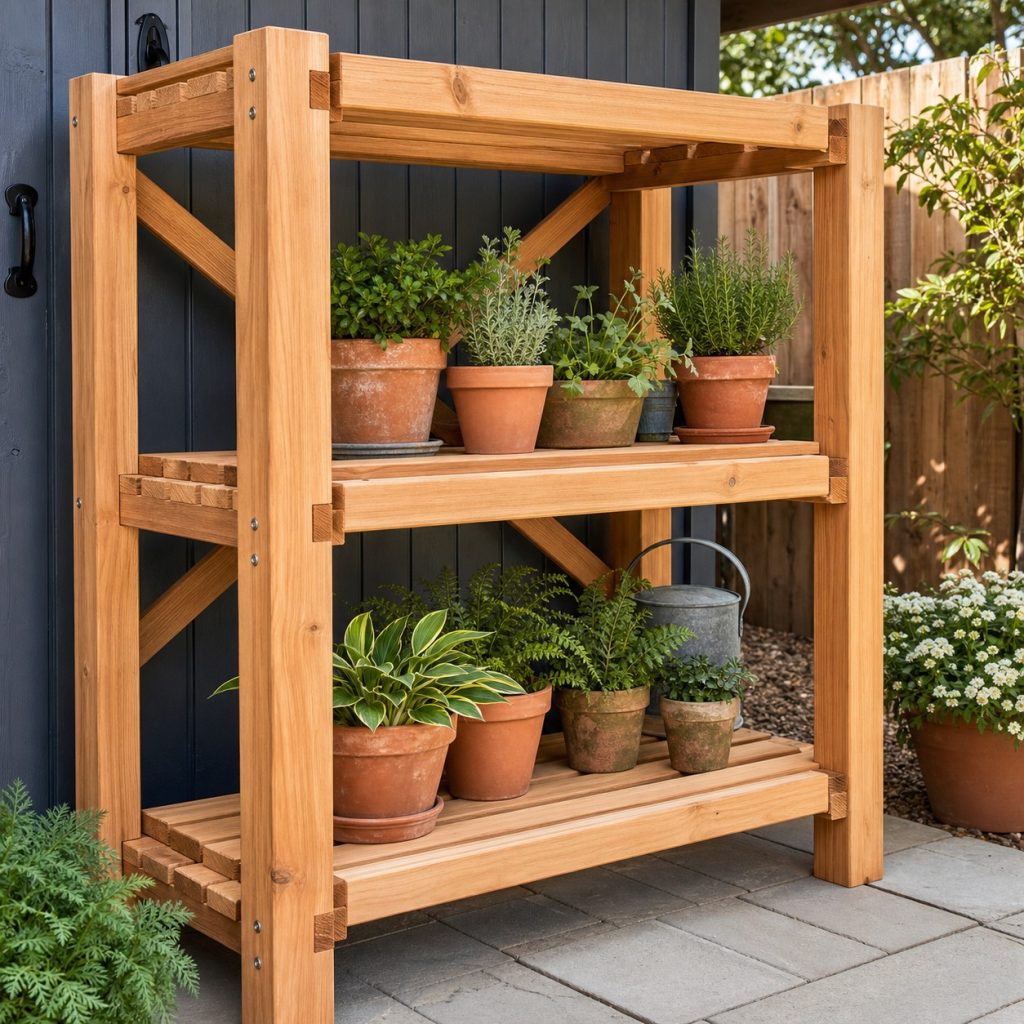
Assemble side frames on a flat surface and compare diagonals. Install load rails before decorative slats, predrill near ends, and add a back brace that connects opposite corners. Dry-fit the largest pot on every level before applying finish.
Drainage Between Levels
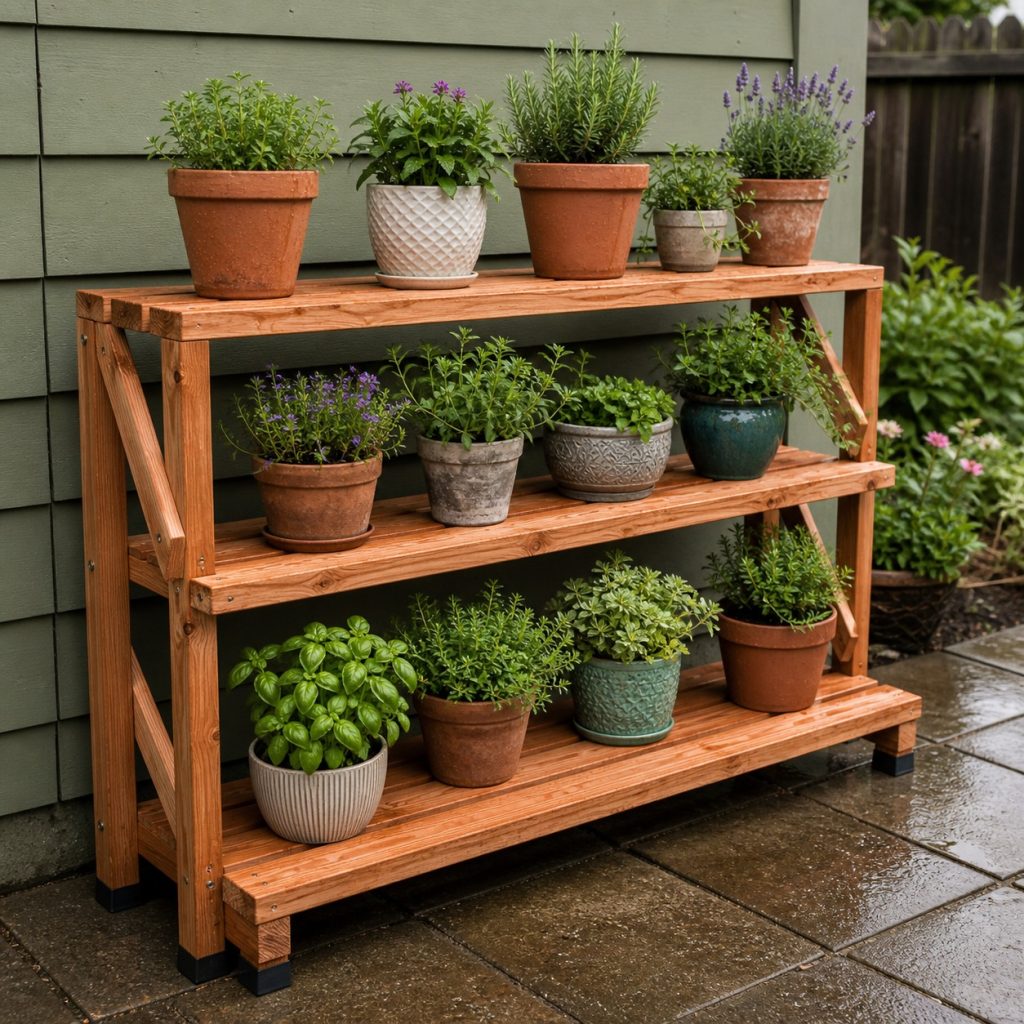
Slat gaps let water pass, but lower plants should not receive dirty runoff from every pot above. Use saucers where appropriate without leaving roots submerged, stagger sensitive plants, and protect the feet from puddles. Inspect for algae and slippery patio surfaces.
Planning checklist
- Measure pots, trays, watering access, foliage height, and saturated weight.
- Support shelf spans and brace the full frame against racking.
- Secure tall ladder units and verify all wall or fence attachments.
- Use slats and raised feet to promote drainage and drying.
- Keep heavy pots low and inspect joints, finish, and footing regularly.
These concepts are general planning guidance, not engineering drawings or tested load-rated plans. Verify dimensions, lumber grade and treatment, structural loads, foundations, fasteners, coatings, utility locations, accessibility, wildlife guidance, property rules, permits, and local building requirements for the actual site. Use qualified local professionals for structural, fall, swing, bridge, retaining, electrical, plumbing, or water hazards.
Frequently asked questions
How much space should be between outdoor plant shelves?
Use the tallest mature plant and watering method to set clear height. Leaves and pots should lift out without catching the shelf above.
Can outdoor shelves attach to a fence?
Only when the posts and framing are verified for the added saturated load and wind. Fence boards alone are rarely suitable structural support.
What keeps wooden shelf feet from rotting?
Use durable material, protected end grain, raised or replaceable feet, drained footing, and maintenance that prevents standing water.