Project planning guide
Before you build
Use the reference image and planning notes as a starting point. Confirm dimensions, loads, materials, local codes, and site conditions before purchasing or cutting.
- Kitchen Design
- 8 reference images
- Print-friendly guide
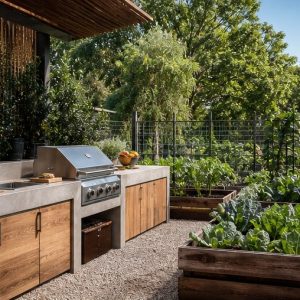
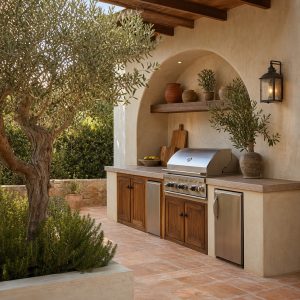
Rustic outdoor kitchen ideas feel convincing when materials are useful and appropriate to the landscape. Timber, stone, terracotta, lime-toned masonry, and simple metal roofing provide enough character without signs or artificial distressing. Modern safety, utilities, ventilation, and cleanability still belong beneath the natural finish.
Timber and green tile
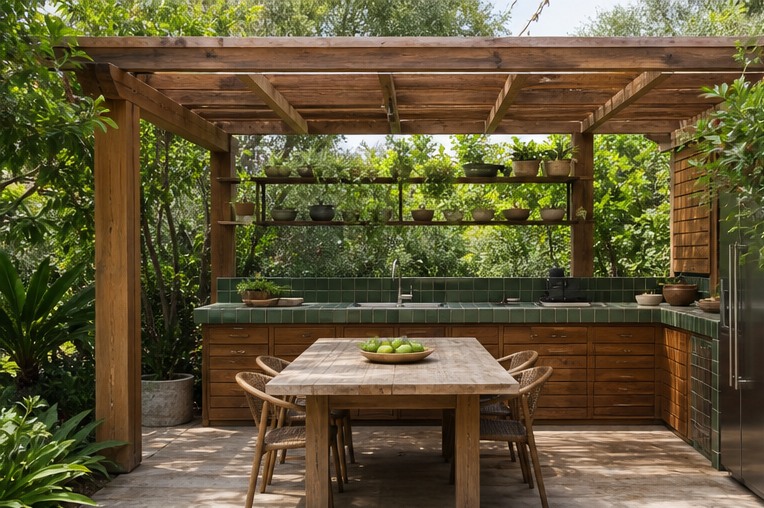
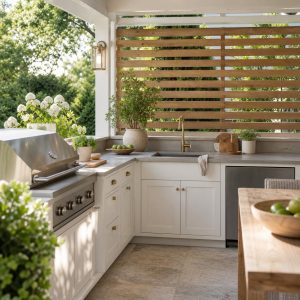
A small area of muted tile gives a timber kitchen a cleanable backsplash and gentle color. Use exterior-rated tile, mortar, grout, substrate, and movement joints. Keep rough wood away from food-contact surfaces and protect lower cabinet edges from splashback.
Terracotta and a masonry oven
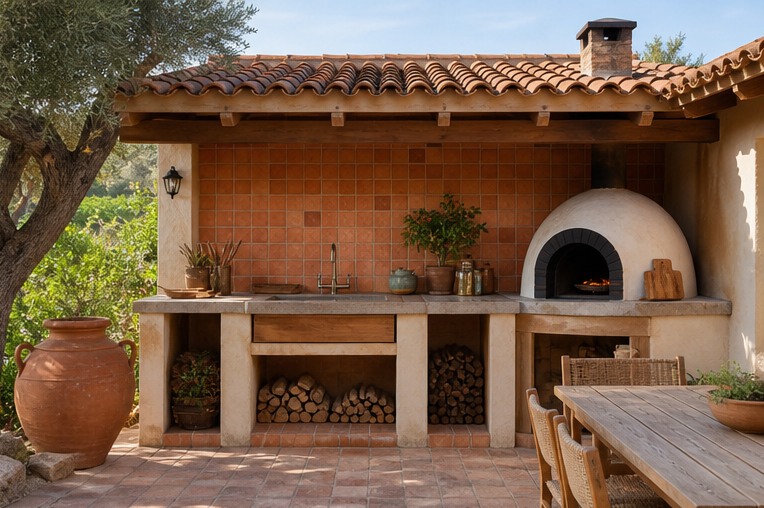
Terracotta brings warm color, while a purpose-built oven can become the focal point. Oven foundations, flues, clearances, fuel storage, and fire protection require manufacturer guidance and qualified design. Let surrounding counters stay simple so the cooking element has safe working room.
Stone wall and simple counter
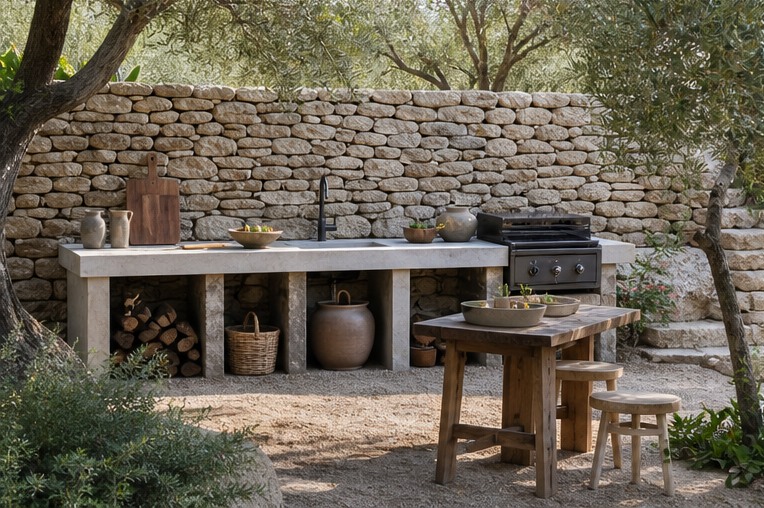
A stone wall makes a durable backdrop when it is properly drained and capped. A smooth counter and backsplash provide the hygiene that heavily textured stone cannot. Use the stone as architecture, not as a surface that traps grease beside cooking equipment.
Open timber room
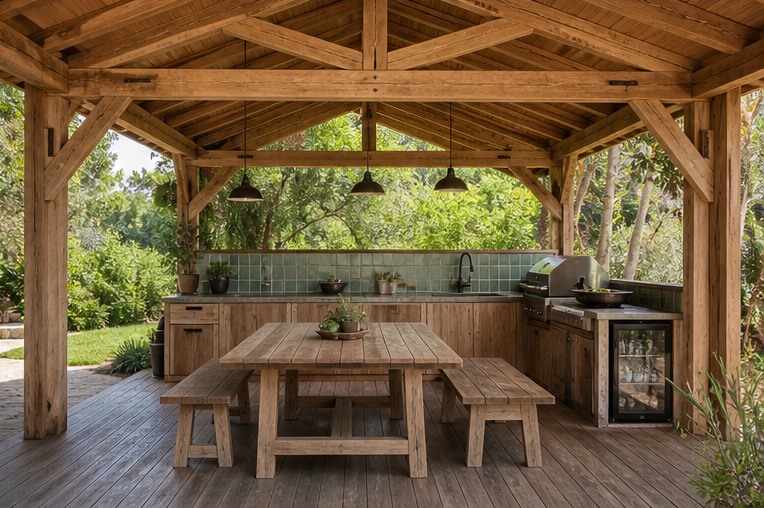
An open timber enclosure can feel like a garden room while admitting light through a translucent roof. Preserve cross-ventilation, protect timber connections from standing water, and use a roof system rated for the climate. Keep decoration spare so the frame remains the character.
Reclaimed-look worktable
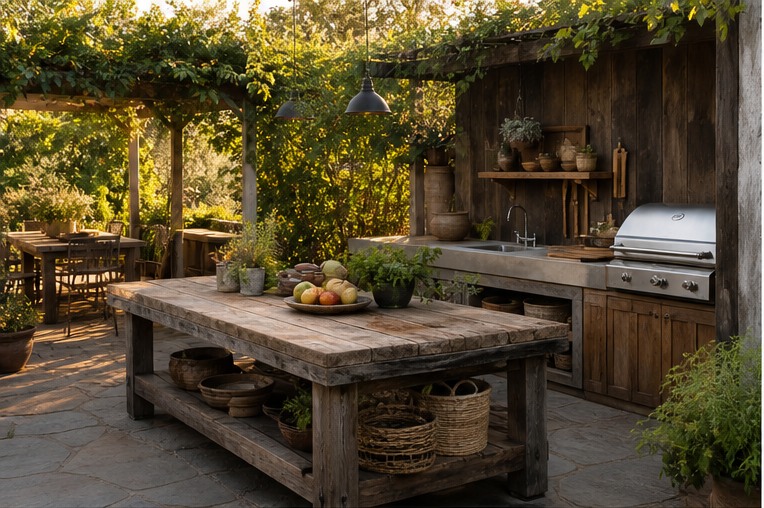
A freestanding worktable offers prep space without heavy built-ins. Use new or verified material suitable for the application rather than unknown contaminated salvage. Stabilize the table, provide a smooth cleanable top, and store only weather-tolerant items on open lower shelves.
Slatted shade roof
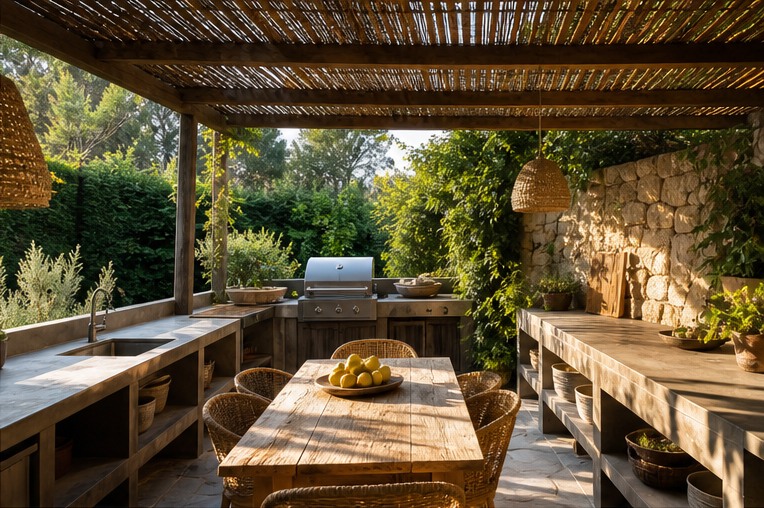
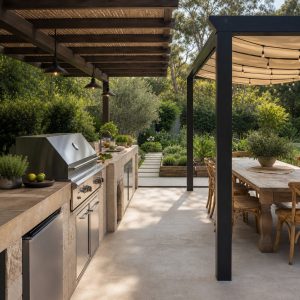
A slatted roof casts attractive shadow and keeps the kitchen visually open, but it is not full rain protection. Put sensitive storage elsewhere or add a designed weather layer above. Check member spacing, fasteners, wind resistance, and combustible clearances.
Golden-hour stone kitchen
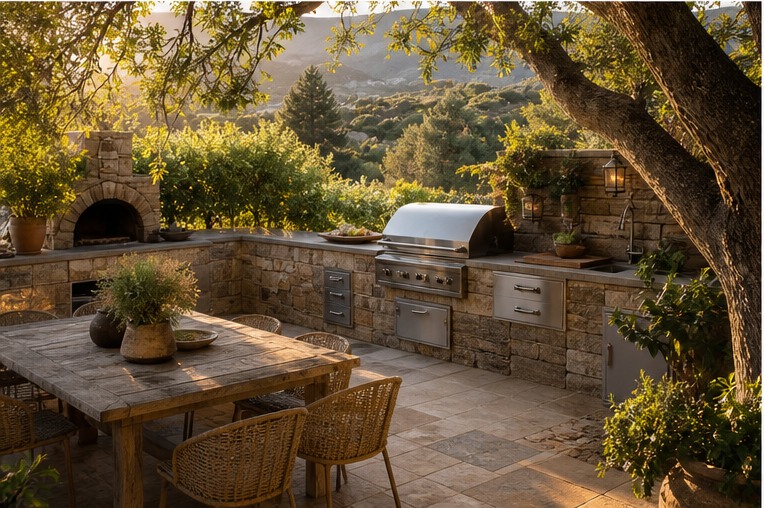
Warm evening light emphasizes stone and wood, but the practical lighting plan must work after sunset. Add shielded task lighting at counters and safe path lighting at steps. Decorative pendants should be exterior-rated and positioned clear of heat, smoke, and moving branches.
Concrete hearth-style kitchen
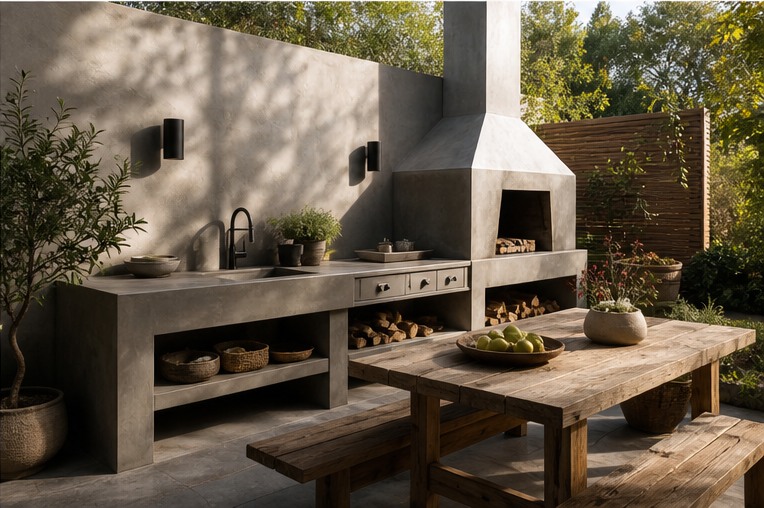
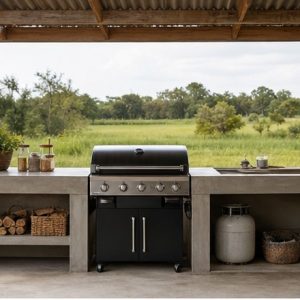
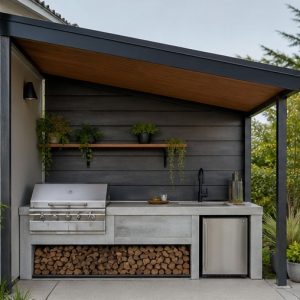
A masonry or concrete counter can evoke an old working kitchen while resisting hard use. Detail drainage, reinforcement, movement, and a finish suitable for food preparation. Avoid oversized hearth forms that crowd the cook or imply unsafe open-fire use.
Planning checklist
- Limit the palette to a few durable natural materials.
- Keep prep and cleanup surfaces smooth and washable.
- Use verified outdoor-rated wood, tile, metals, and finishes.
- Protect timber and masonry from trapped water.
- Design fire, structure, utilities, and ventilation to current requirements.
These ideas are general planning guidance. Verify appliance clearances, ventilation, weather exposure, drainage, structural loads, fuel and electrical work, permits, and local fire and building requirements with manufacturers and qualified local professionals.
Frequently asked questions
What materials create a rustic outdoor kitchen?
Timber, stone, terracotta, handmade-look tile, simple masonry, and corrugated metal work well when detailed for climate and maintenance.
Can reclaimed wood be used outdoors?
It can be used selectively if its history, condition, treatment, structural role, and finish are suitable. Unknown coatings or contamination make some salvage inappropriate near food.
How do I keep rustic style from looking cluttered?
Use a restrained material palette, closed storage for packaging, and only a few useful visible objects. Let the structure and natural texture provide character.