Project planning guide
Before you build
Use the reference image and planning notes as a starting point. Confirm dimensions, loads, materials, local codes, and site conditions before purchasing or cutting.
- Garden Projects
- 8 reference images
- Print-friendly guide
A decorative wishing well can serve as a raised flower planter without creating an open shaft or water hazard. The safest version is a closed, drained container with two structural uprights, a lightweight weather-shedding roof, and a purely decorative spindle and bucket.
Octagonal Cedar Planter
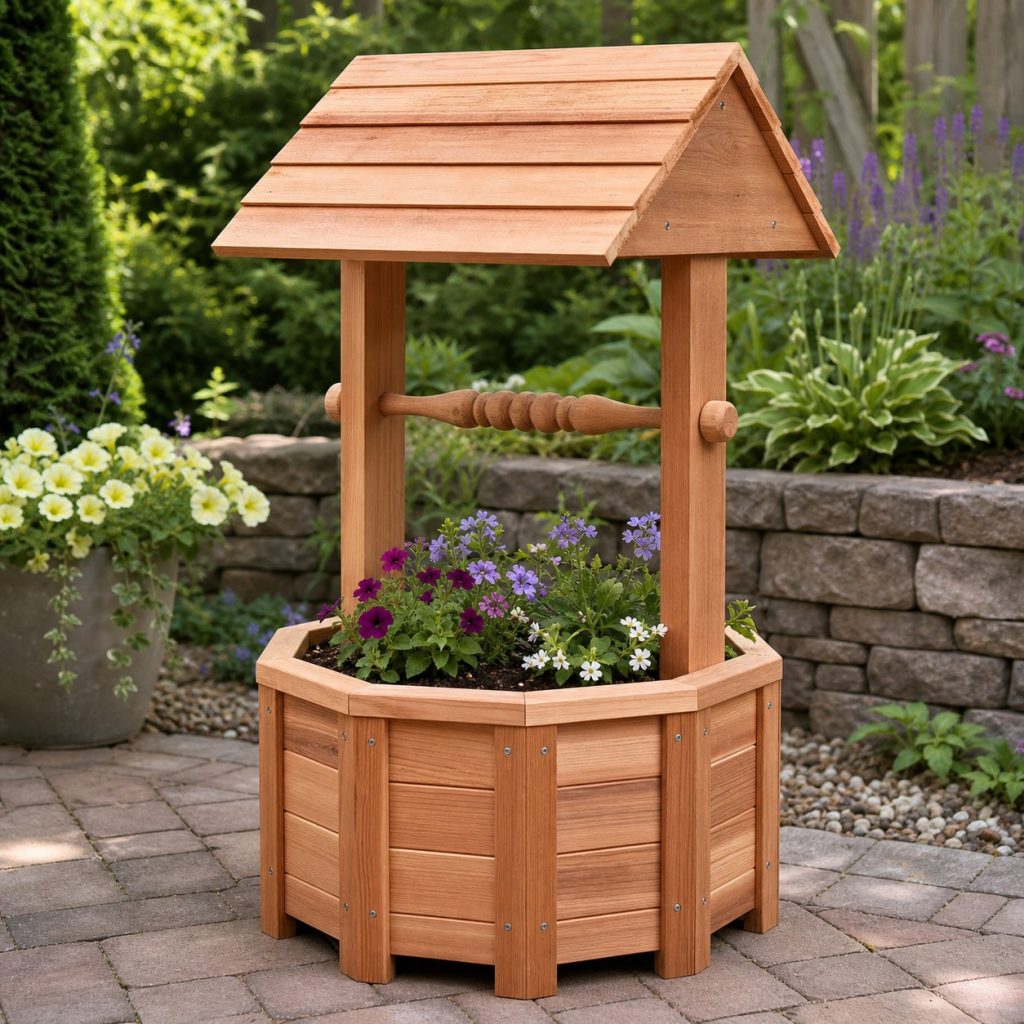
An octagonal base creates the familiar round appearance from straight boards. Make a full-size layout, cut matching segments with consistent angles, and fasten them to interior rings or frames. The base should remain a shallow closed planter, not an open barrel over a hole.
Compact Square Patio Version
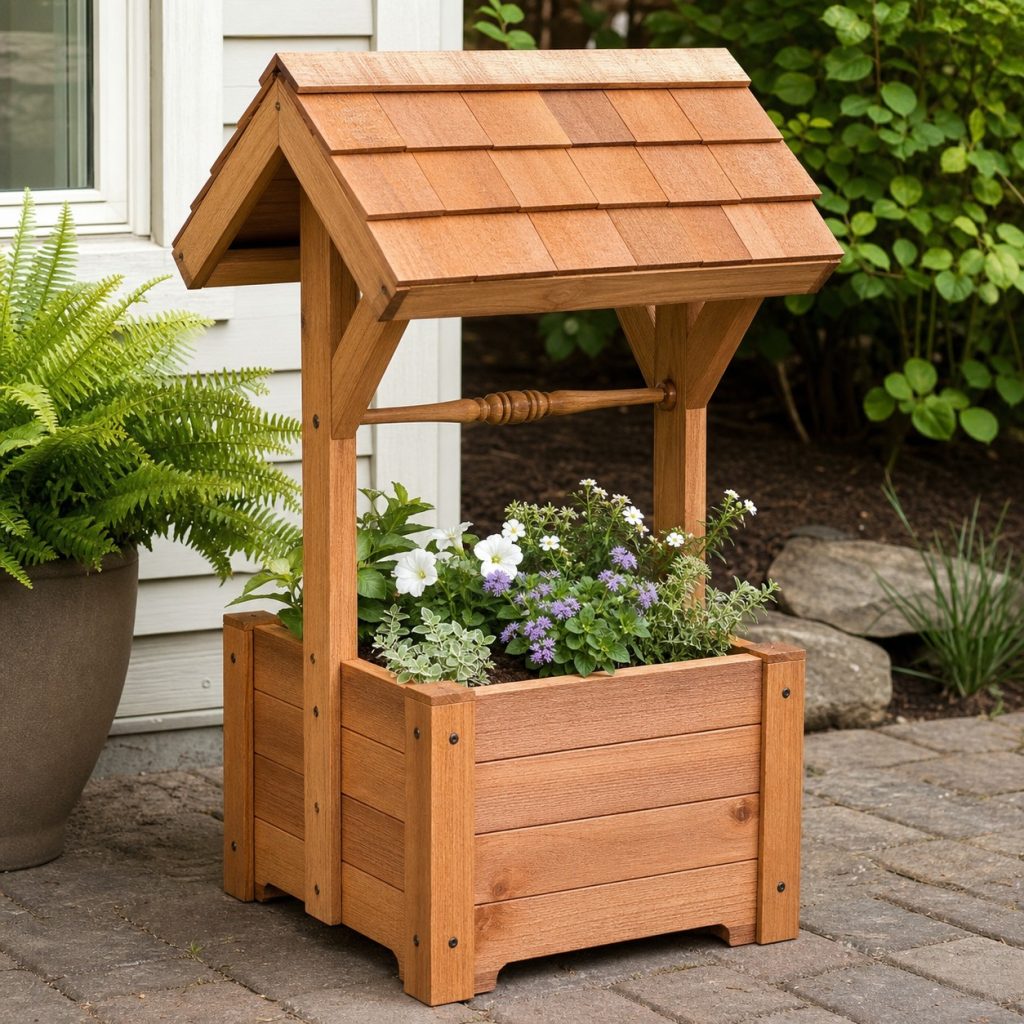
A square planter simplifies cuts and fits a small patio. Build the flower box with structural corners, attach two uprights outside the liner, and keep the roof proportional and light. Check that the finished unit cannot block a path or tip in wind.
Dry-Fit the Angled Base
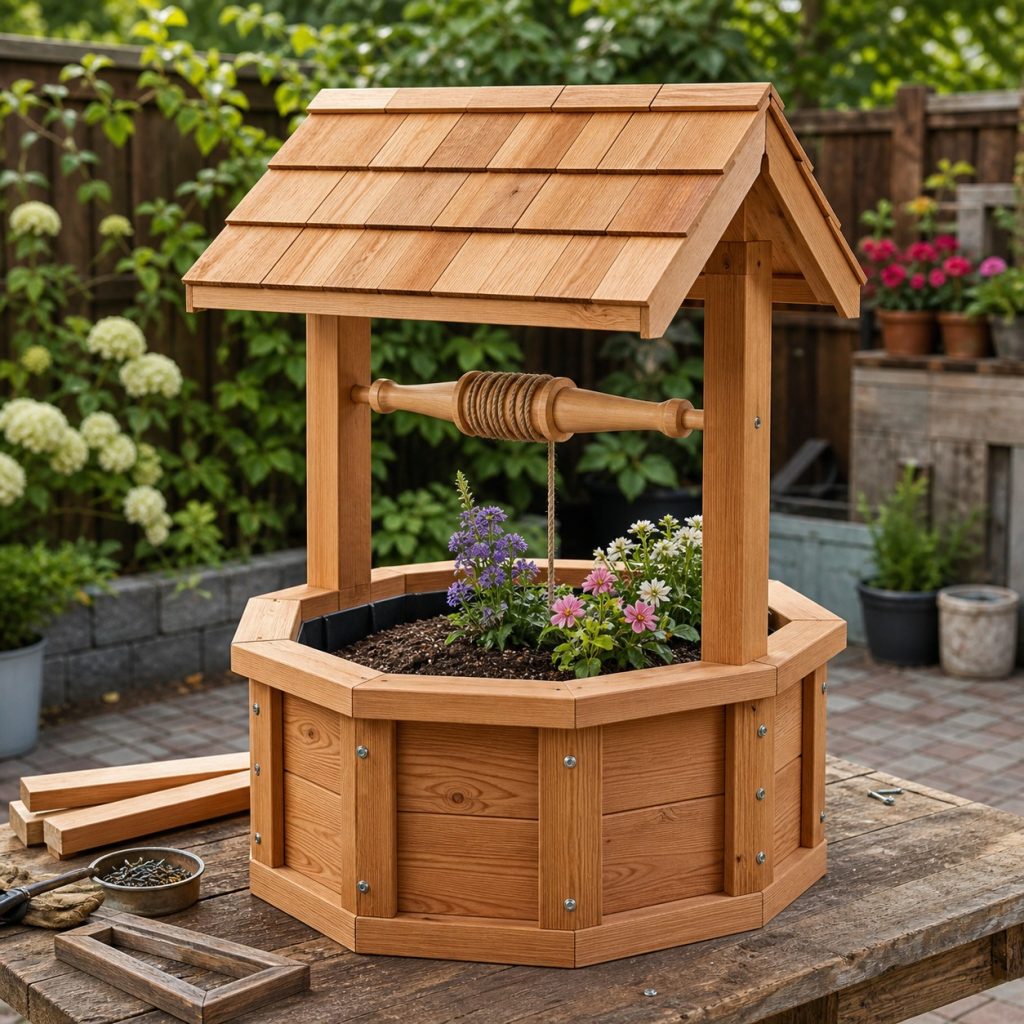
Use a stop block to make all wall segments equal, then dry-fit the polygon around its support ring. Small angle errors multiply around eight sides, so adjust the setup rather than forcing the final joint. Add a supported raised floor and clear drainage openings.
Brace the Uprights and Roof Frame
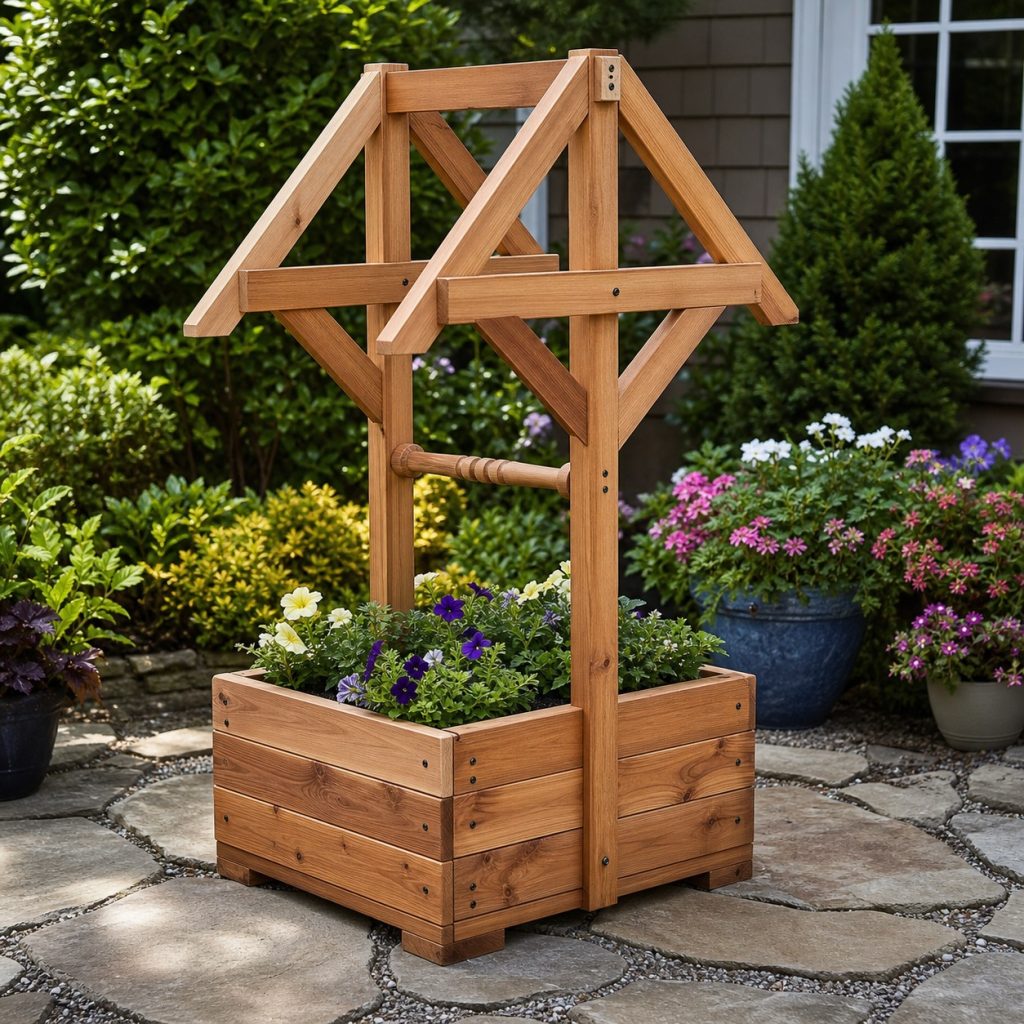
Tie both uprights into the structural planter frame, connect them with a ridge or header, and add small braces before roofing. Do not rely on thin wall boards to hold the roof. Keep posts outside the liner so planting moisture does not surround their ends.
Build a Weather-Shedding Roof
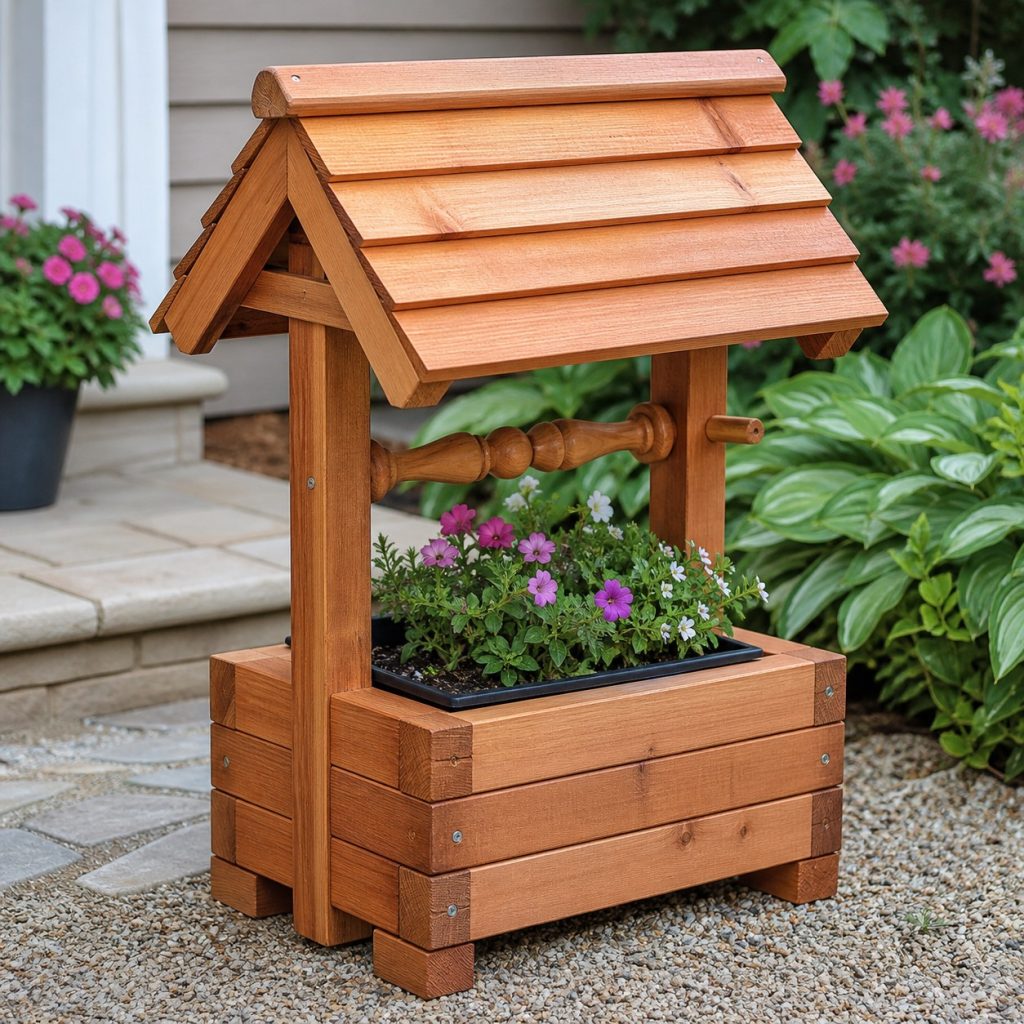
Overlapping cedar slats create a light roof when each course sheds onto the next. Provide overhang, cap the ridge, predrill near slat ends, and protect every cut. Keep the roof small enough that wind does not overpower the planter base.
Use a Decorative Spindle Only
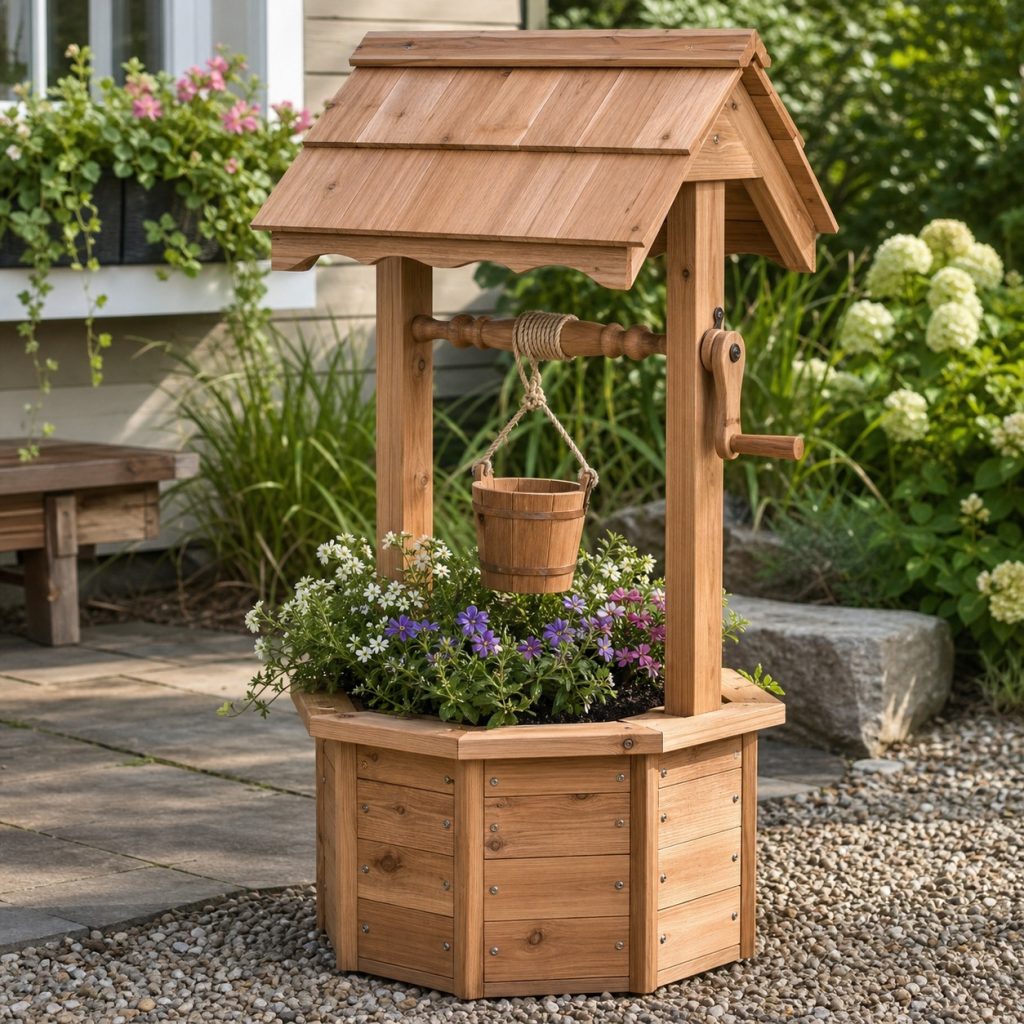
A wood dowel or spindle can complete the look without carrying a heavy bucket. Secure the handle, prevent pinch points, and keep rope loops short and inaccessible. Do not use the decoration to lift water, people, soil, or other loads.
Install a Removable Drained Liner
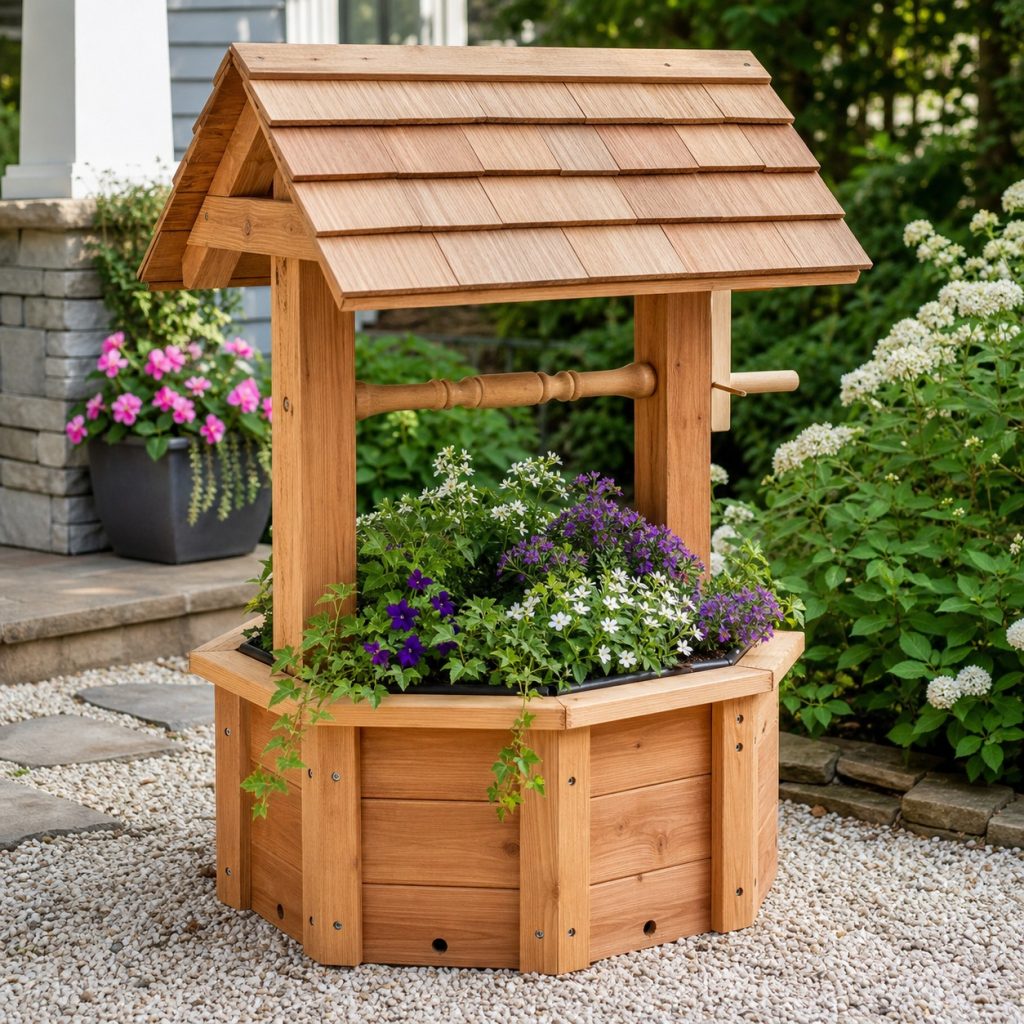
A separate insert keeps potting mix in a manageable container and protects the decorative shell. Support it above an open drain path, leave lift points for seasonal removal, and ensure overflow cannot collect inside the wooden base. Use a lightweight container mix.
Raise and Maintain the Base
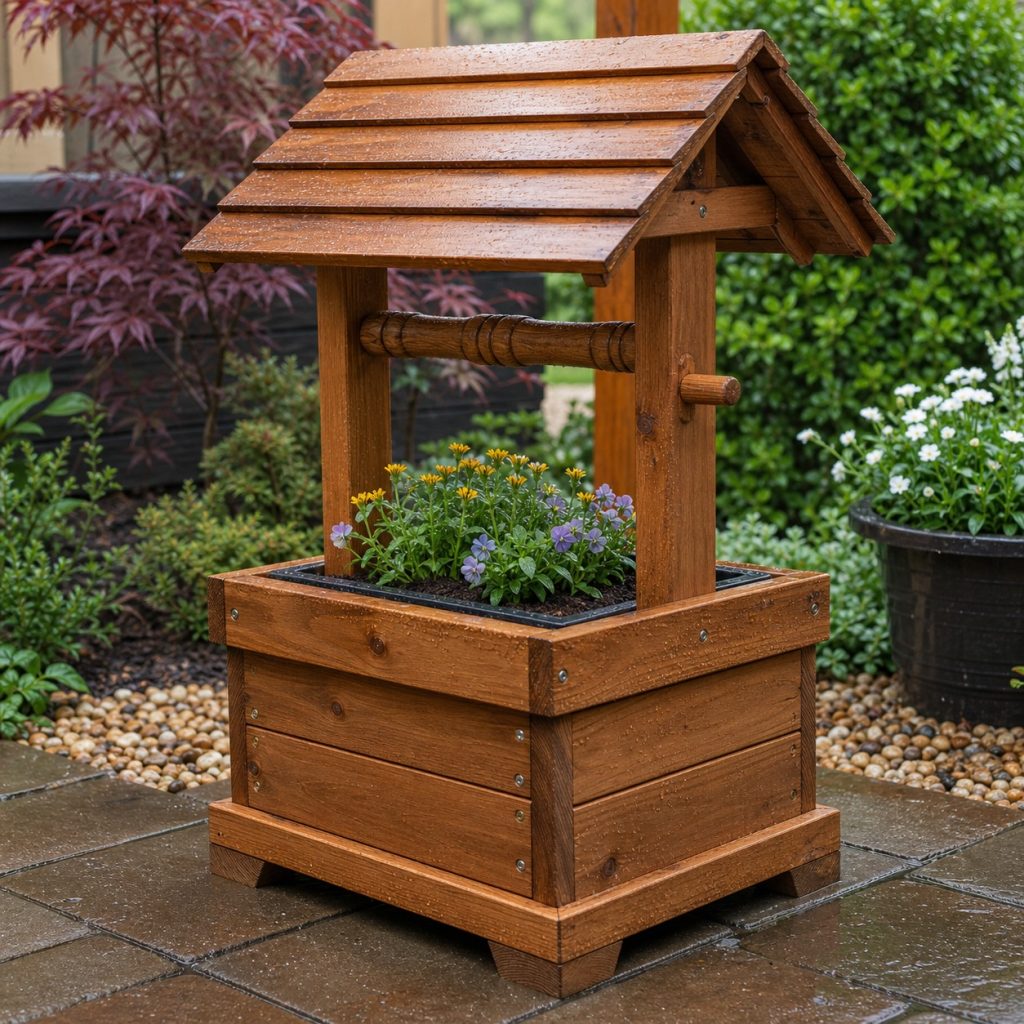
Set the planter on pavers, gravel, or raised feet so air reaches the bottom. After rain, inspect roof joints, upright connections, drains, finish, and the decorative spindle. Recoat dry wood and replace failed trim before moisture reaches the main frame.
Planning checklist
- Use a closed shallow planter base with no accessible shaft or hole.
- Tie roof uprights into structural frames outside the wet liner.
- Keep the roof lightweight, braced, and proportionate to the base.
- Make the spindle and bucket decorative and prevent pinch or loop hazards.
- Provide removable planting, free drainage, raised feet, and regular inspection.
These concepts are general planning guidance, not engineering drawings or tested load-rated plans. Verify dimensions, lumber grade and treatment, structural loads, foundations, fasteners, coatings, utility locations, accessibility, wildlife guidance, property rules, permits, and local building requirements for the actual site. Use qualified local professionals for structural, fall, swing, bridge, retaining, electrical, plumbing, or water hazards.
Frequently asked questions
Can a decorative wishing well hold water?
This design should not. Use it as a drained planter and keep the base closed; actual water features require different waterproofing, electrical, sanitation, and safety planning.
Does the bucket need to move?
No. A fixed or limited decorative spindle avoids pinch points and the false impression that the structure can lift a load.
How do you keep the planter from tipping?
Use a broad weighted base, modest roof, tied frame, drained level footing, and site-specific anchoring where wind exposure requires it.