Project planning guide
Before you build
Use the reference image and planning notes as a starting point. Confirm dimensions, loads, materials, local codes, and site conditions before purchasing or cutting.
- Garden Projects
- 8 reference images
- Print-friendly guide
A firewood shed should keep rain and ground moisture away while leaving the stack open to moving air. It also needs stable footing, a restrained stack, safe access, pest awareness, and appropriate distance from buildings, fuel tanks, ignition sources, property lines, and wildfire exposures.
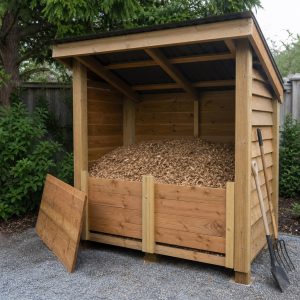
Open-Front Firewood Shed
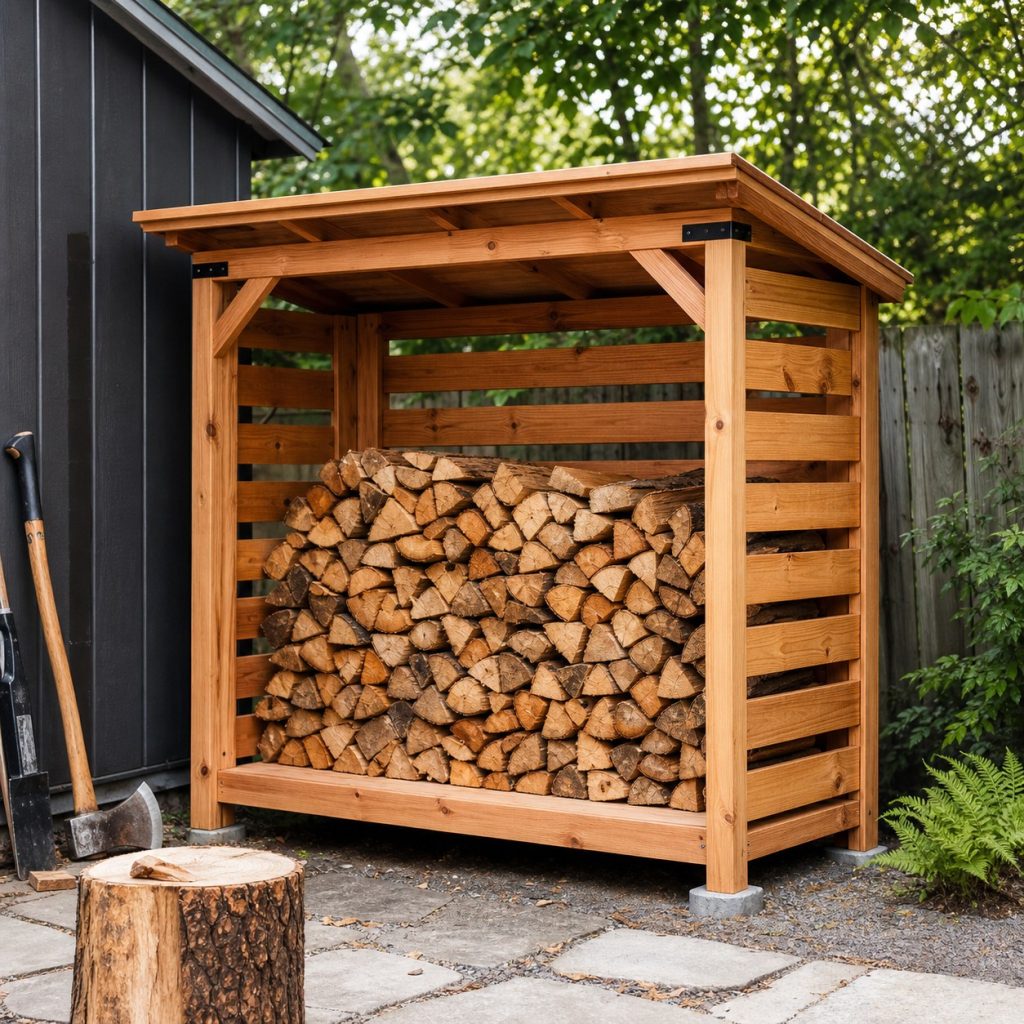
An open front simplifies loading and promotes drying. Use side and rear slats to restrain the stack without blocking air, keep the top course below the roof structure, and orient the opening away from prevailing rain when site conditions permit.
Three-Bay Sorting Shed
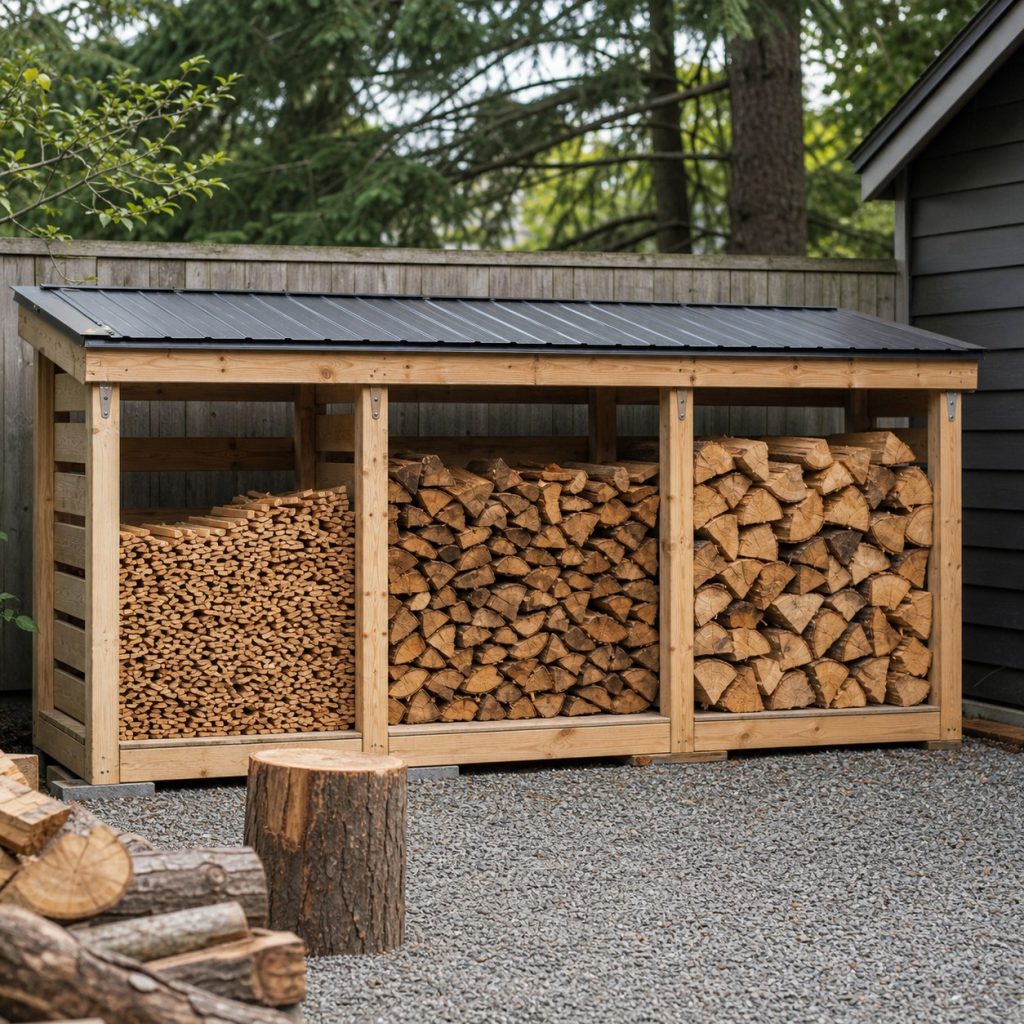
Separate bays can organize kindling, ready-to-burn wood, and newer material. Structural dividers help restrain each shorter stack, but each bay still needs an open air path, raised base, and clear label-free workflow that avoids mixing treated scrap with firewood.
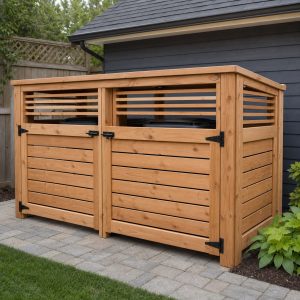
Compact Patio Wood Store
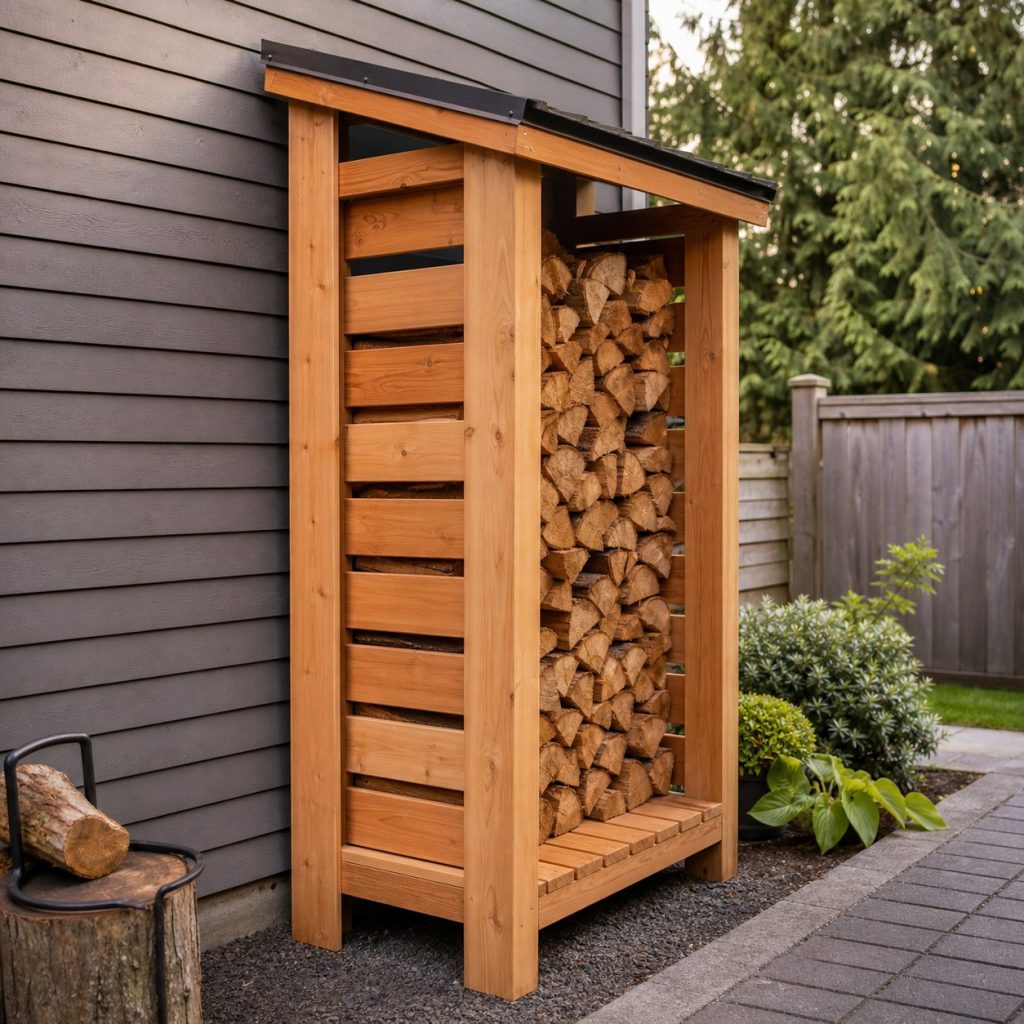
A small store can hold a limited supply near an outdoor living area only when local fire and pest guidance permits it. Keep it clear of heat sources and exits, limit stack height, and maintain airflow beneath and behind the logs.
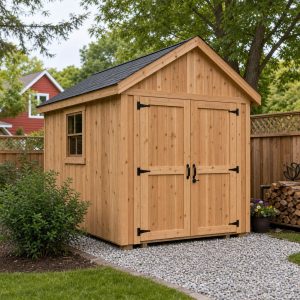
Freestanding Lean-To Roof Shed
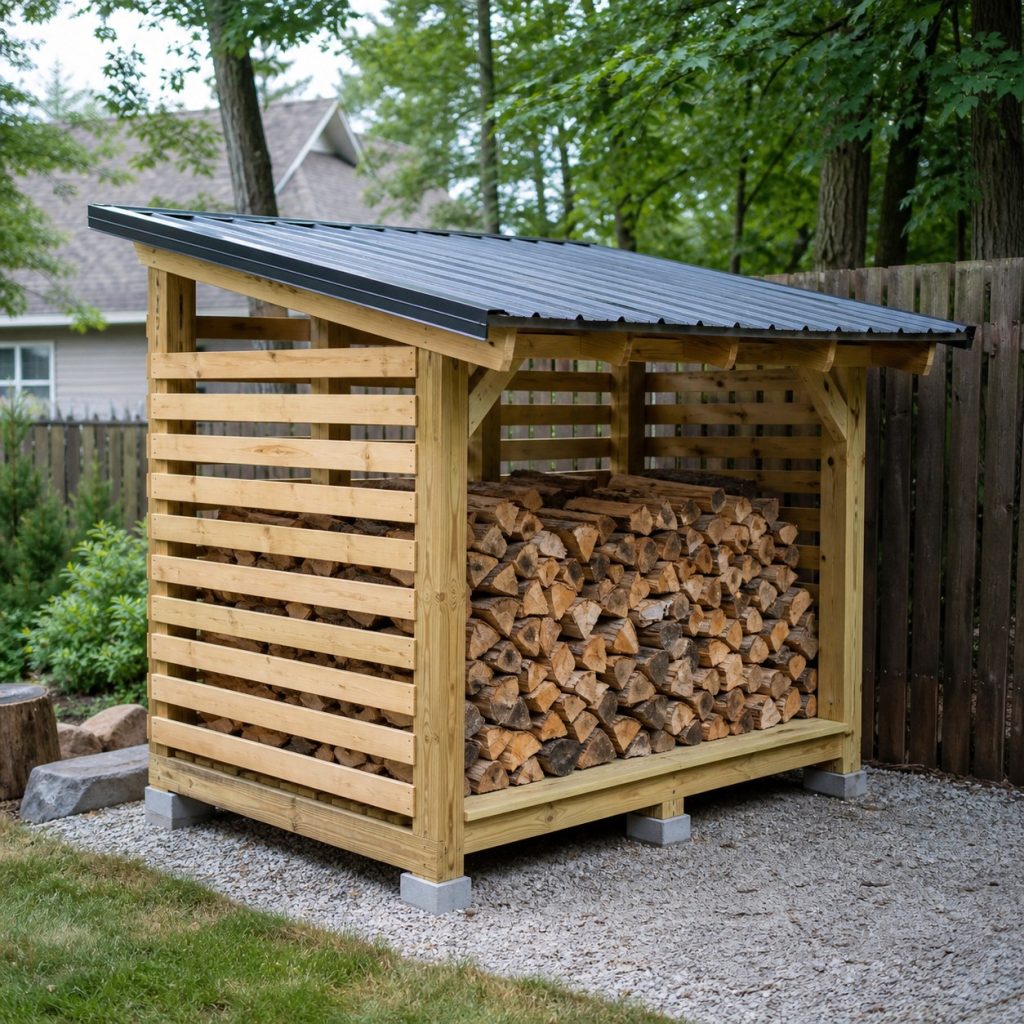
A single-slope roof directs runoff to one side. Keep the structure independent from the house unless a professional design and local rules allow attachment, use adequate overhang, and discharge water away from both the wood stack and foundation.
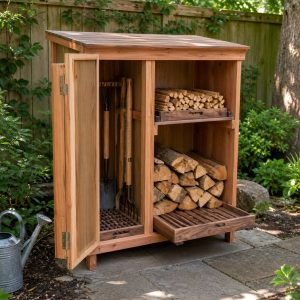
Covered Kindling Cabinet
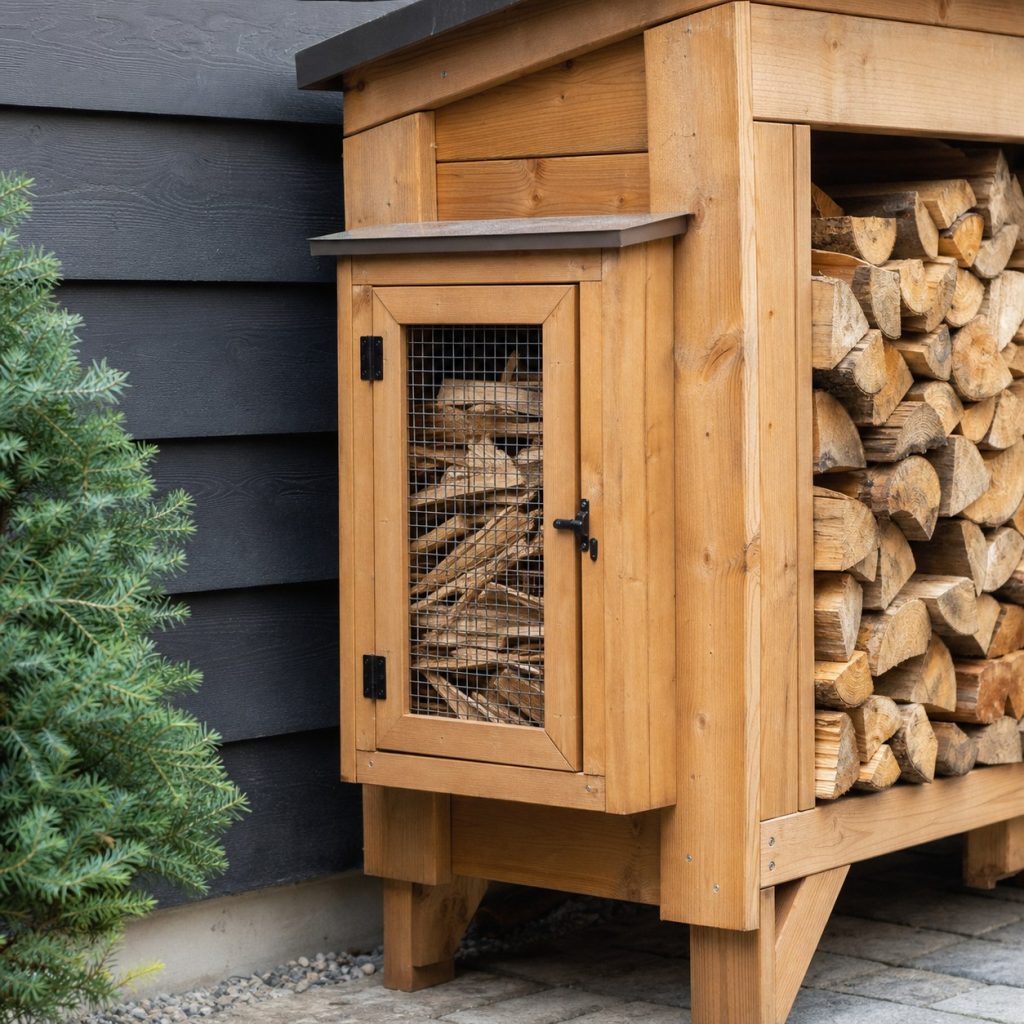
A protected side compartment can keep kindling organized without sealing it in a damp box. Use a vented door, positive latch, raised slatted floor, and smooth dividers. Never store flammable liquids, ashes, or ignition equipment with the wood.
Build a Raised Drainable Base
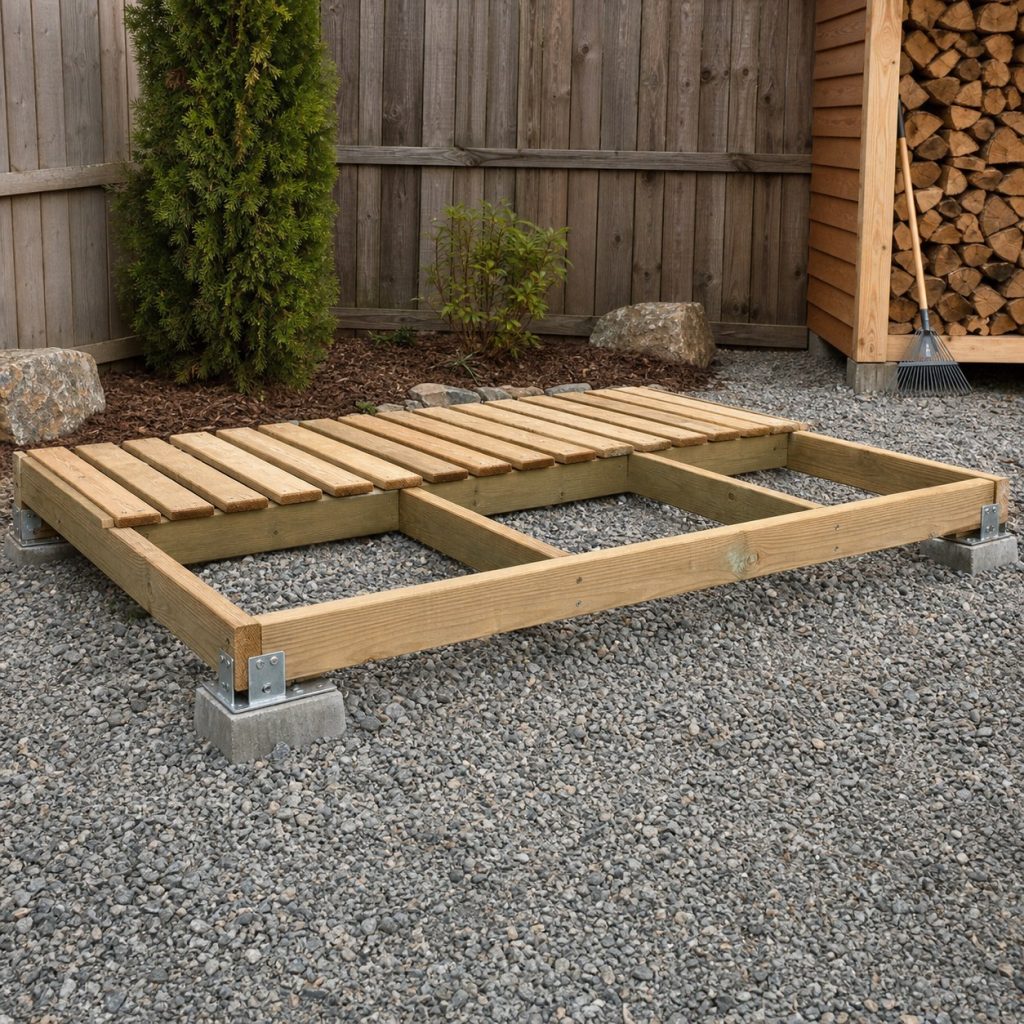
Prepare a stable drained pad, then build a level base that supports concentrated log weight and allows air below. Use exposure-rated material and verified spans, brace the frame square, and anchor it for local wind before stacking.
Frame Slatted Walls and Roof
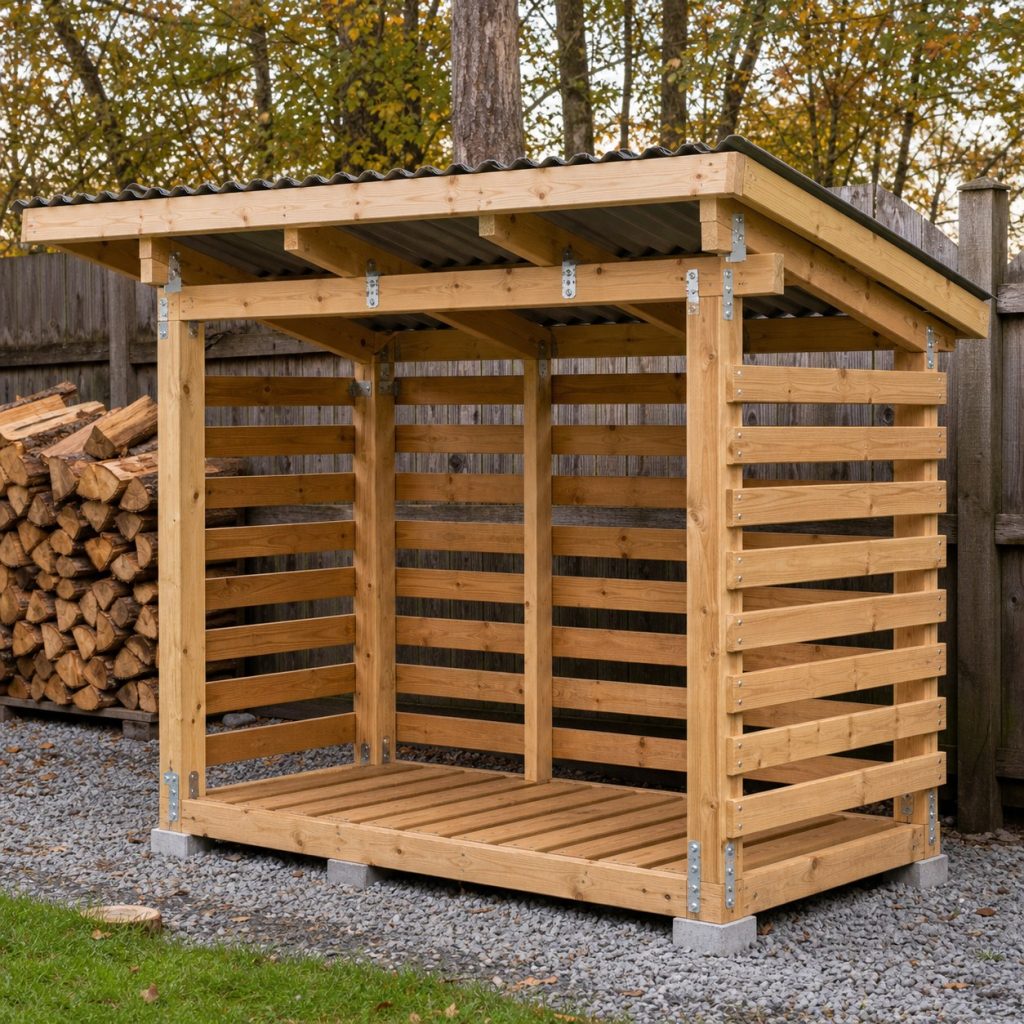
Wall slats should retain irregular logs while leaving ventilation and safe hand clearance. Install roof framing and panels to their approved spans and fastener schedule, protect cut edges, and keep sharp roofing and connector edges out of loading paths.
Rotate Stock and Inspect
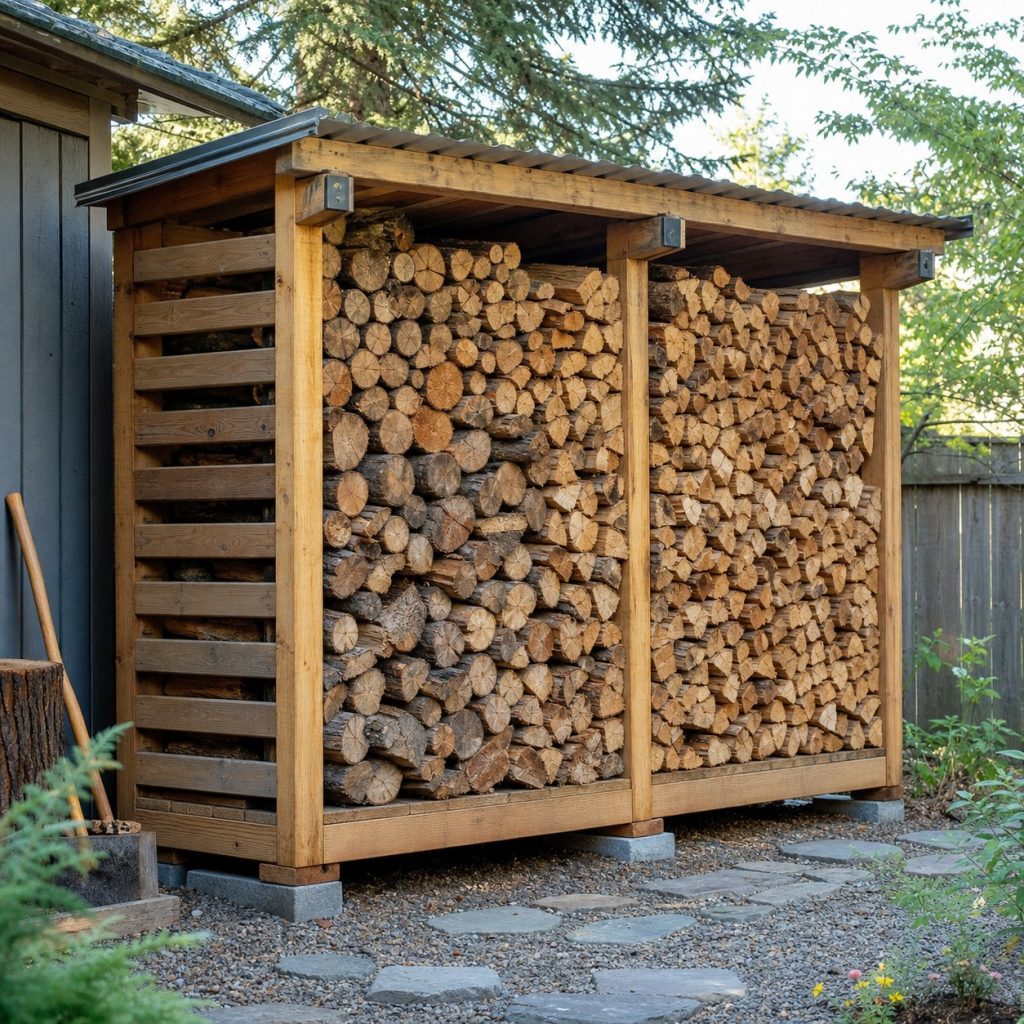
Use older dry stock first and avoid moving firewood across regulated areas. Inspect settlement, anchors, roof leaks, leaning stacks, insects, rodents, decay, and encroaching vegetation. Restack safely before movement becomes a collapse hazard.
Planning checklist
- Confirm fire, pest, property, and local firewood-movement rules.
- Choose a drained site with required building and fuel clearances.
- Raise and restrain a shallow ventilated stack.
- Use a braced anchored frame and rain-shedding roof.
- Never burn treated scrap or apply pesticide to firewood.
These concepts and generated images are general planning inspiration, not measured drawings, structural attachment details, pond or electrical designs, engineered plans, or tested load-rated designs. Verify dimensions, lumber grade and treatment, structural and dynamic loads, fasteners, coatings, accessibility, utility locations, water and wildlife guidance, property rules, permits, and local building requirements for the actual project. Use qualified professionals where structural, electrical, plumbing, drowning, fall, or entrapment hazards apply.
Frequently asked questions
Should a firewood shed be fully enclosed?
Usually the stack benefits from open airflow. Rain protection and ventilation matter more than sealing the wood inside a humid box.
Can firewood be stacked against a house?
Fire, pest, moisture, and local rules may require separation. Follow current local guidance and keep inspection access.
Should firewood be treated for insects?
Do not apply insecticide or pesticide to wood that will be burned. Follow local guidance on source, movement, seasoning, and disposal.