Project planning guide
Before you build
Use the reference image and planning notes as a starting point. Confirm dimensions, loads, materials, local codes, and site conditions before purchasing or cutting.
- Garden Projects
- 8 reference images
- Print-friendly guide
A boot scraper can stop mud at the garden entrance, but sharp edges, rocking frames, trapped debris, and awkward placement create new hazards. These concepts compare slat, brush, grate, and combined scraper arrangements.
Classic Wooden Slat Scraper
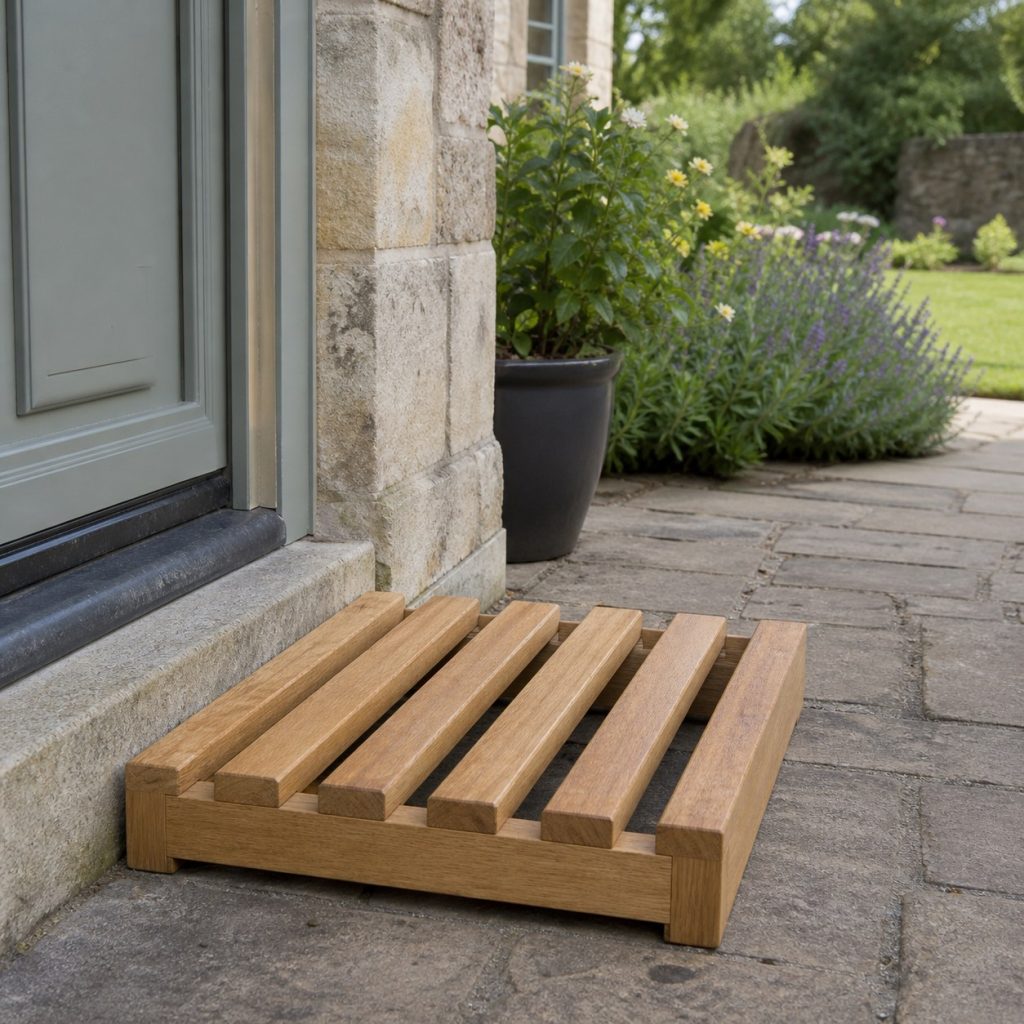
Blunt replaceable slats remove soft soil while wide feet keep the frame from rocking. Avoid sharp improvised metal, unstable loose frames, treated-material conflicts, and trip-prone placement; verify fasteners, drainage, footwear clearance, and accessibility at the actual entrance.
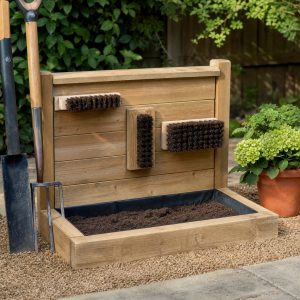
Three-Brush Boot Scraper
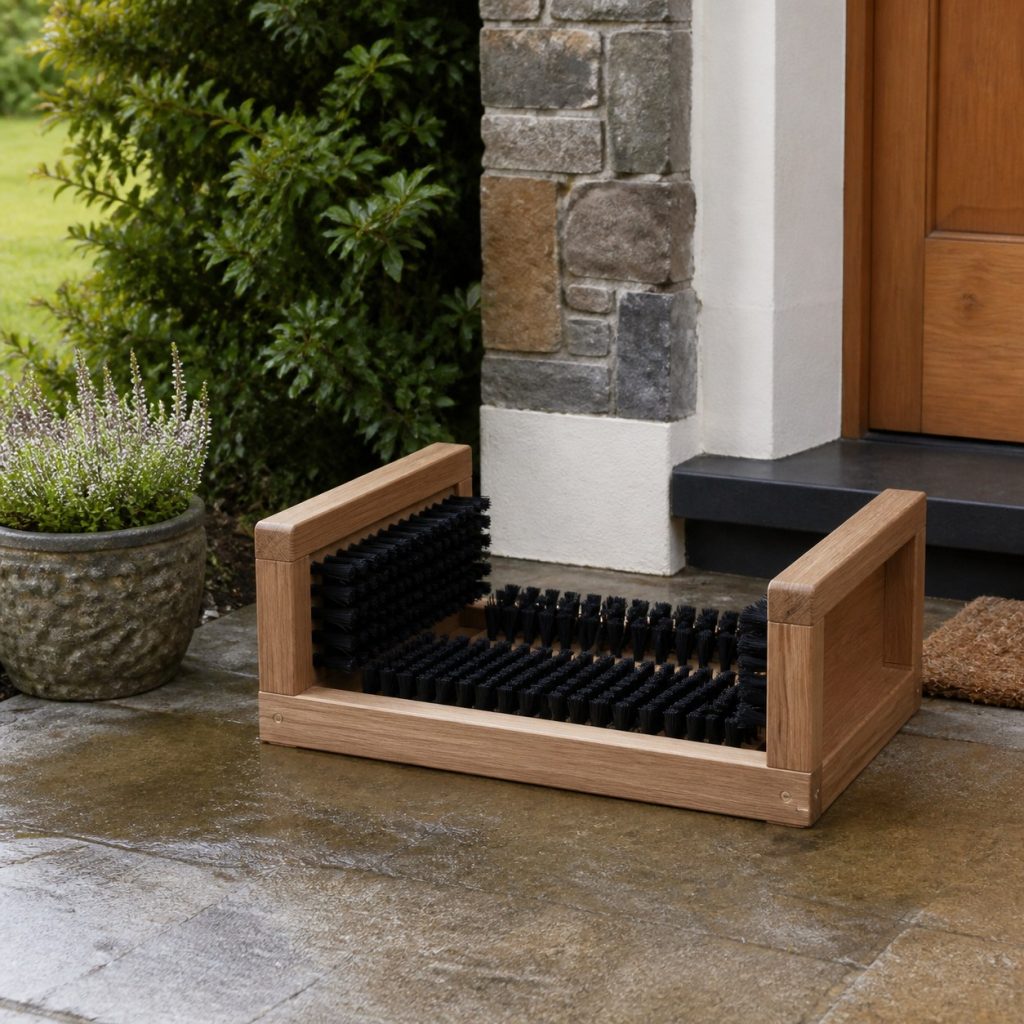
Purpose-made replaceable brushes clean the sole and sides without exposed sharp scraping edges.
Scraper With Handrail
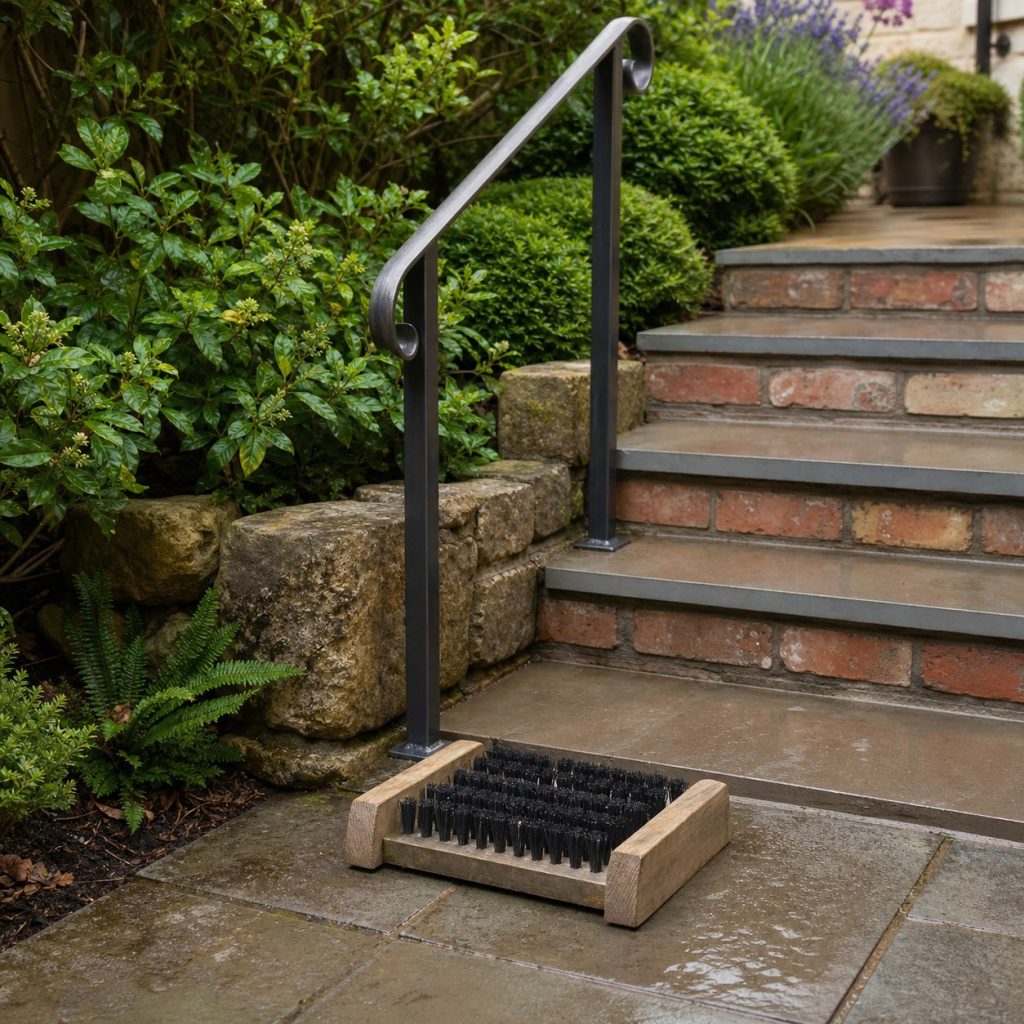
A separate secure hand support can improve balance when correctly designed and positioned.
Grate-Top Mud Scraper
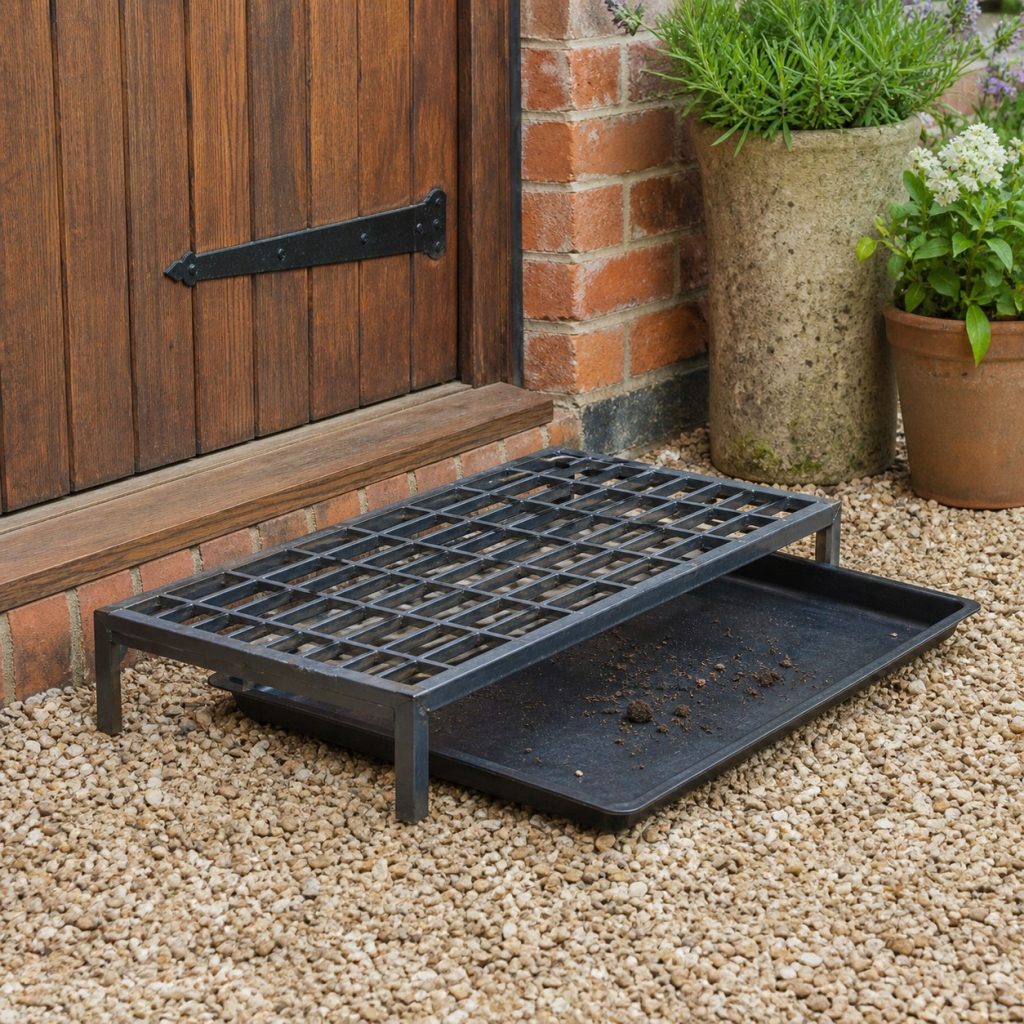
A purpose-made grate and removable tray contain debris while openings remain suitable for footwear.
Wall-Side Compact Scraper
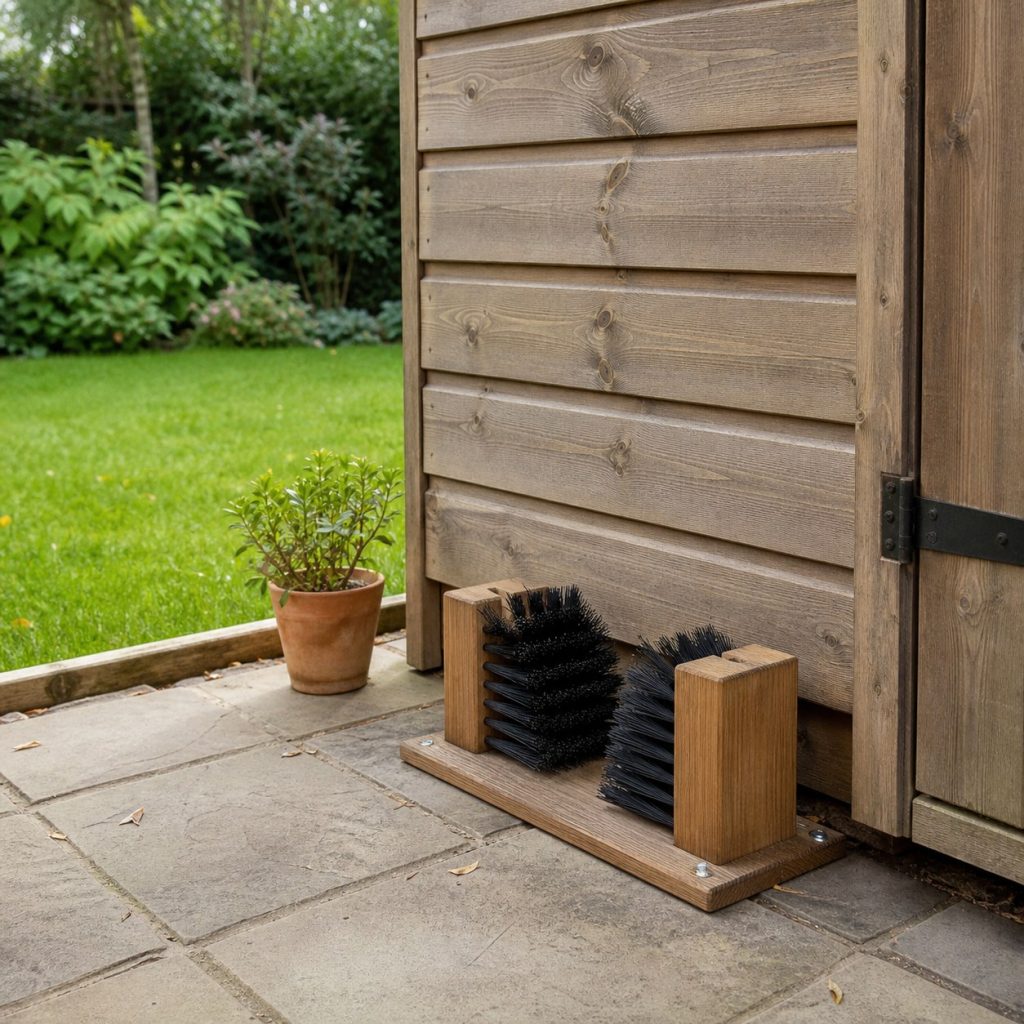
A compact fixed unit saves space when kept clear of siding, doors, drains, and the walking line.
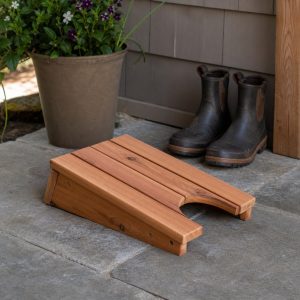
Scraper and Boot Jack
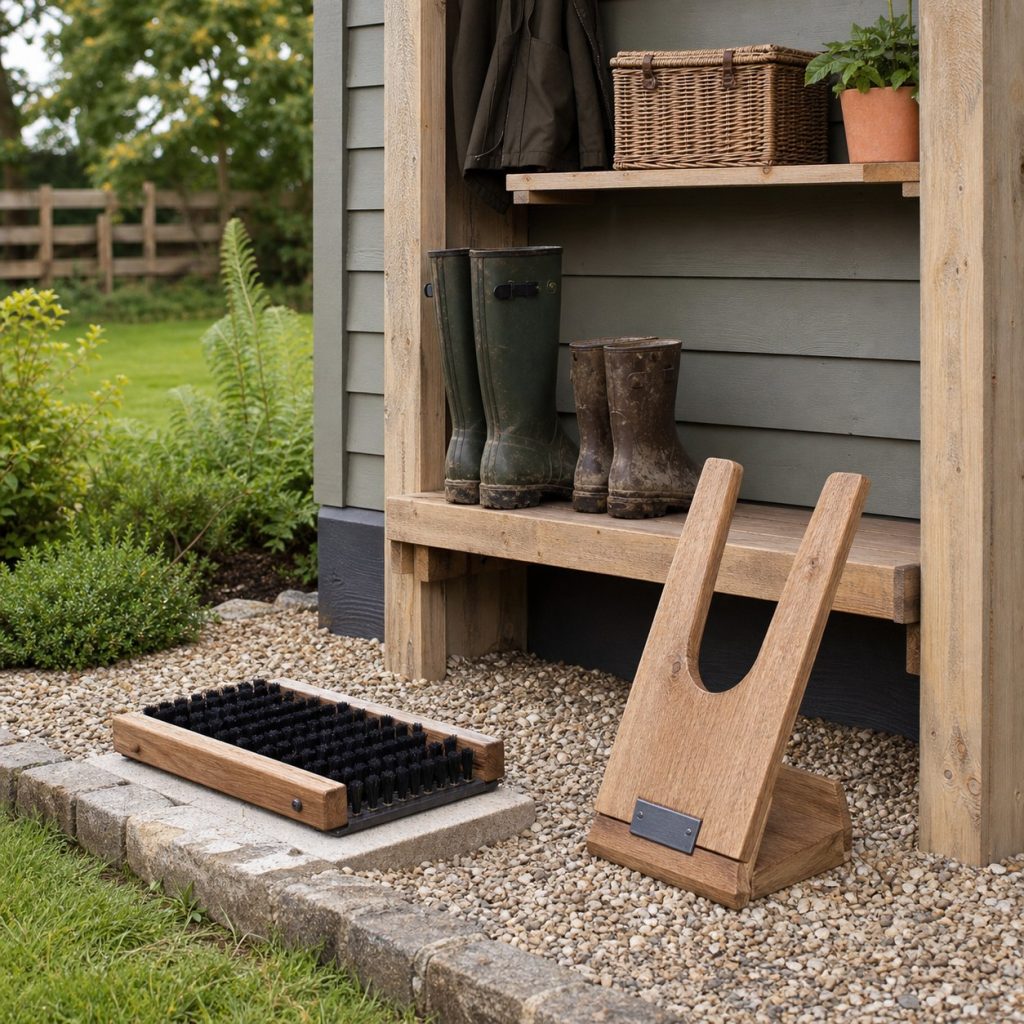
Separate functions keep scraping forces away from the boot jack and preserve stable footing.
Covered Entry Cleaning Station
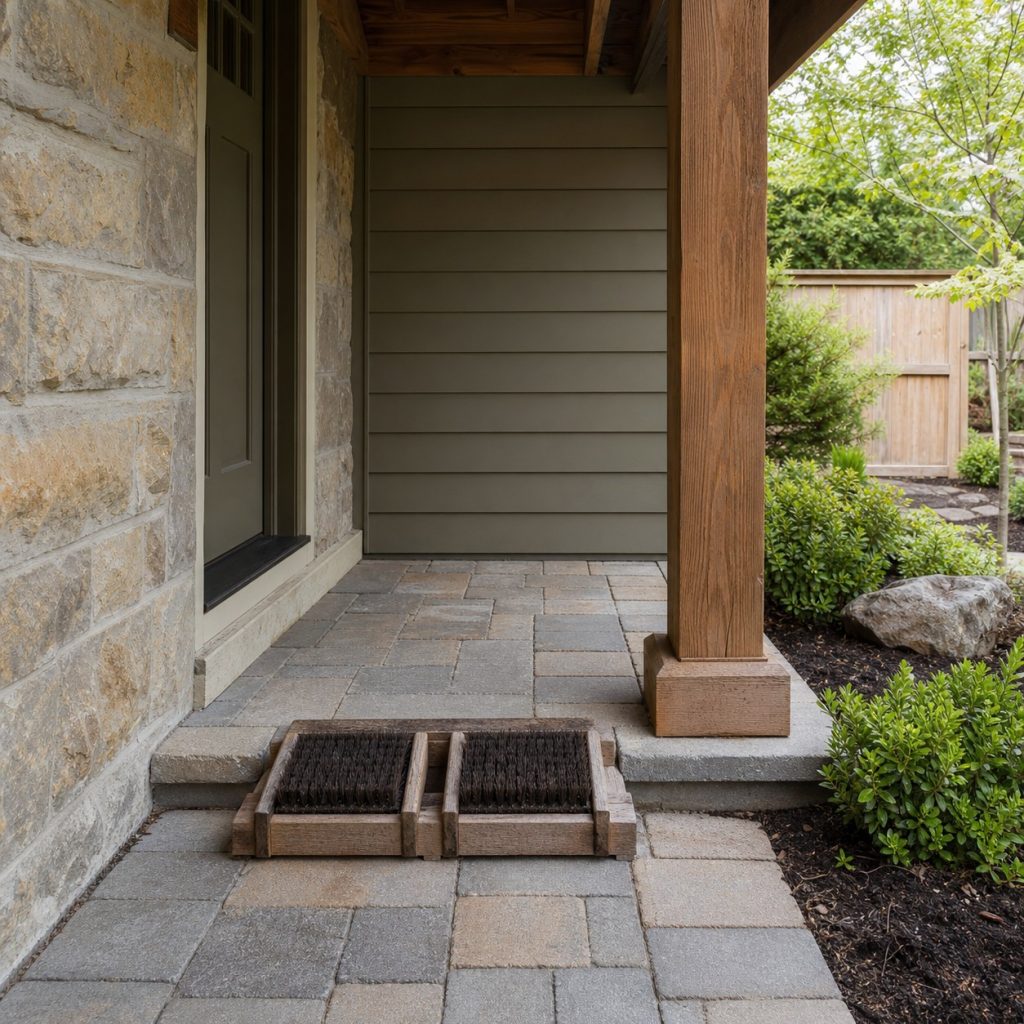
Shelter reduces saturated mud while a washable drained surface simplifies cleanup.
Drainage and Debris Cleanup
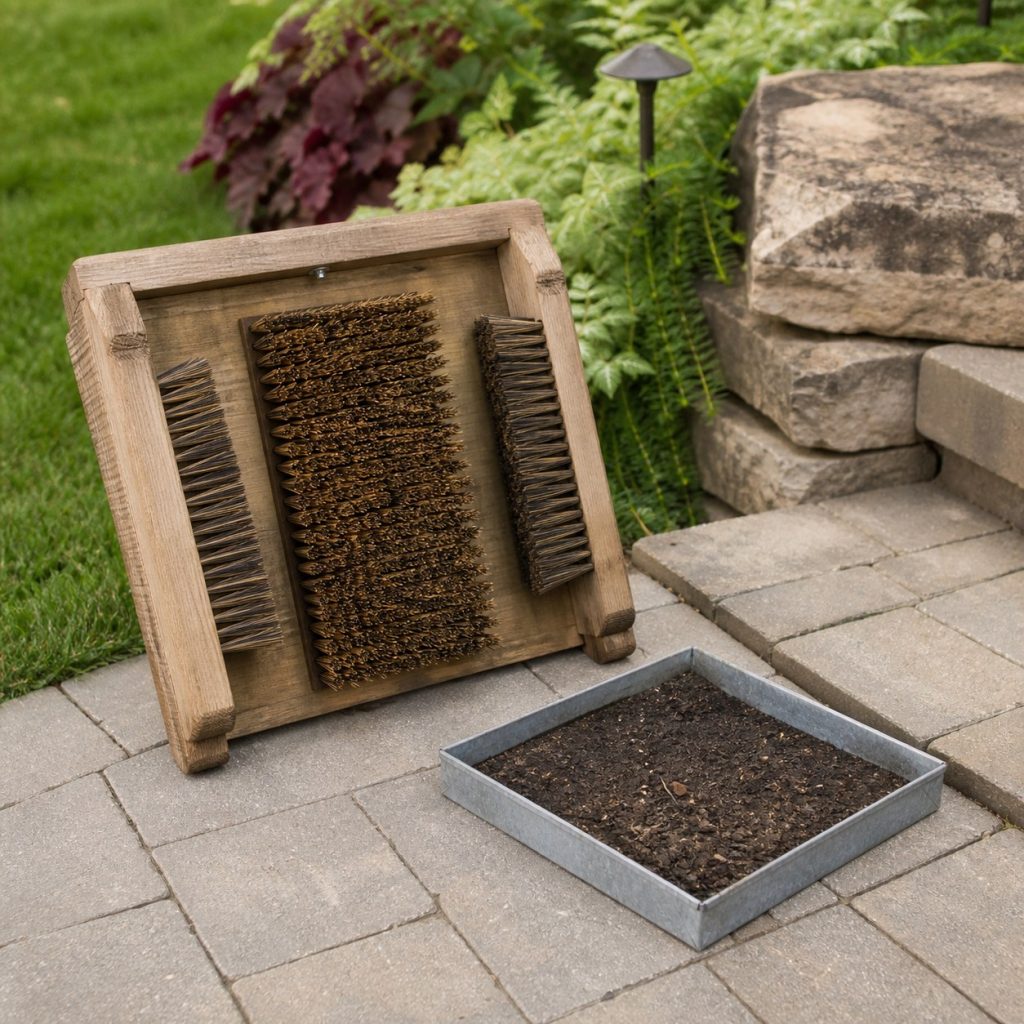
Open construction, removable parts, and corrosion-resistant fasteners make accumulated soil visible and easy to remove.
Planning checklist
- Use blunt edges or purpose-made brushes.
- Prevent rocking, sliding, and tipping.
- Keep clear of doors and accessible routes.
- Provide drainage and removable debris collection.
- Inspect splinters, corrosion, fasteners, and brush wear.
These concepts and generated images are general planning inspiration, not measured drawings, drainage calculations, equipment-clearance instructions, accessibility designs, engineered plans, or tested load-rated structures. Verify dimensions, soil and drainage, roots and utilities, lumber and hardware, structural and wind loads, equipment manuals, service access, electrical and plumbing work, water and chemical safety, accessibility, permits, and local requirements for the actual project. Use qualified arborists, engineers, HVAC and pool technicians, electricians, plumbers, drainage professionals, and other licensed trades where those hazards or systems apply.
Frequently asked questions
Should a boot scraper be fixed down?
Fixing or a broad nonslip base may be appropriate depending on the surface. The unit must not rock, slide, or become a trip hazard.
Are metal scraping bars safe?
Use only purpose-designed blunt profiles with smooth protected edges. Avoid improvised sharp plate or exposed cut metal.
Where should it be placed?
Near the dirty entrance but outside the door swing, main circulation line, steps, ramps, and required accessible route.