Project planning guide
Before you build
Use the reference image and planning notes as a starting point. Confirm dimensions, loads, materials, local codes, and site conditions before purchasing or cutting.
- Garden Projects
- 8 reference images
- Print-friendly guide
A plant dolly is a low mobile woodworking base for one container, but wet soil, ceramic pots, and moving loads can exceed small caster ratings quickly. These designs keep the load centered, protect drainage, and make wheel hardware visible for inspection.
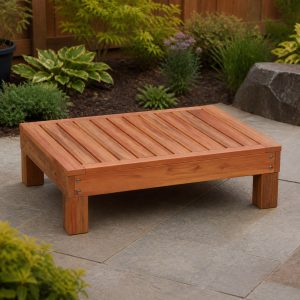
Square Slatted Plant Dolly
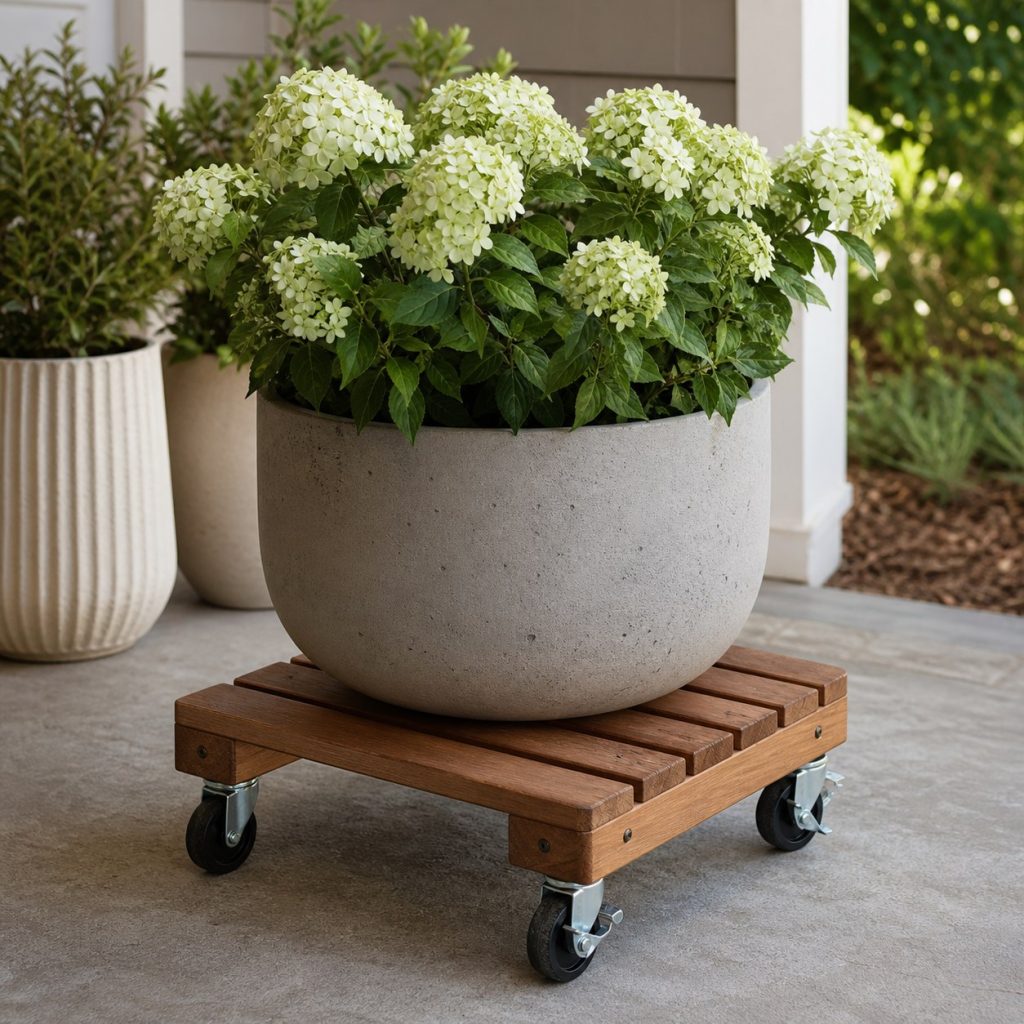
Slats support drainage when the pot base bears across enough structural members. Generated images are not load-rated equipment; verify caster, fastener, panel, and floor capacity, pot stability, drainage, thresholds, slopes, pinch points, and manual-handling limits.
Round Wooden Plant Dolly
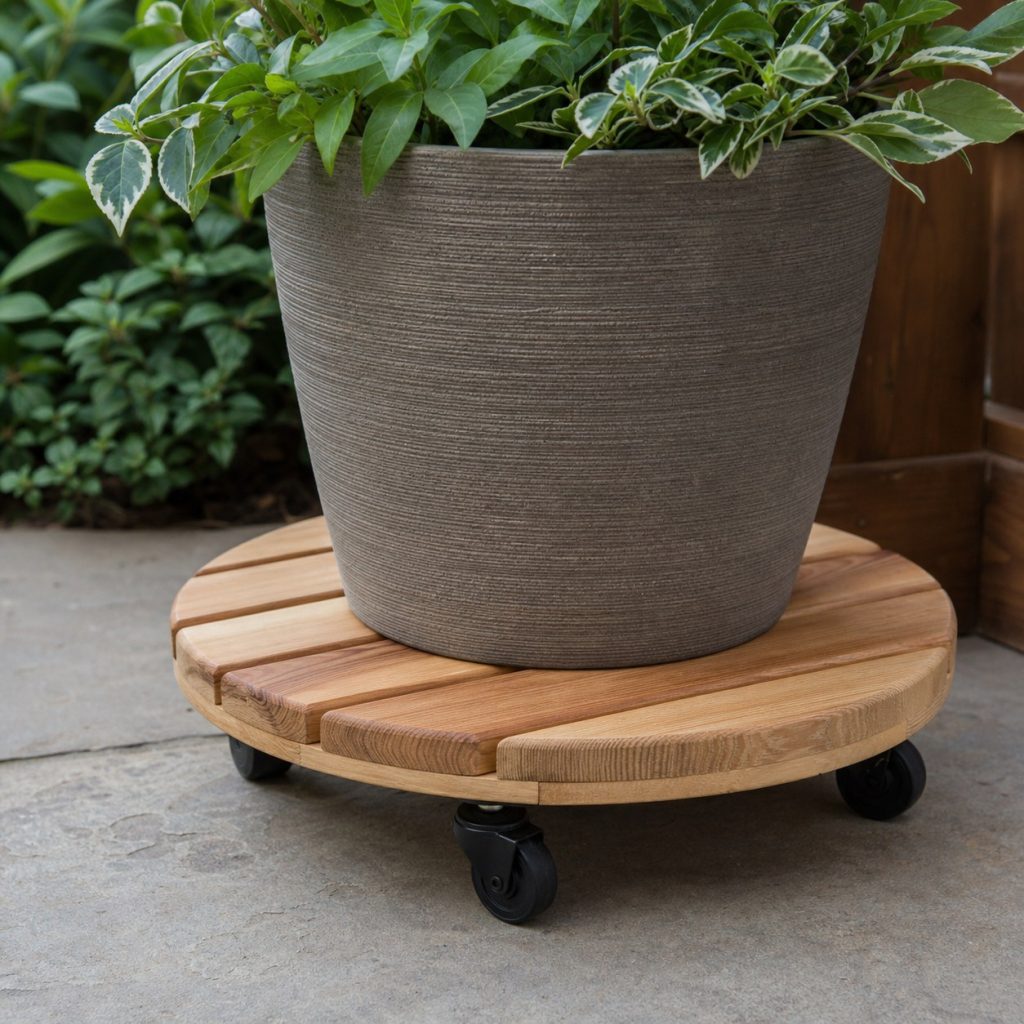
A round deck needs a reinforced underside that keeps caster plates away from weak edges.
Cross-Frame Pot Dolly
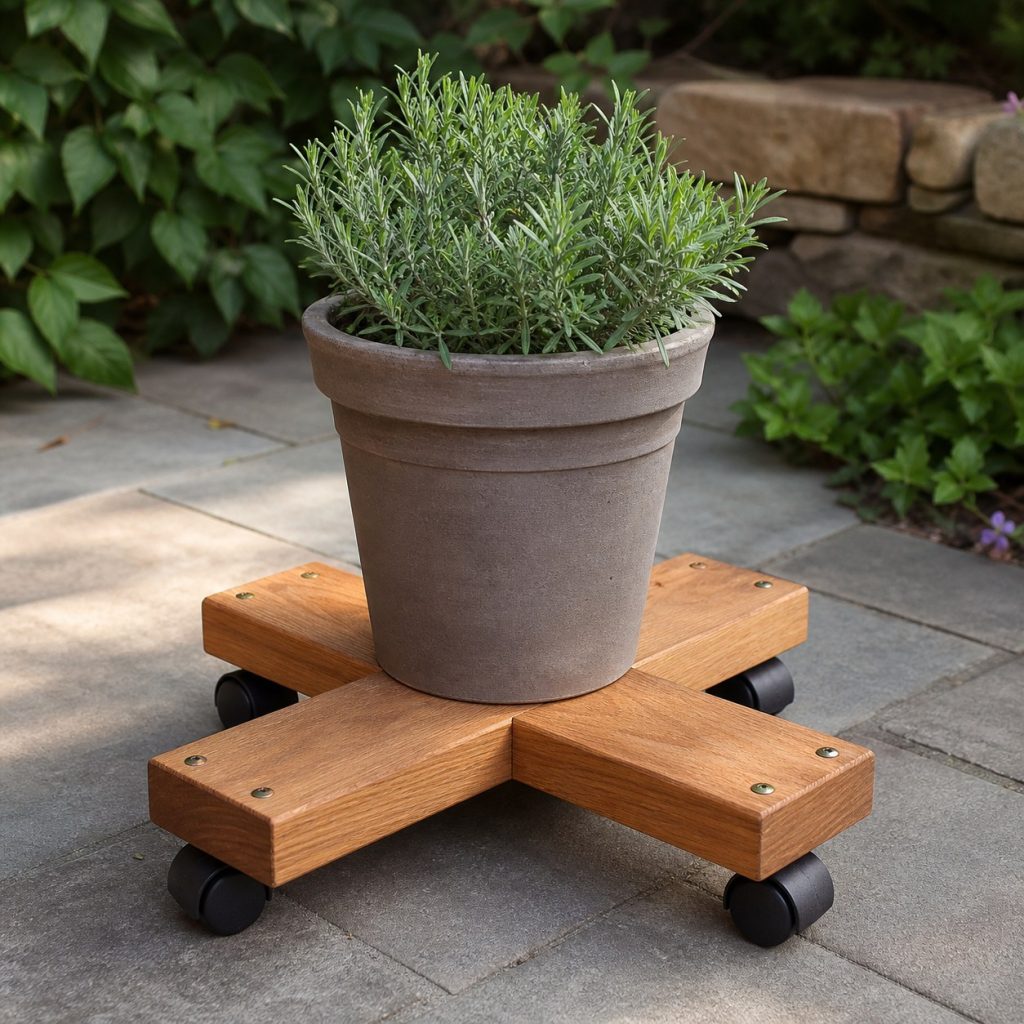
A half-lap cross frame transfers load directly while keeping the pot stable and centered.
Octagonal Plant Caddy
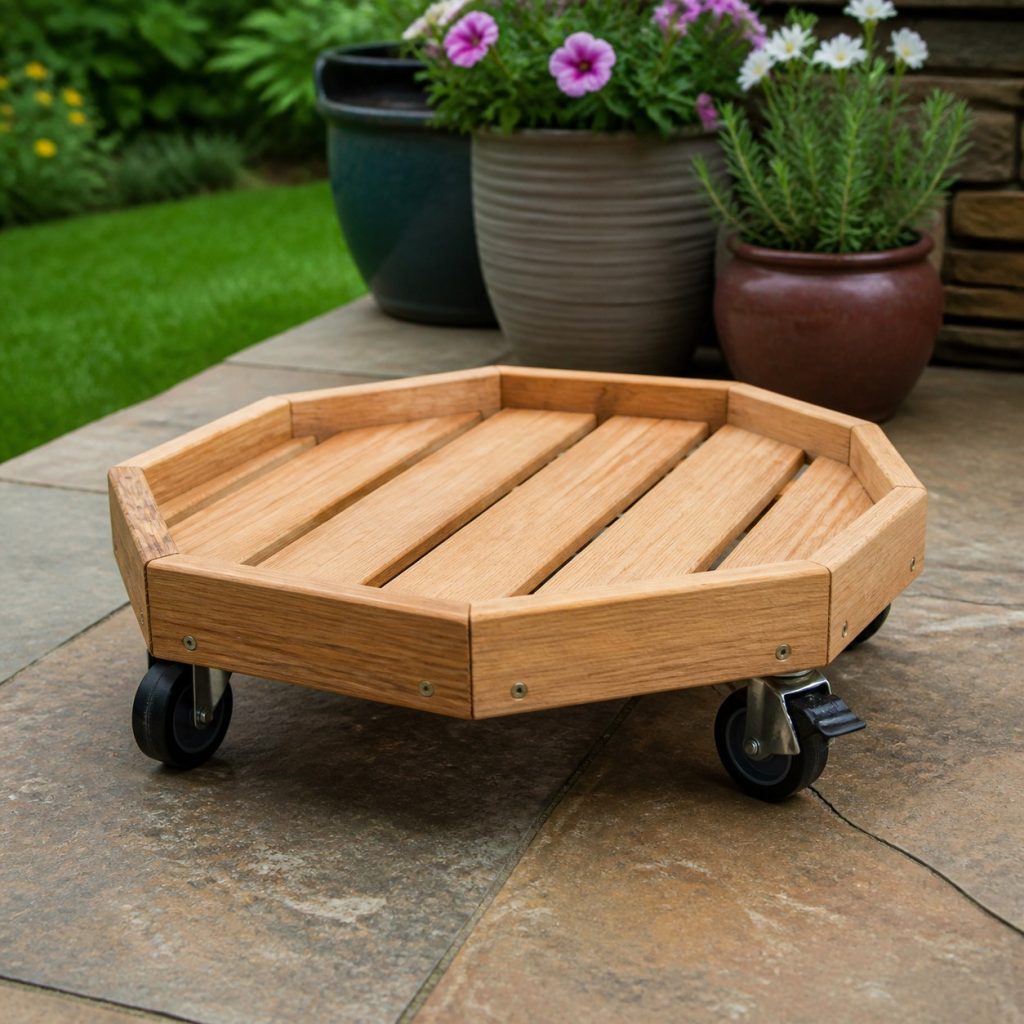
A low rim can locate the pot without trapping water or interfering with drainage.
Hidden-Caster Plant Dolly
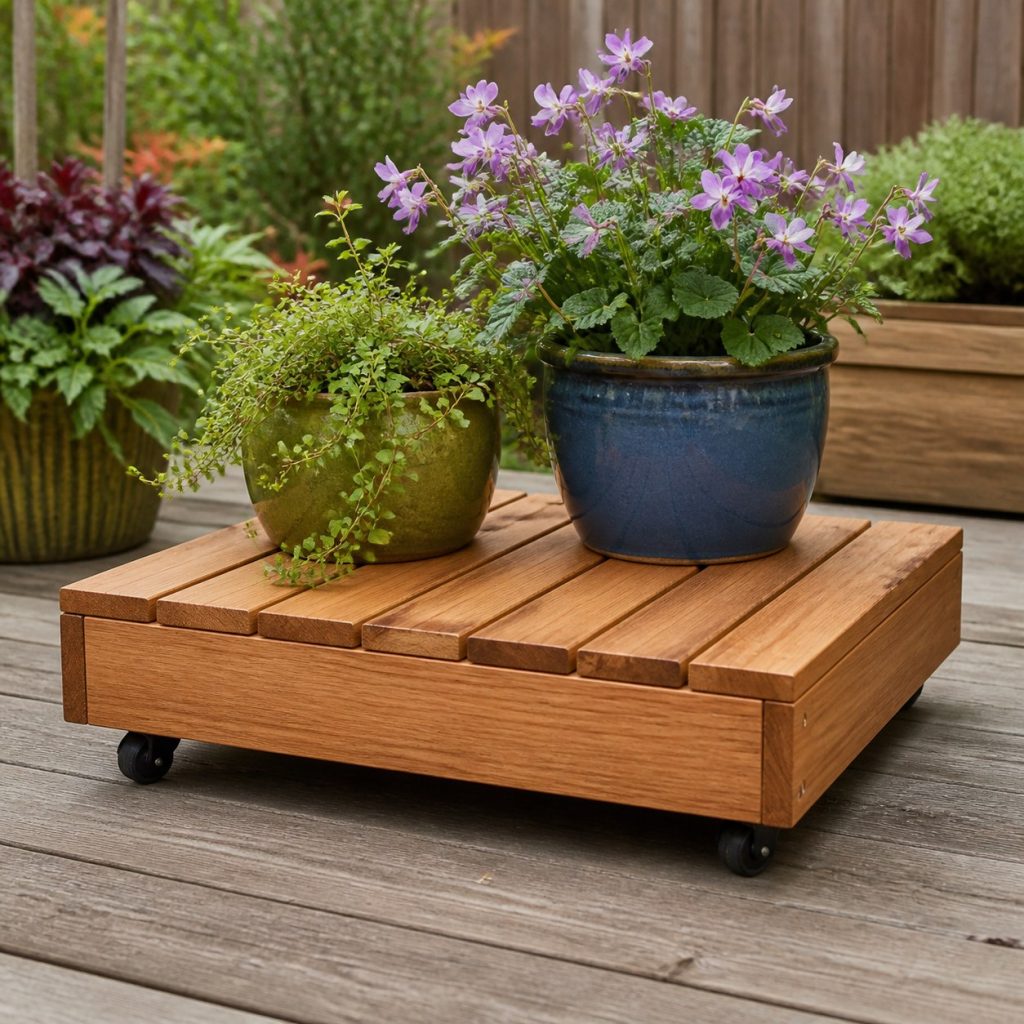
A shallow skirt may hide hardware visually while leaving locks and inspection access open.
Heavy-Duty Timber Dolly
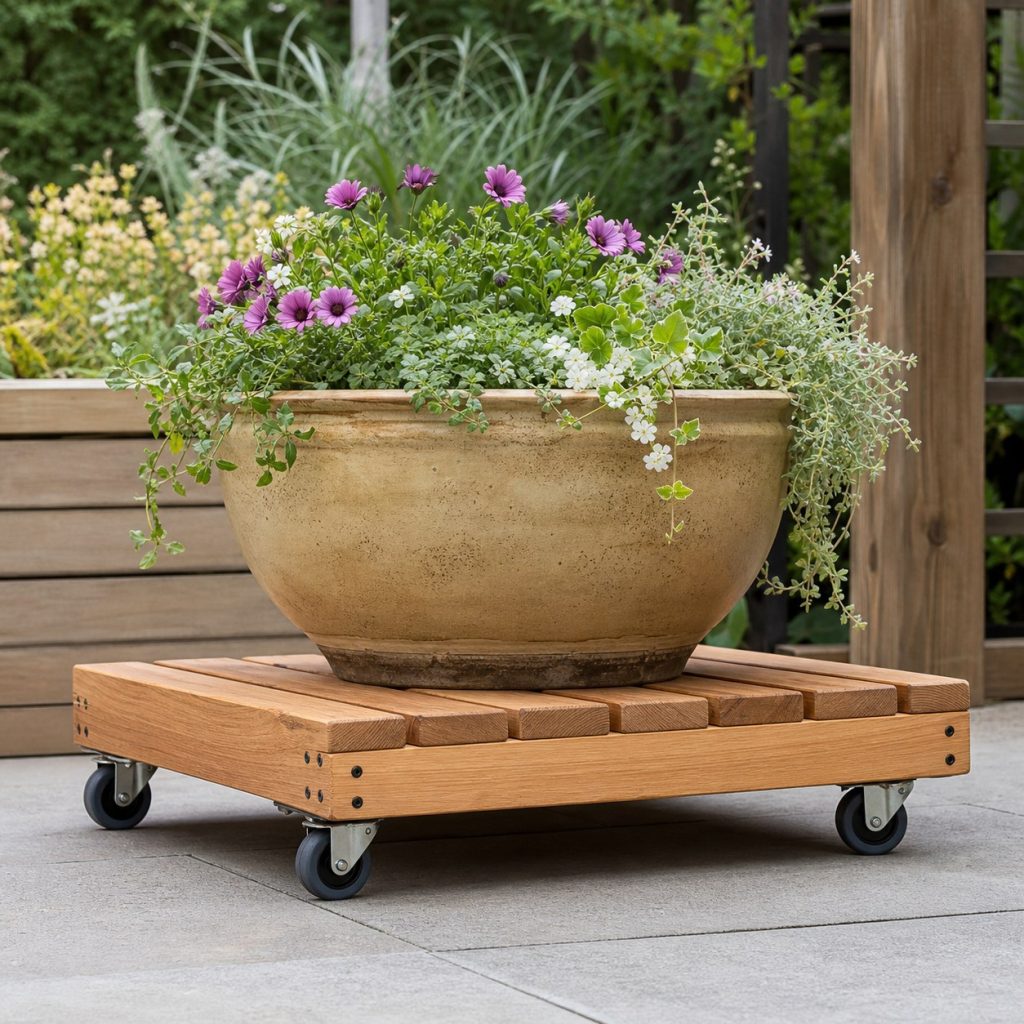
Additional casters require a stiff deck so all wheels share load on the actual floor.
Handled Plant Dolly
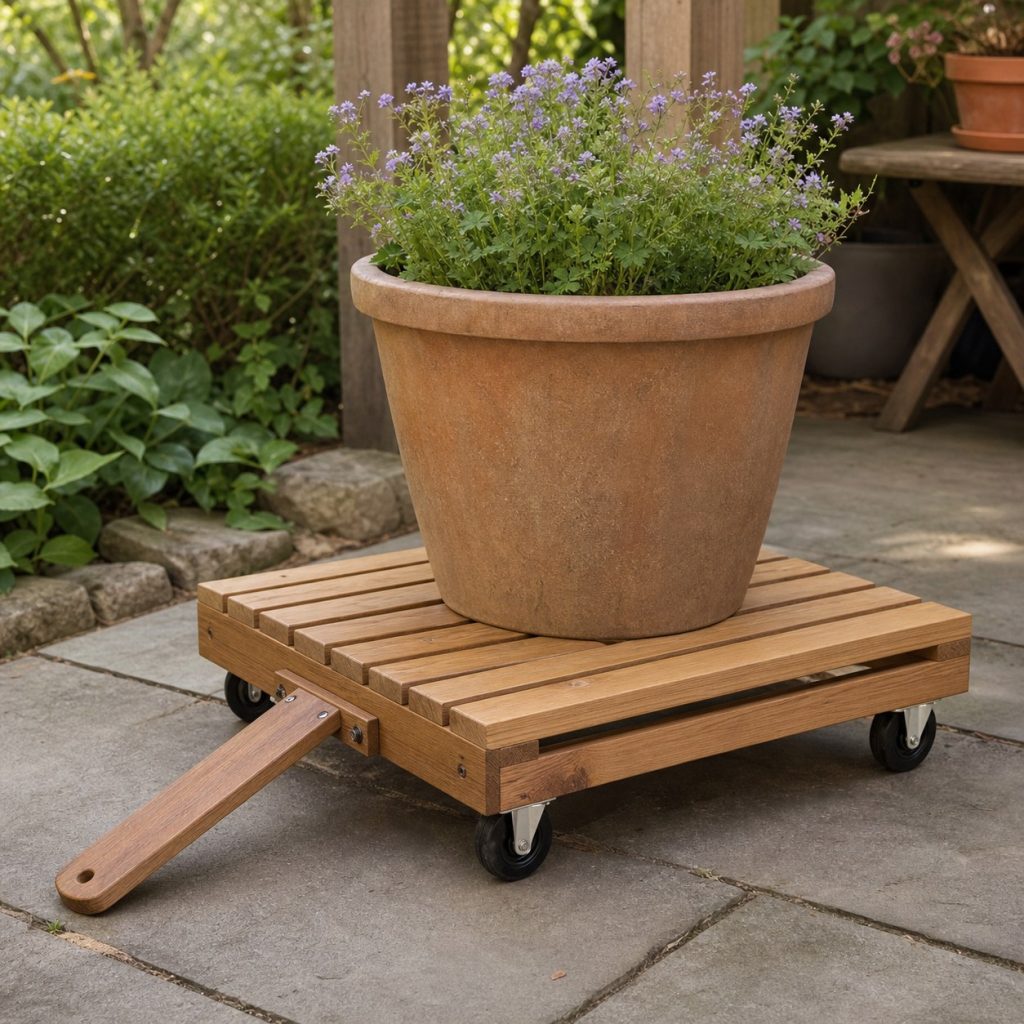
A removable handle reduces stooping but must not encourage uncontrolled travel or excessive pulling force.
Caster Blocking and Drainage Details
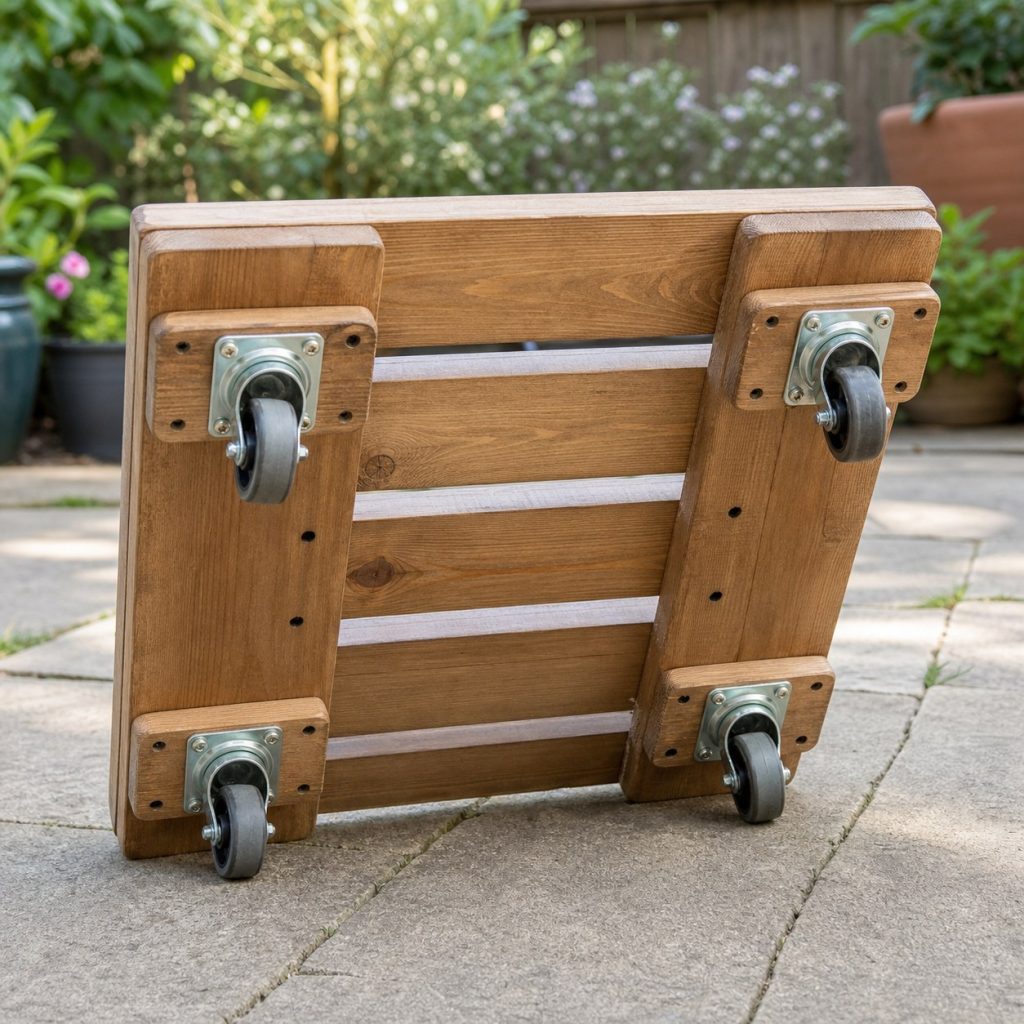
Through-fastening or adequate blocking, visible hardware, and a gradual load test support safe use.
Planning checklist
- Calculate the saturated pot and dolly weight.
- Use rated outdoor casters and reinforced mounting blocks.
- Keep the pot centered with unobstructed drainage.
- Provide locks or stable chocks on a level surface.
- Never roll across slopes or thresholds without a safe plan.
These woodworking concepts and generated images are planning inspiration, not measured drawings, cut lists, tested furniture plans, load ratings, engineered structures, accessibility designs, playground certifications, or utility instructions. Verify dimensions, ergonomics, lumber grade and treatment, grain direction, joint design, fastener and preservative compatibility, structural and wind loads, stability, sharp and pinch hazards, finish labels, equipment instructions, accessibility, permits, and local requirements for the actual project. Use appropriate personal protective equipment and qualified engineers, electricians, plumbers, accessibility specialists, and other licensed professionals where the work or hazards require them.
Frequently asked questions
How many casters should I use?
Use the number and arrangement supported by the deck stiffness, wheel ratings, floor, and total dynamic load; more wheels do not automatically share evenly.
Can I move a very large planter while full?
Often it is safer to reduce weight or obtain professional moving equipment rather than relying on a homemade dolly.
Will caster brakes hold on a slope?
Do not rely on ordinary brakes for slopes. Use the dolly only on firm level surfaces unless professionally designed otherwise.