Project planning guide
Before you build
Use the reference image and planning notes as a starting point. Confirm dimensions, loads, materials, local codes, and site conditions before purchasing or cutting.
- Garden Projects
- 1 reference image
- Print-friendly guide
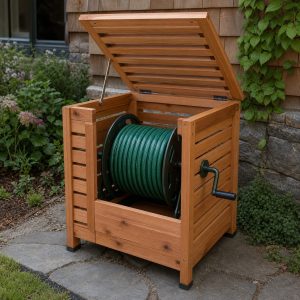
Quick answer: A good hose holder supports a wide coil without sharp bends, sits near the hose bib without blocking it, and transfers the wet hose load into a stable post or structural wall. Add a small shelf for the nozzle, preserve drainage below, and keep fittings accessible for shutoff and winter service.
Choose post-mounted or wall-mounted
A post-mounted holder can sit where the hose is actually used, but it needs a frost- and soil-appropriate anchor. A wall holder avoids a new footing but must attach to structural framing without damaging siding or trapping water. Do not mount into cladding alone or place hardware where it interferes with the hose bib’s anti-siphon device.
Measure the hose coil
Coil the hose loosely on the ground and measure its diameter and depth. The holder’s cradle should be broad enough that the hose does not kink at two narrow points. Longer or heavier hoses may need a manufactured reel rather than a decorative wood saddle.
Build a broad cradle and shelf
- Cut two matching side brackets with rounded front profiles.
- Join them using several slats or a curved support surface.
- Round every hose-contact edge.
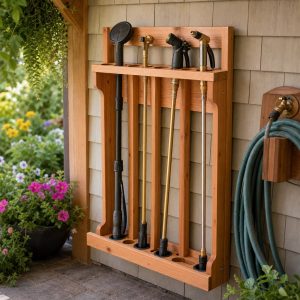
- Add a small top shelf with drainage gaps and a retaining lip.
- Fasten the assembly to a 4×4 post or structural mounting board.
- Seal end grain and use corrosion-resistant fasteners.
Install the support
Locate utilities before digging. Set the post or rated post base according to local frost, wind, and soil conditions. Keep the wood above standing water where possible. For wall mounting, identify framing and use flashing or spacers that preserve the wall’s water-management system.
Arrange the hose path
The short leader from the bib to the holder should curve gently without rubbing siding. Keep the main hose off walkways and sharp bed corners. A gravel drip area below the holder reduces mud, but it should not direct water toward the foundation.
Use the hose holder beside the raised-bed drip system. For captured water, the existing rain barrel guide covers a separate nonpotable setup.
Seasonal care
- Drain the hose before freezing.
- Disconnect it where local winter practice requires.
- Inspect the cradle for splits and loose fasteners.
- Keep the shelf clear enough to dry.
- Recoat exposed wood as the finish manufacturer directs.
Protect the support from hose leverage
A long water-filled hose can apply a substantial pulling and twisting force when users unwind it quickly. Build a broad cradle and connect it to sound structure, not only siding or a thin fence board. Position the holder so the hose leaves toward the main watering route without scraping corners, steps, or vehicle paths.
- Keep the shutoff and connection visible for leak checks.
- Provide drainage so the shelf does not hold wet gloves or tools in water.
- Round the cradle edges to reduce hose abrasion.
- Store only light items on a high shelf.
Fully unwind and rewind the hose during the installation test. Watch the post or wall for movement and correct it before repeated use. Drain and store the system according to climate and hose-manufacturer guidance.
Common questions
How high should a hose holder be?
Set it high enough that the lowest coil stays clean but low enough to lift a wet hose without shoulder strain. Test the coil before installation.
Can I mount a holder on a fence?
Only if the post and rails are capable of carrying the wet hose and pulling forces. A light fence panel can rack or loosen.