Project planning guide
Before you build
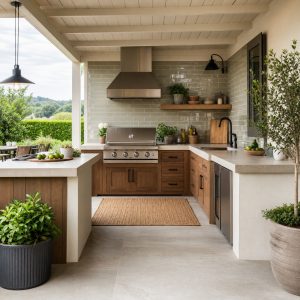
Use the reference image and planning notes as a starting point. Confirm dimensions, loads, materials, local codes, and site conditions before purchasing or cutting.
- Kitchen Design
- 8 reference images
- Print-friendly guide
DIY outdoor kitchen cabinets must handle water, heat, sun, pests, corrosion, and seasonal movement while preserving appliance ventilation and service access. Indoor cabinet methods do not automatically transfer outdoors. Choose the cabinet system after identifying exposure, climate, equipment, and how much enclosed storage will actually stay dry.
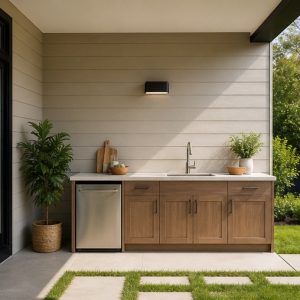
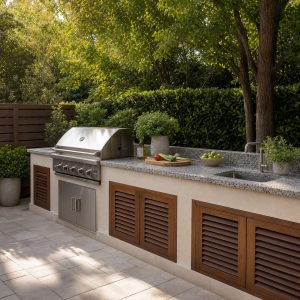
Louvered wood doors
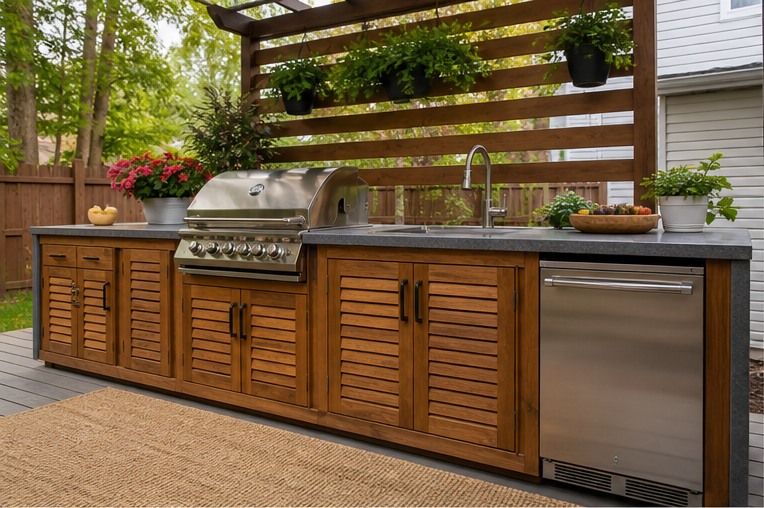
Louvered doors promote airflow and give masonry counters warm texture. Use a stable exterior-suitable species or product, seal all faces and edges, and keep the frame from sitting in water. Louvers do not make the interior watertight, so store only appropriate items.
Outdoor polymer cabinets
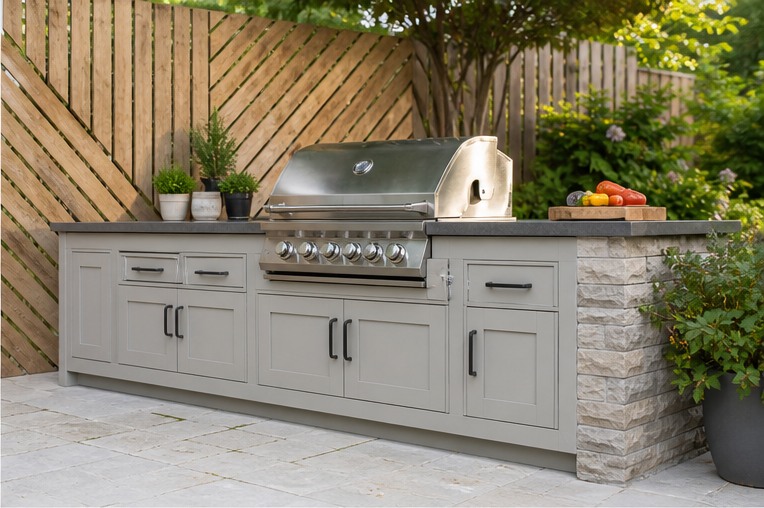
Purpose-made polymer cabinets resist moisture and can offer familiar drawers and doors. Verify temperature limits, UV performance, hardware, structural support, and compatibility with adjacent heat-producing equipment. Follow the system details rather than treating panels like ordinary interior sheet goods.
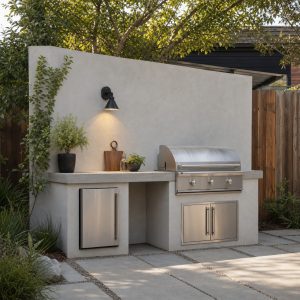
Stainless access doors
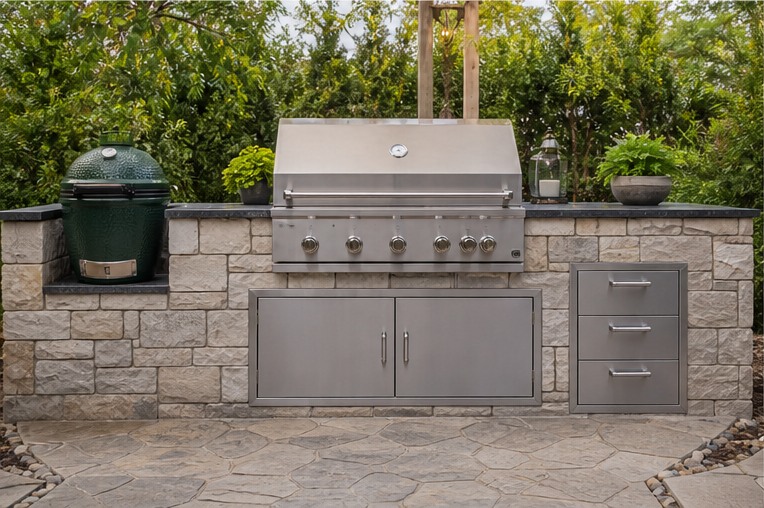
Stainless doors provide durable access to utilities and storage, but alloy choice and maintenance should suit coastal, pool, or chemical exposure. Use compatible fasteners, isolate dissimilar metals, and provide drainage and ventilation inside the masonry cavity.
Open masonry niches
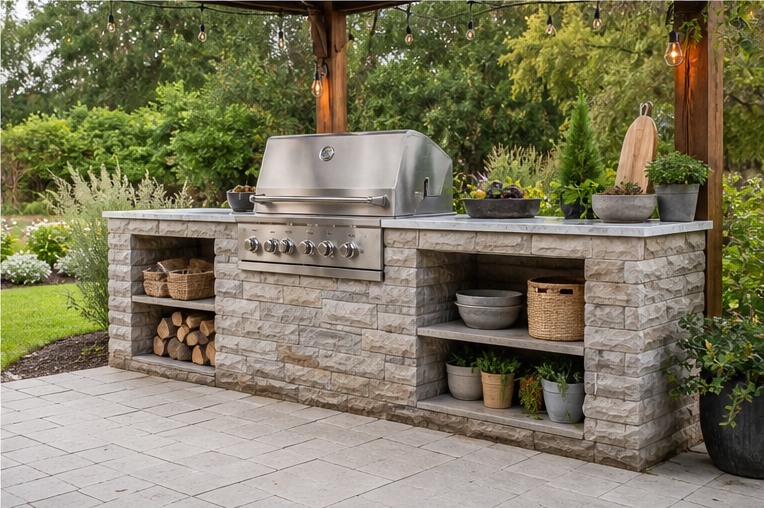
Open niches are simple, visible, and easy to rinse when correctly finished. Add removable slatted shelves so air can circulate and water can drain. Use baskets only for items brought indoors after use, and avoid creating dark recesses that attract pests.
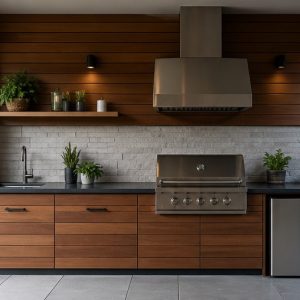
Slatted timber fronts
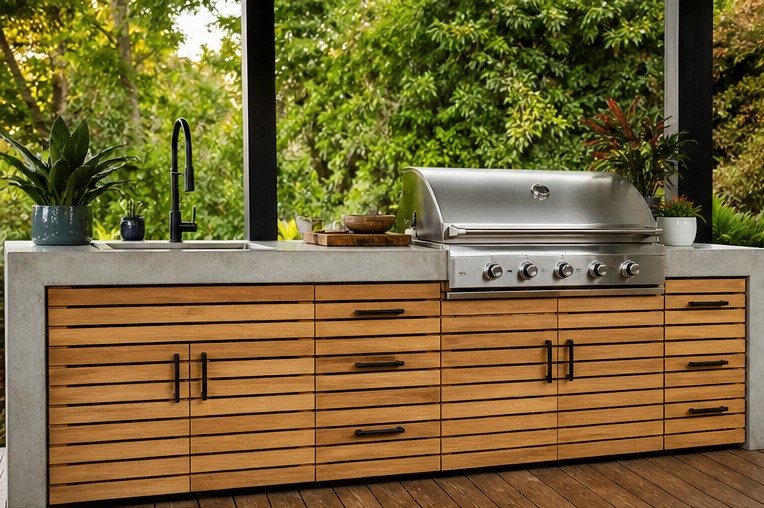
Slatted fronts create a lighter look and help ventilation. Keep spacing consistent, use durable hinges and frames, and design panels for replacement because the outer face receives sun and rain. Protect cut ends and prevent splashback from the floor.
Removable wood shelves
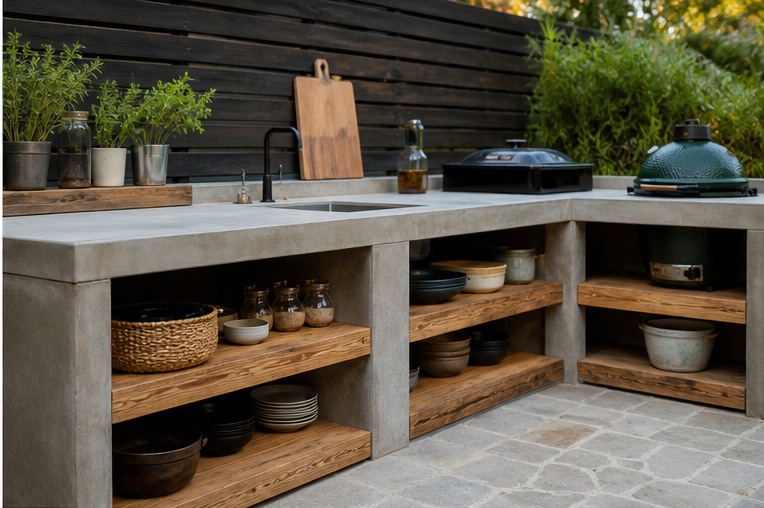
Removable shelves simplify cleaning and let the masonry cavity dry. Use slats rather than solid boards where drainage matters, support expected loads, and leave refrigeration ventilation exactly as the manufacturer specifies. Never block service panels with fixed shelves.
Weather-protected drawers
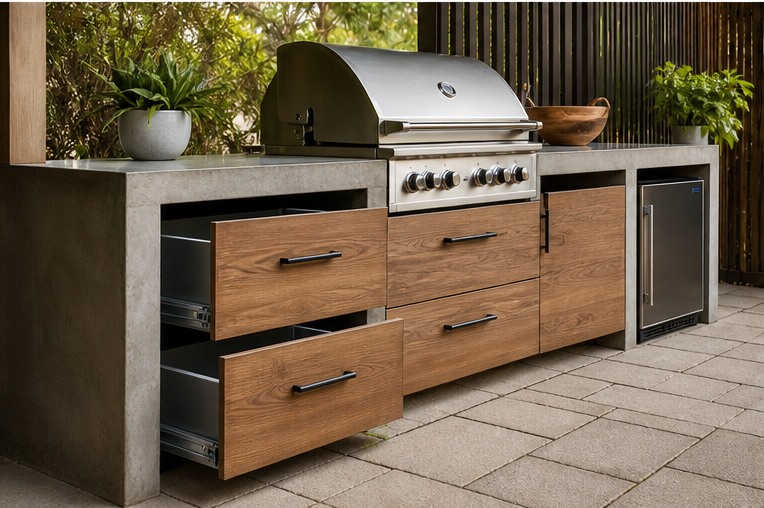
Drawers keep tools organized but demand close control of water entry and corrosion. Use an outdoor cabinet system or carefully detailed covered location, quality slides rated for the environment, drainage below, and seals that do not trap condensation.
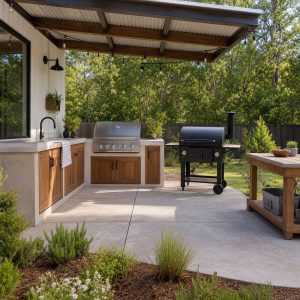
Mixed closed and open storage
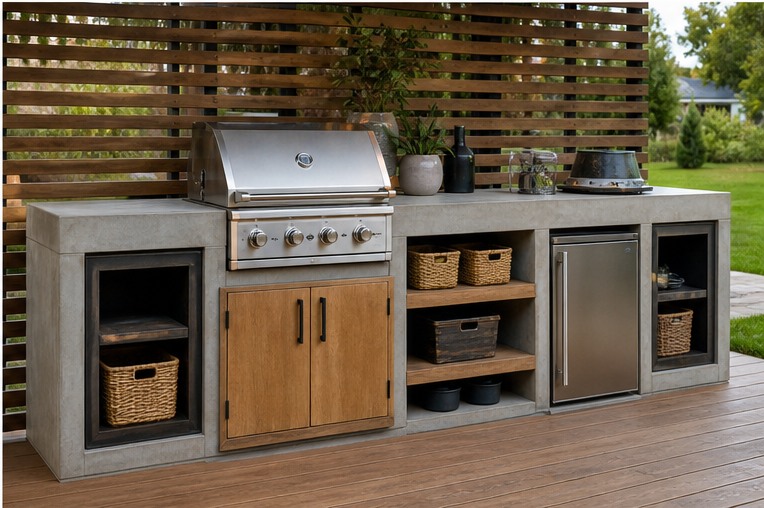
A mixed system puts utensils and cleaning supplies behind doors while bulky pots or baskets sit on open shelves. Closed does not always mean dry outdoors, so keep food and sensitive appliances inside the house unless the storage system is specifically designed for them.
Planning checklist
- Choose materials for the actual sun, rain, freeze, salt, and heat exposure.
- Verify appliance ventilation and access before framing openings.
- Keep bases drained, ventilated, and separated from standing water.
- Use corrosion-resistant compatible hardware and fasteners.
- Plan removable panels for plumbing, gas, electrical, and repairs.
These ideas are general planning guidance. Verify appliance clearances, ventilation, weather exposure, drainage, structural loads, fuel and electrical work, permits, and local fire and building requirements with manufacturers and qualified local professionals.
Frequently asked questions
Can I use regular kitchen cabinets outdoors?
Generally, indoor cabinets are not designed for prolonged moisture, UV, temperature swings, pests, or exterior heat exposure. Use a documented outdoor-rated system or appropriate materials.
What wood works for outdoor kitchen cabinets?
Durability depends on species, construction, finish, exposure, and maintenance. Consult local suppliers and use products appropriate for exterior cabinetry near the selected equipment.
Do outdoor kitchen cabinets need ventilation?
Many cavities and appliances do. Ventilation requirements depend on fuel, refrigeration, heat, moisture, and manufacturer instructions; do not guess or block specified openings.