Project planning guide
Before you build
Use the reference image and planning notes as a starting point. Confirm dimensions, loads, materials, local codes, and site conditions before purchasing or cutting.
- Garden Projects
- 8 reference images
- Print-friendly guide
A cloche traps solar heat around a small crop area, which can protect plants on cold nights and overheat them quickly in sun. Safe plans combine lightweight framing, nonshattering glazing, controlled ventilation, smooth edges, wind anchoring, drainage, and a lifting method that does not strain the user or crush plants.
A-Frame Garden Cloche
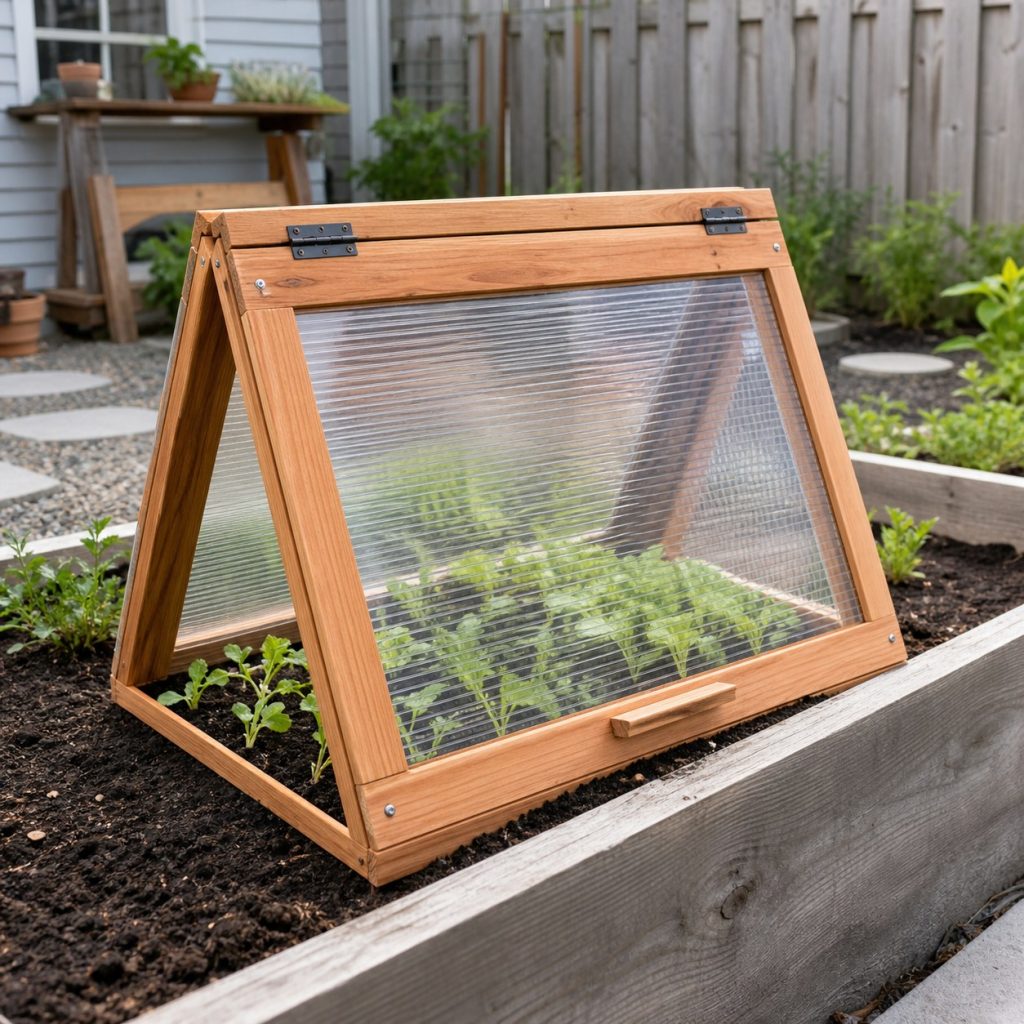
An A-frame sheds rain and gives seedlings center height. Use lightweight straight rails, cover sharp panel edges, and add a ridge or side vent. Anchor both long sides so gusts cannot lift the cover from the bed.
Low Hoop Cloche
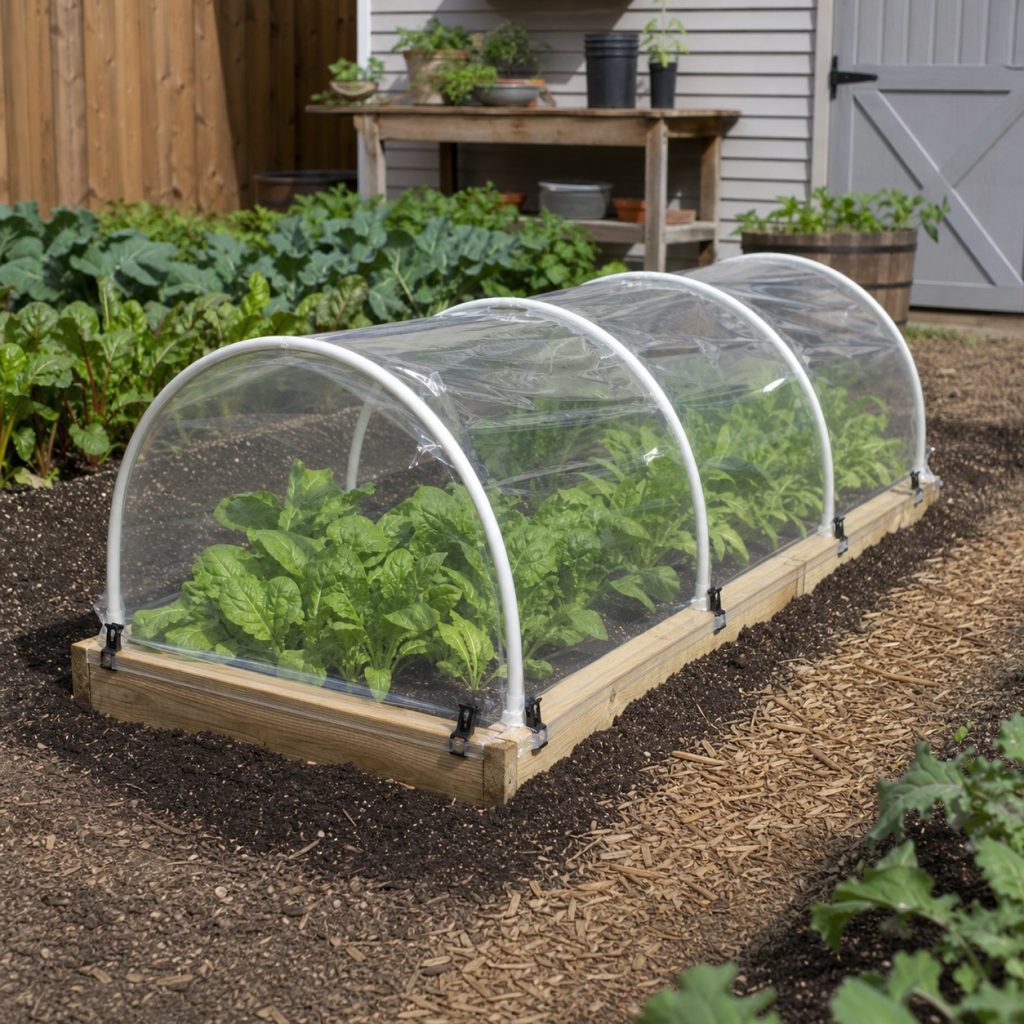
Flexible hoops create a light tunnel for a short row. Use a cover intended for outdoor growing, clip it without sharp protrusions, secure edges against wind, and provide a repeatable way to vent both ends or roll a side.
Rigid Box Cloche
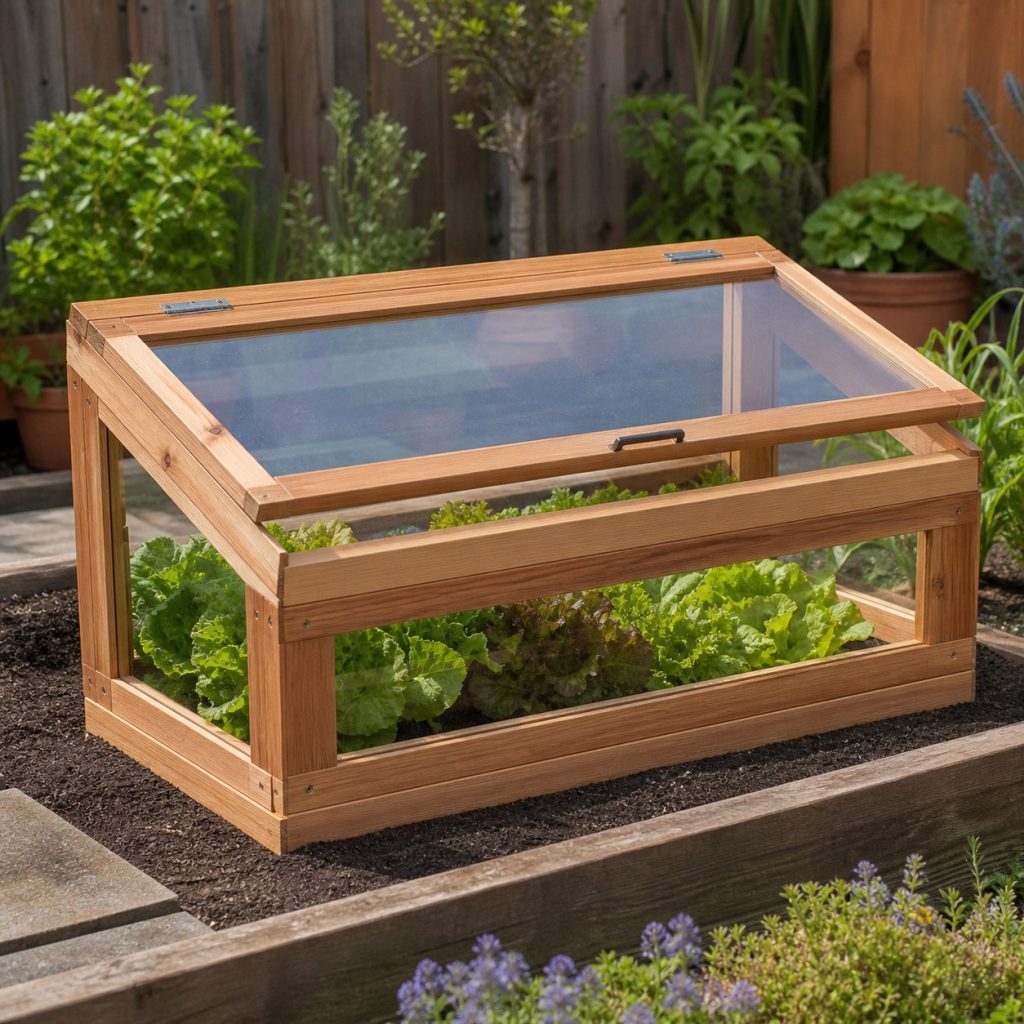
A rigid box gives good wind resistance when corners are braced and the top is restrained. Slope the glazing for runoff, leave planting clearance, and make the cover removable or hinged only when the lifting weight and support hardware are safe.
Hinged Raised-Bed Cloche
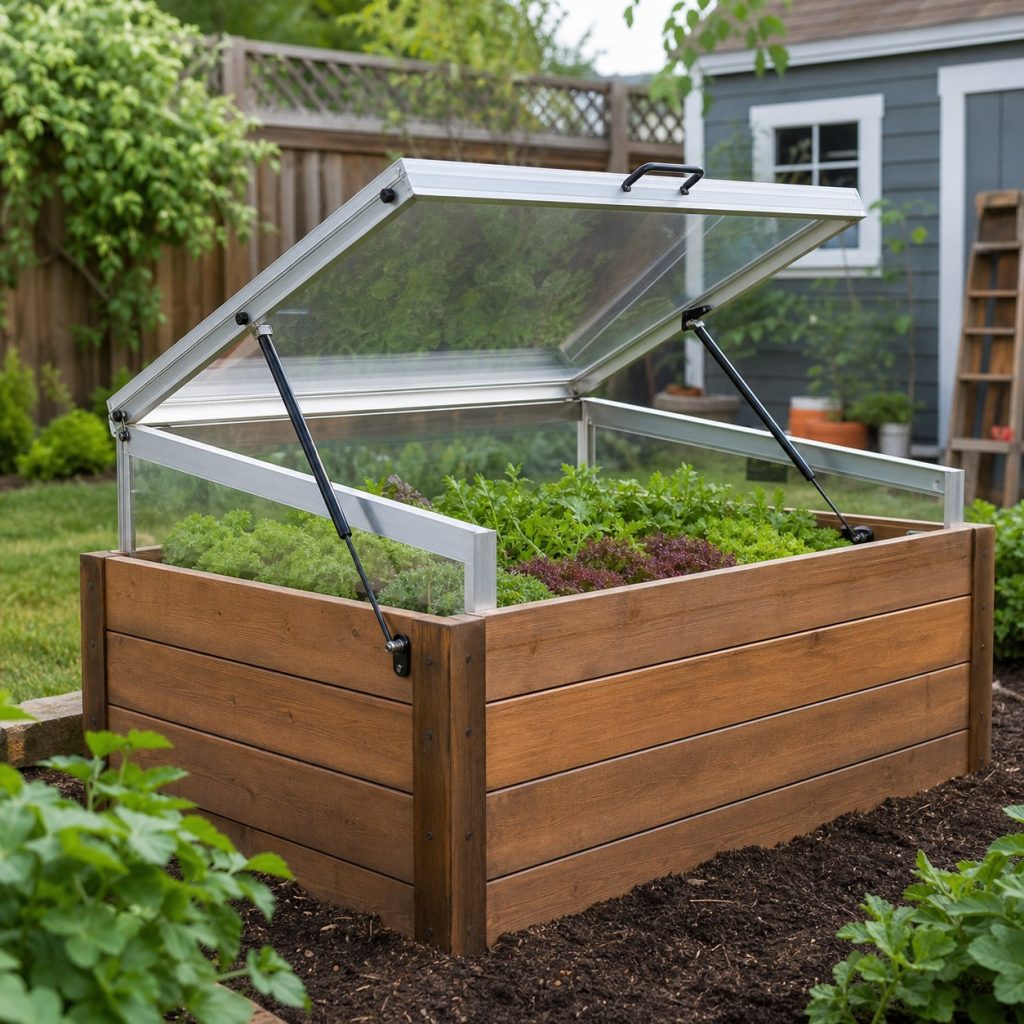
A hinged cover needs paired supports, controlled closing, and finger clearance. Reinforce the bed only if its frame is verified for hinge loads, use two comfortable handles, and secure the open cover before reaching beneath it.
Individual Plant Cloches
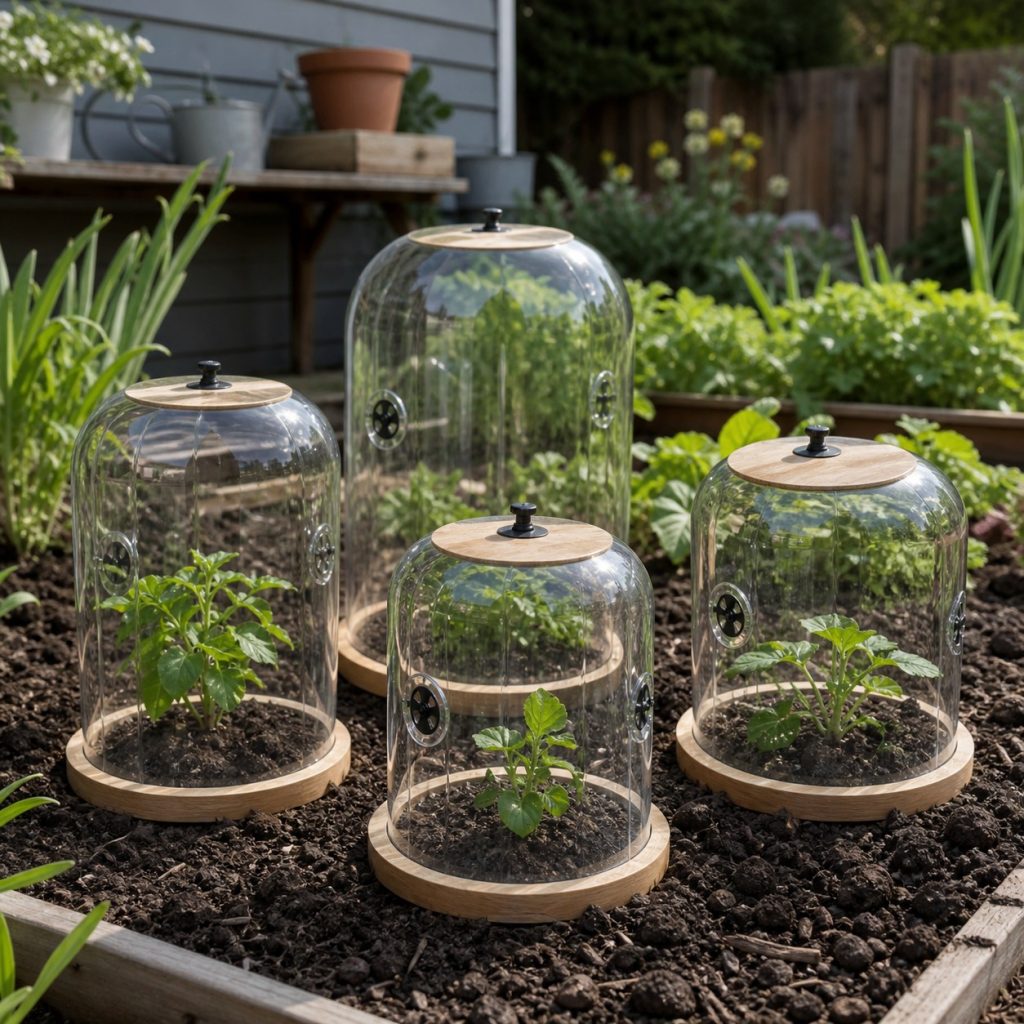
Small covers can protect individual transplants and are easy to move, but each still needs ventilation and anchoring. Keep edges visible, avoid creating trip hazards, and remove the cover before foliage touches hot glazing.
Build a Lightweight Square Frame
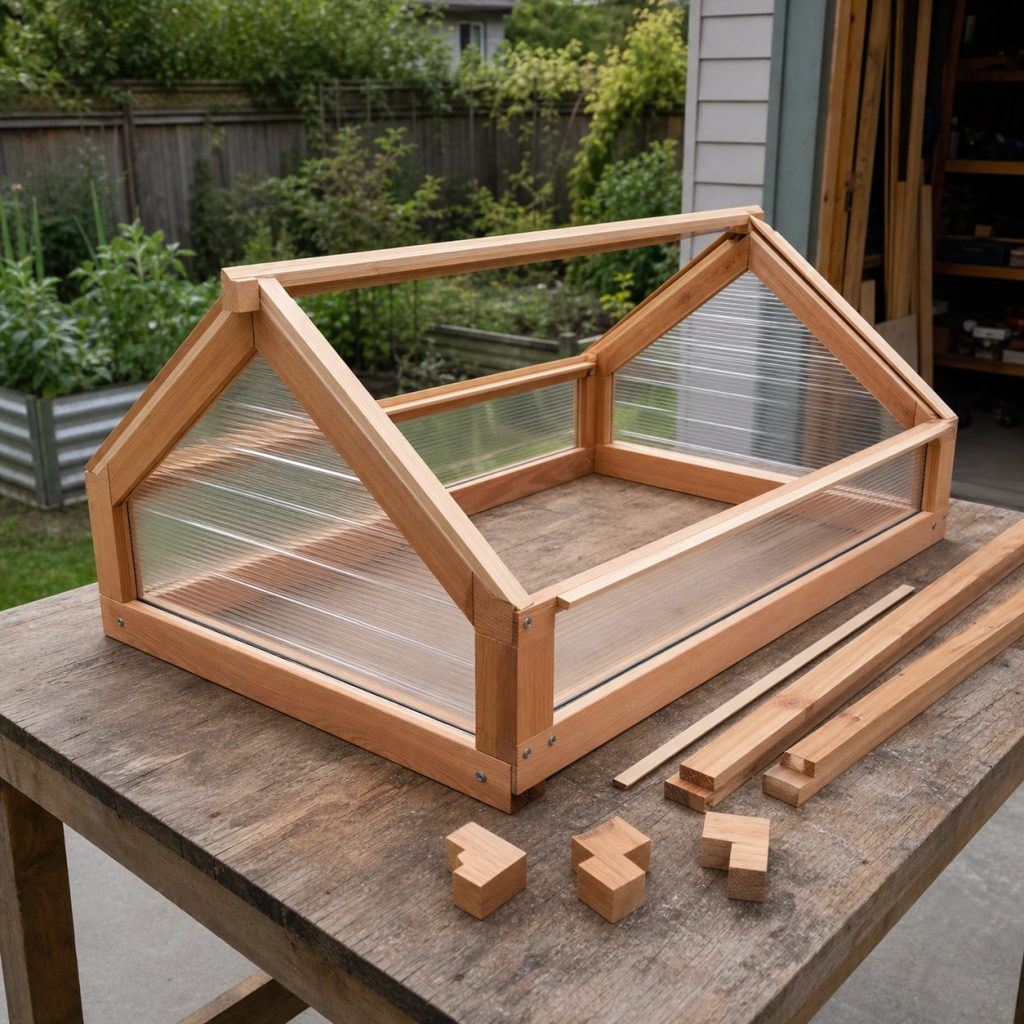
Assemble the frame on a flat surface, compare diagonals, and brace corners without adding unnecessary weight. Predrill thin rails, ease hand-contact edges, and dry-fit glazing strips so panels can expand without cracking or pulling fasteners loose.
Install Safe Glazing and Vents
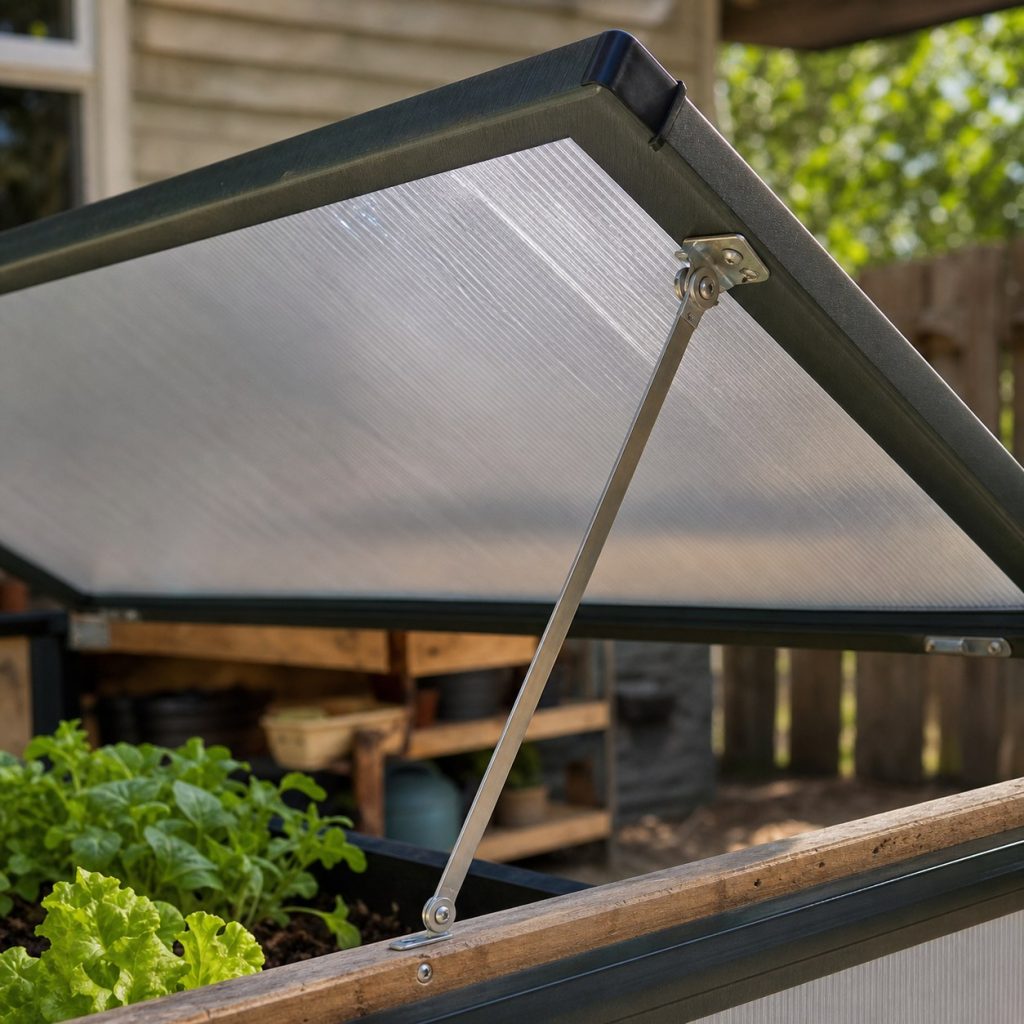
Use nonshattering glazing rated for UV and outdoor exposure. Follow its drilling, washer, clearance, and orientation instructions, cover cut edges, and install a vent or prop that cannot slip closed when wind shifts.
Monitor, Clean, and Store
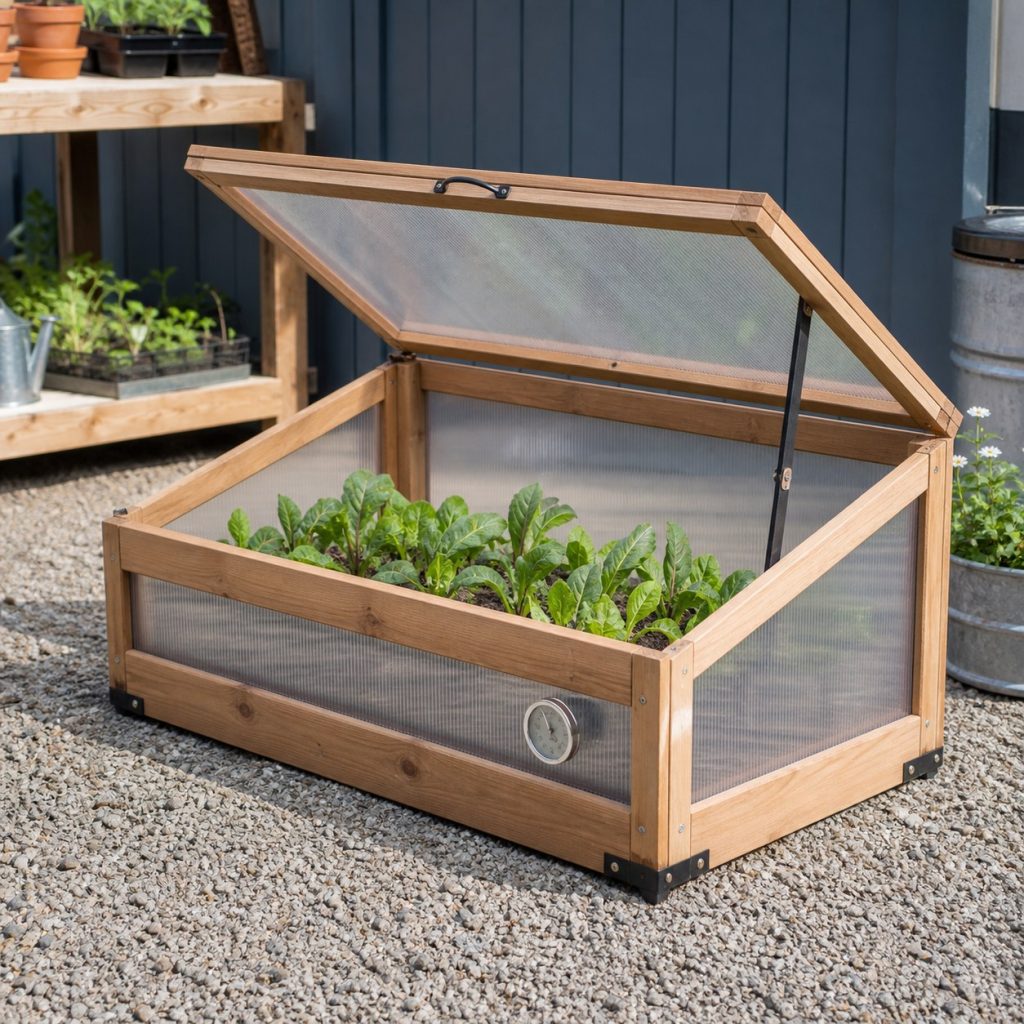
Check temperature at plant height rather than judging by outdoor air alone. Vent early on sunny days, clear condensation and algae, inspect anchors and props, then clean and store panels where wind and impact cannot damage them.
Planning checklist
- Match the cover to crop height, bed width, and season.
- Use UV-stable nonshattering glazing with protected edges.
- Provide positive ventilation, safe props, and wind anchors.
- Monitor temperature at plant height and prevent overheating.
- Clean, dry, inspect, and store the cloche securely.
These concepts and generated images are general planning inspiration, not measured drawings, structural attachment details, pond or electrical designs, engineered plans, or tested load-rated designs. Verify dimensions, lumber grade and treatment, structural and dynamic loads, fasteners, coatings, accessibility, utility locations, water and wildlife guidance, property rules, permits, and local building requirements for the actual project. Use qualified professionals where structural, electrical, plumbing, drowning, fall, or entrapment hazards apply.
Frequently asked questions
Is a cloche the same as a cold frame?
A cloche is usually smaller and lighter, often covering a row or individual plants. Both require ventilation and temperature monitoring.
Can old glass windows be used?
Glass can break and old coatings may contain hazards. Nonshattering outdoor-rated glazing is a safer general choice.
When should a cloche be opened?
Open or vent based on measured temperature, sunlight, crop needs, and weather. Even cool days can produce damaging heat inside.