Project planning guide
Before you build
Use the reference image and planning notes as a starting point. Confirm dimensions, loads, materials, local codes, and site conditions before purchasing or cutting.
- Garden Projects
- 8 reference images
- Print-friendly guide
An outdoor cabinet stores vertically and keeps frequently used garden gear within reach, but its broad doors and tall narrow frame can catch wind or tip. The cabinet needs a rigid raised base, wall and back bracing, restrained shelves, rain-shedding top, protected vents, controlled doors, and anchoring suited to the site.
Tall Garden Tool Cabinet
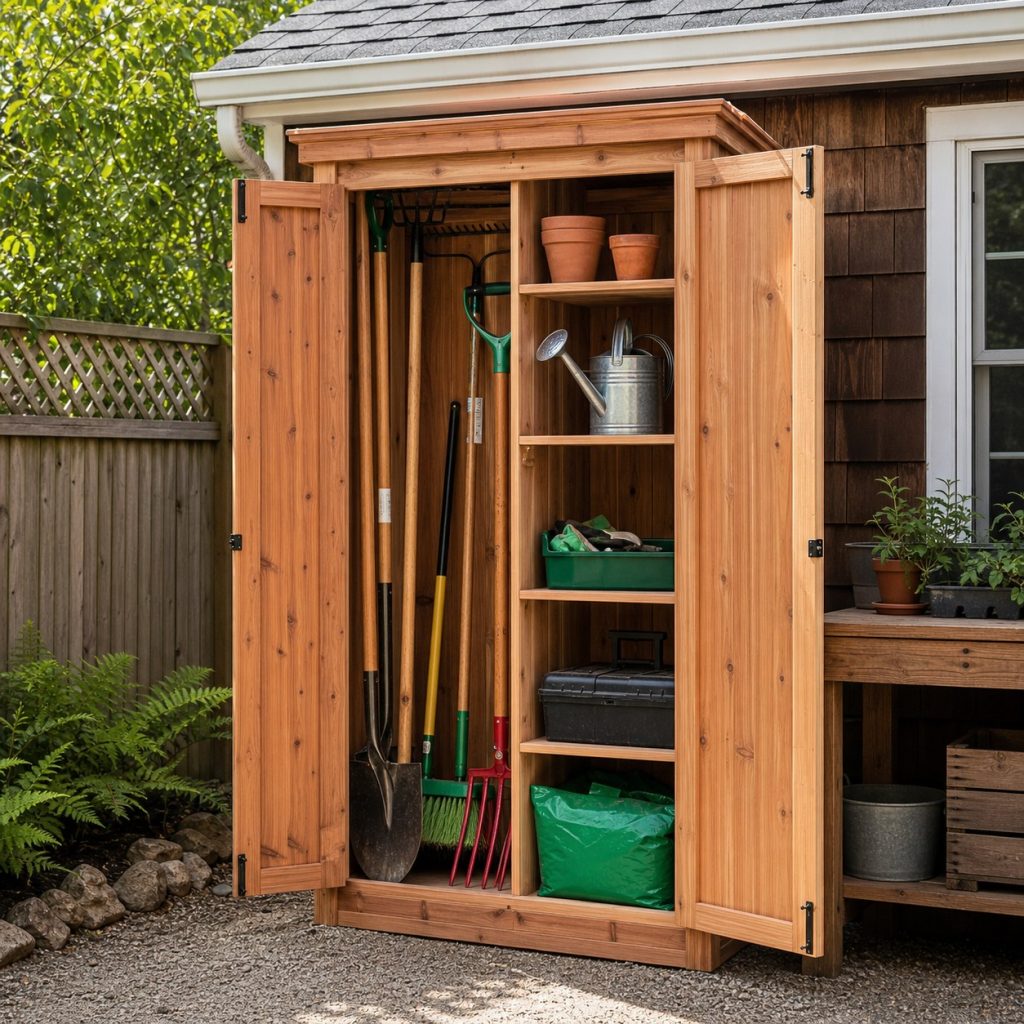
A tall cabinet can combine a full-height tool bay with narrow supply shelves. Retain long handles so they cannot fall into the doors, keep heavy items low, and anchor the case to suitable structure or a designed foundation.
Shallow Wall Cabinet
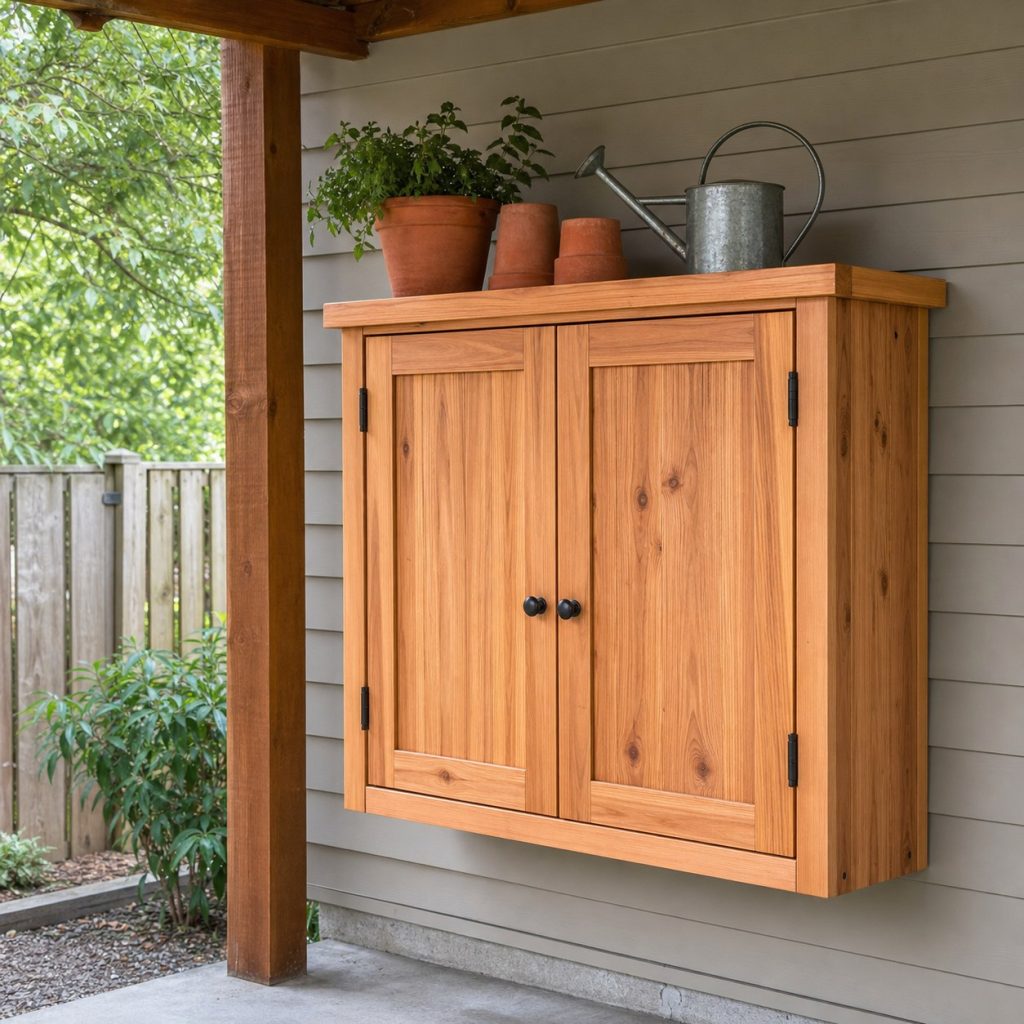
A shallow cabinet keeps small tools visible without consuming floor space. Mount it only to verified structure using an appropriate cleat or brackets, limit stored weight, and provide door clearance. A roof overhang helps, but exterior materials and drainage are still required.
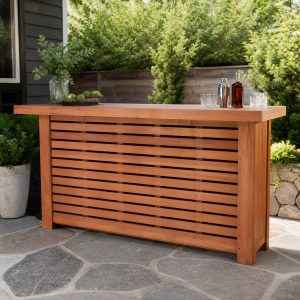
Counter-Height Garden Cabinet
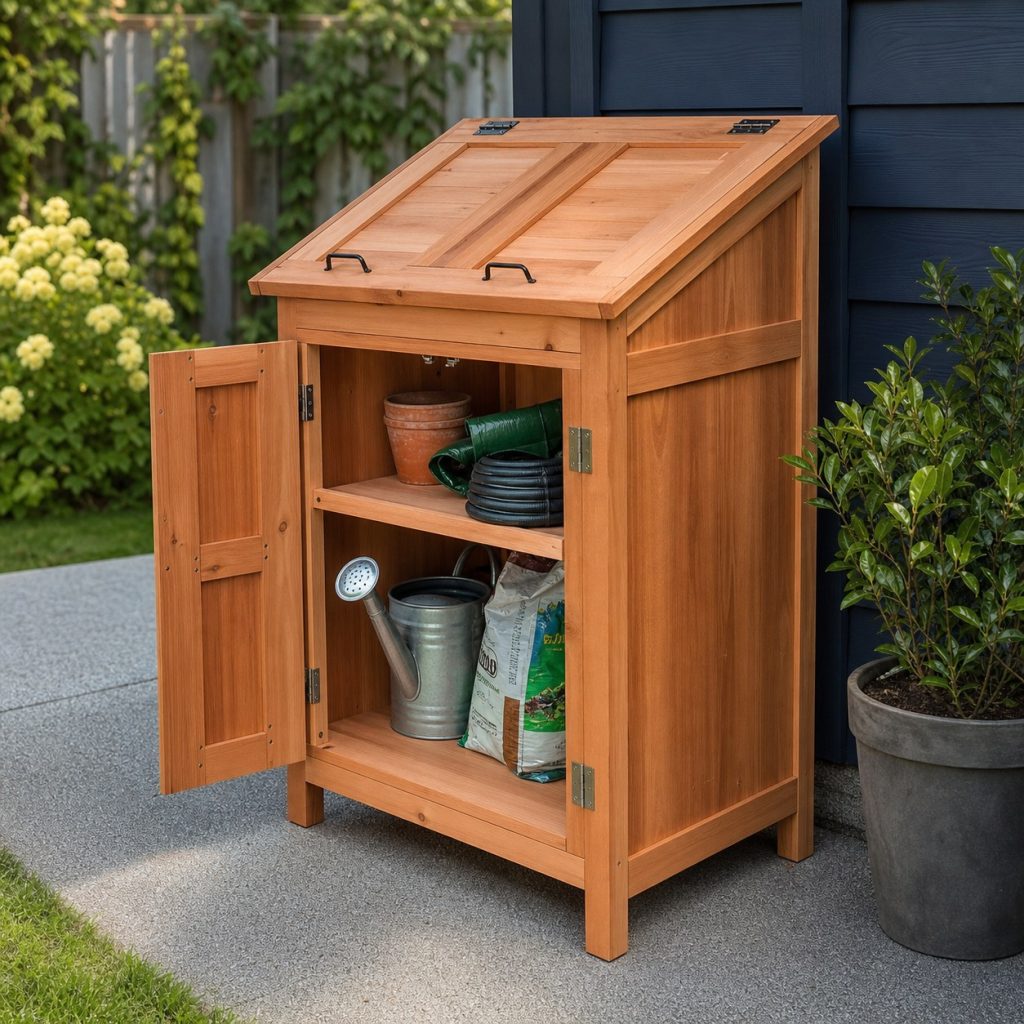
A counter-height cabinet can provide a temporary staging surface while holding pots and supplies below. Keep the top sloped enough to shed rain and do not use it for food preparation unless every surface and material is suitable and cleanable.
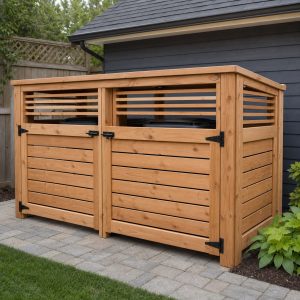
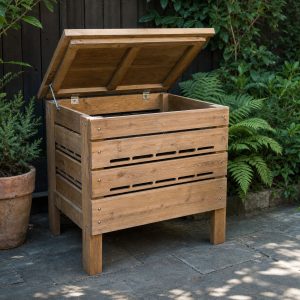
Slatted Ventilated Cabinet
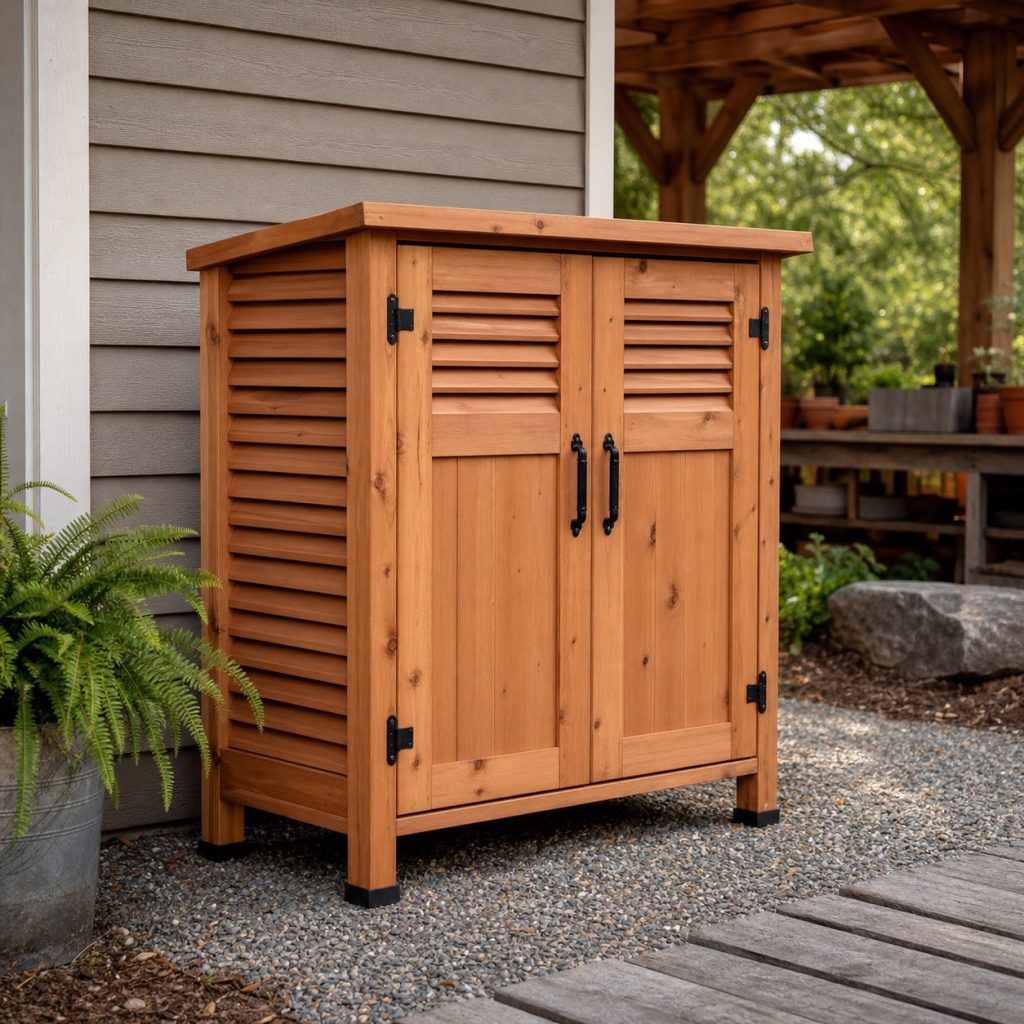
Slatted cladding improves airflow but does not create dry storage. Use an inner braced frame, overlap or baffle openings against driven rain, and store only items that tolerate humidity. Keep fabric, seed, and paper in suitable sealed removable containers.
Narrow Corner Cabinet
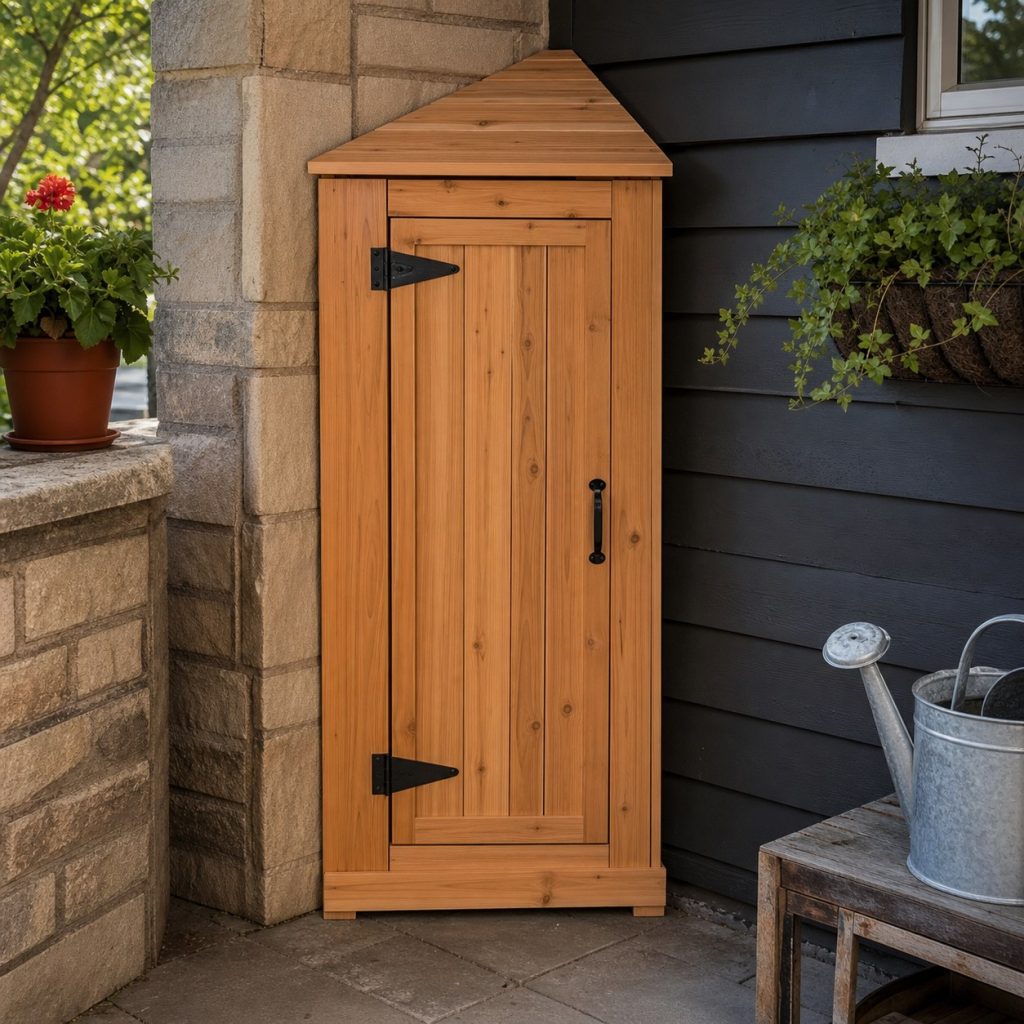
A corner form can use awkward space but requires careful door swing and shelf geometry. Do not block utility access or fasten across dissimilar walls. The cabinet must be stable independently and anchored without damaging flashing or cladding.
Build a Braced Cabinet Frame
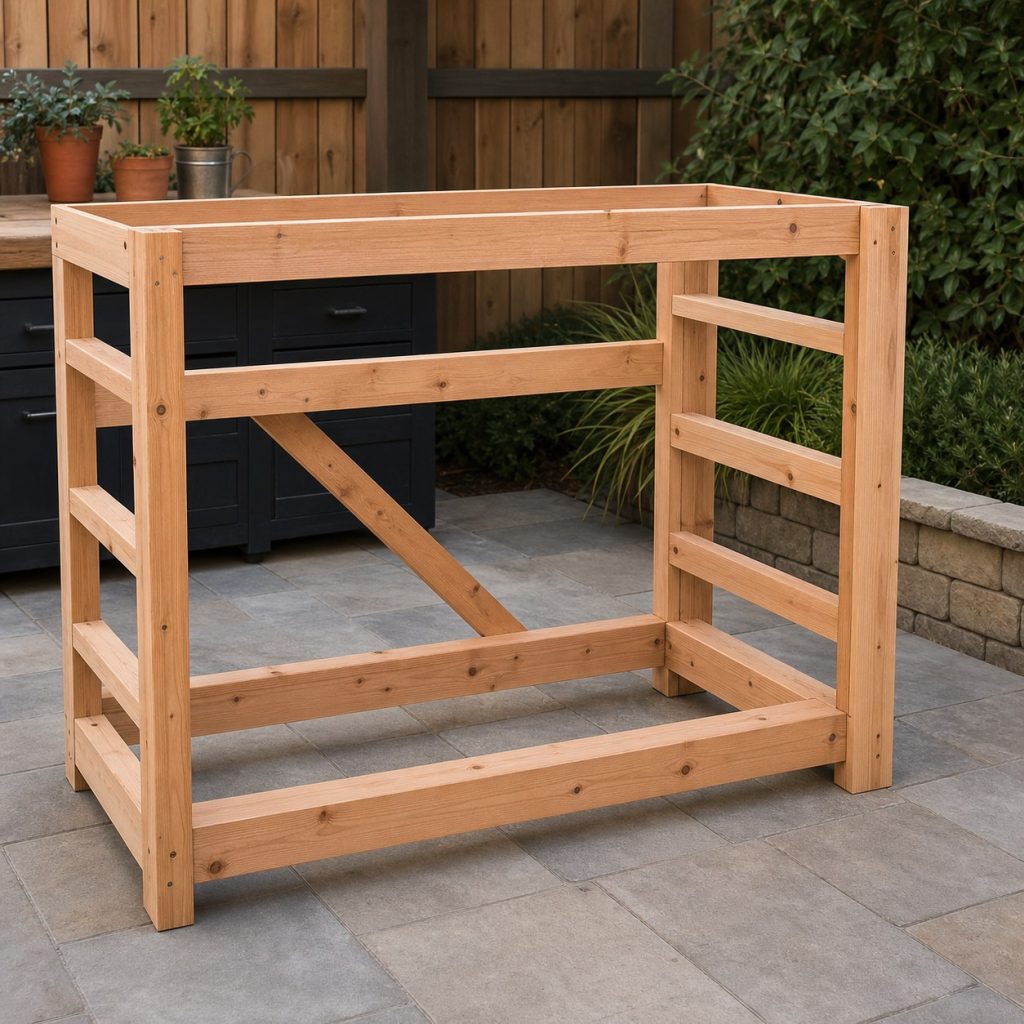
Assemble the raised base level, add two square side frames, and connect them with front and rear rails. A structural back or diagonal bracing resists racking. Dry-fit shelves and doors before cladding hides connection and anchor locations.
Hang and Restrain the Doors
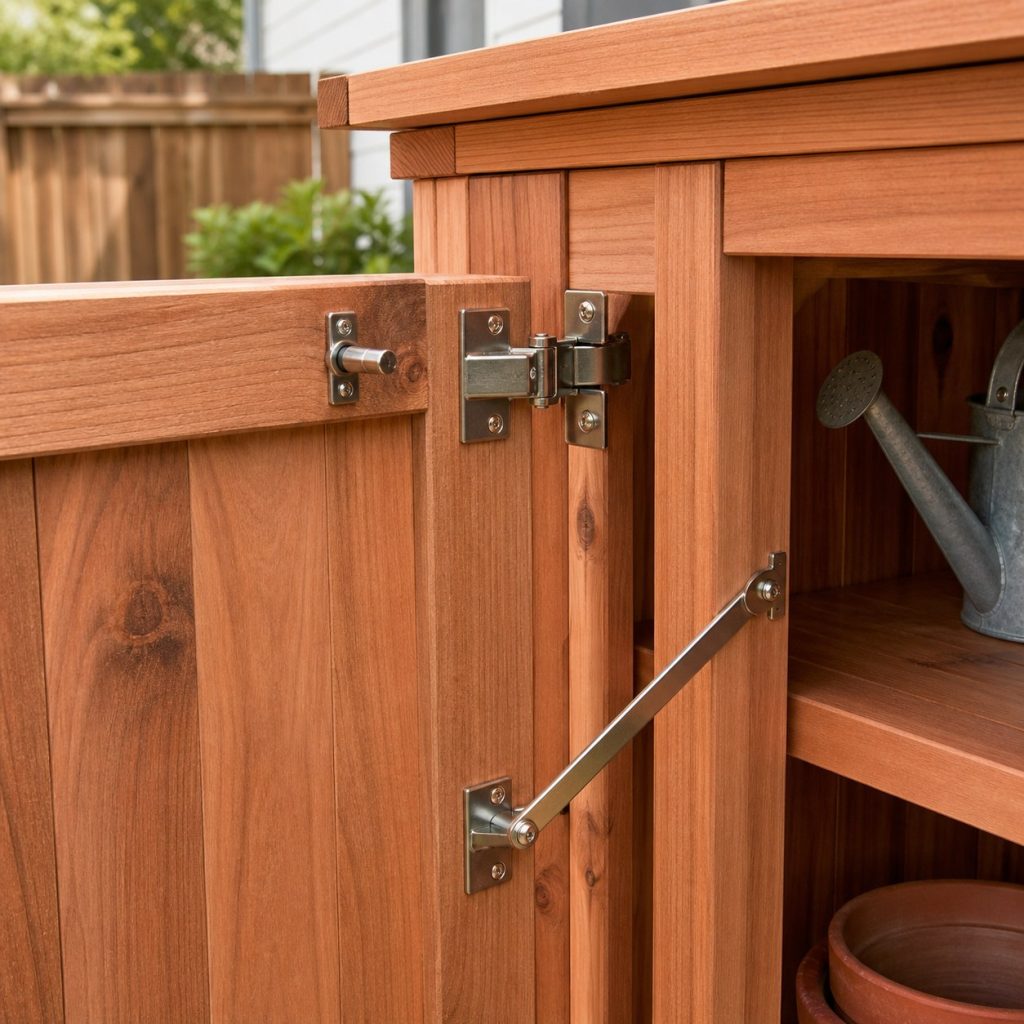
Use exterior-rated hinges sized for each door and reinforce their mounting rails. Add positive latches, stops, and stays so wind cannot fling doors open or closed. Maintain safe finger clearance and adjust sag before it damages the frame.
Anchor, Vent, and Inspect
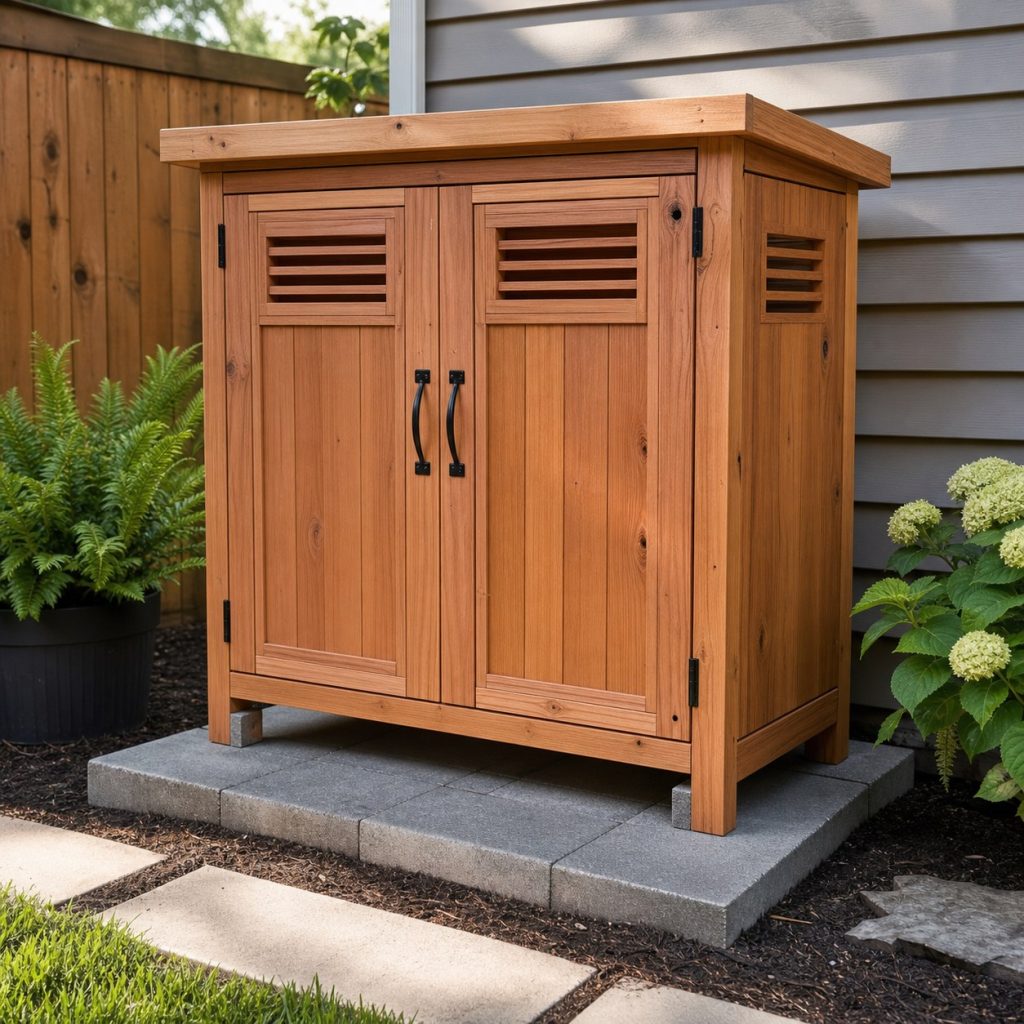
Verify anchors, feet, roof, vents, door hardware, shelving, finish, pests, and stored contents seasonally. Clear leaves from the base and leave airflow behind the cabinet. Remove leaking products and repair movement, decay, or corrosion promptly.
Planning checklist
- Inventory items and keep heavy storage low.
- Build a raised braced frame with a rain-shedding top.
- Vent protected openings and use moisture-tolerant containers.
- Use positive latches, door stays, and exterior hardware.
- Anchor against overturning and inspect contents seasonally.
These concepts and generated images are general planning inspiration, not measured drawings, wildlife-box specifications, engineered plans, or tested load-rated designs. Verify dimensions, lumber grade and treatment, structural loads, fasteners, coatings, accessibility, utility locations, wildlife and public-health guidance, property rules, permits, and local building requirements for the actual project. Use current species- and region-specific plans for wildlife habitat, and qualified professionals where structural, electrical, plumbing, fall, or entrapment hazards apply.
Frequently asked questions
Is an outdoor cabinet waterproof?
Usually not. It can shed rain and provide protected ventilation, but humidity and wind-driven water remain possible. Use suitable inner containers.
Does a tall cabinet need anchoring?
A tall cabinet and open doors can create overturning risk. Use anchoring designed for the cabinet, substrate, wind exposure, and local conditions.
Can garden chemicals be stored inside?
Follow every product label and local rule for temperature, ventilation, separation, locking, and original containers. Some products do not belong in a hot cabinet.