Project planning guide
Before you build
Use the reference image and planning notes as a starting point. Confirm dimensions, loads, materials, local codes, and site conditions before purchasing or cutting.
- Garden Projects
- 8 reference images
- Print-friendly guide
A wooden outdoor easel can support garden sketching, signs during an event, or supervised children's art. The woodworking challenge is a stable adjustable frame that folds without uncontrolled pinch points and does not become a sail when a large panel catches wind.
Classic A-Frame Easel
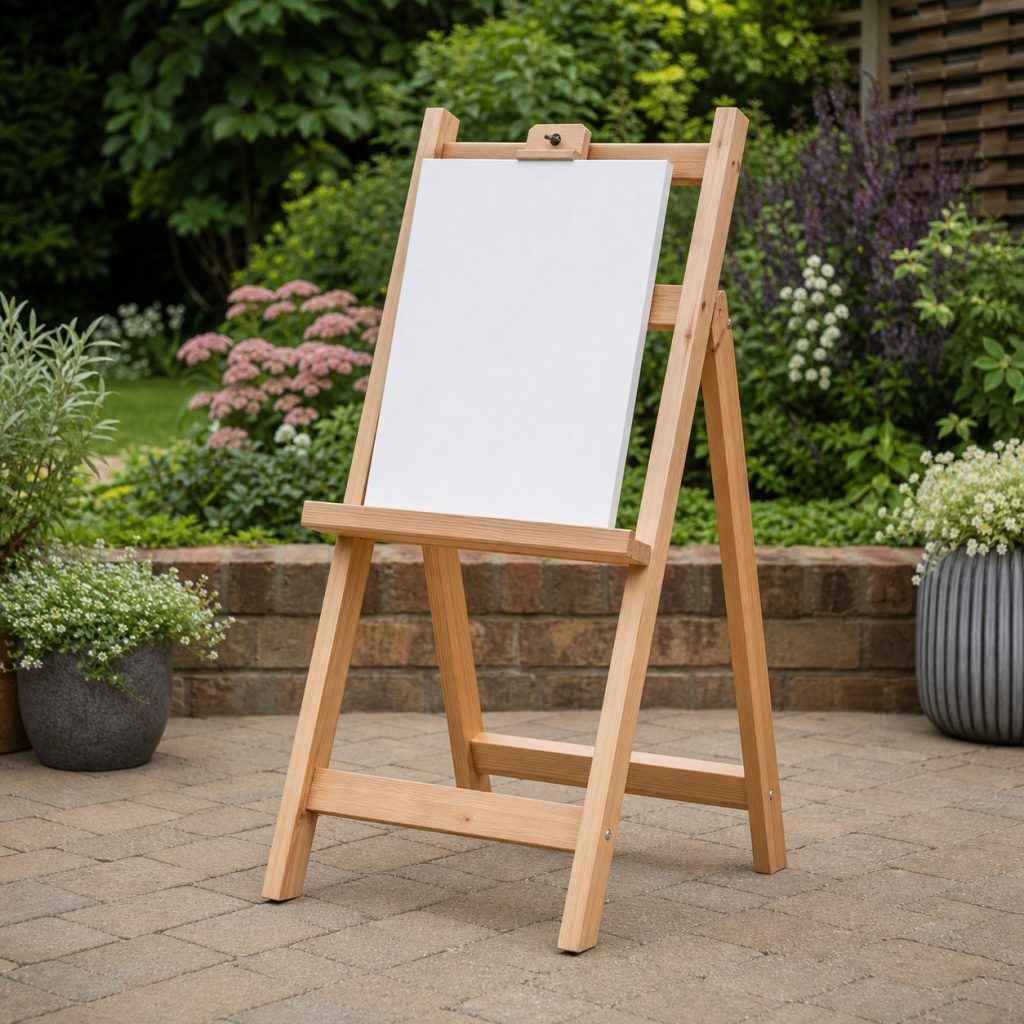
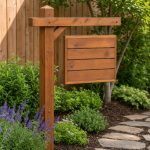
Two front legs and a restrained rear leg create a simple stable triangle when the spread cannot collapse. Verify panel weight, wind exposure, leg spread, hinge and chain hazards, stability, user reach, finish, and supervision; do not use a portable easel as a permanent outdoor sign structure.
H-Frame Patio Easel
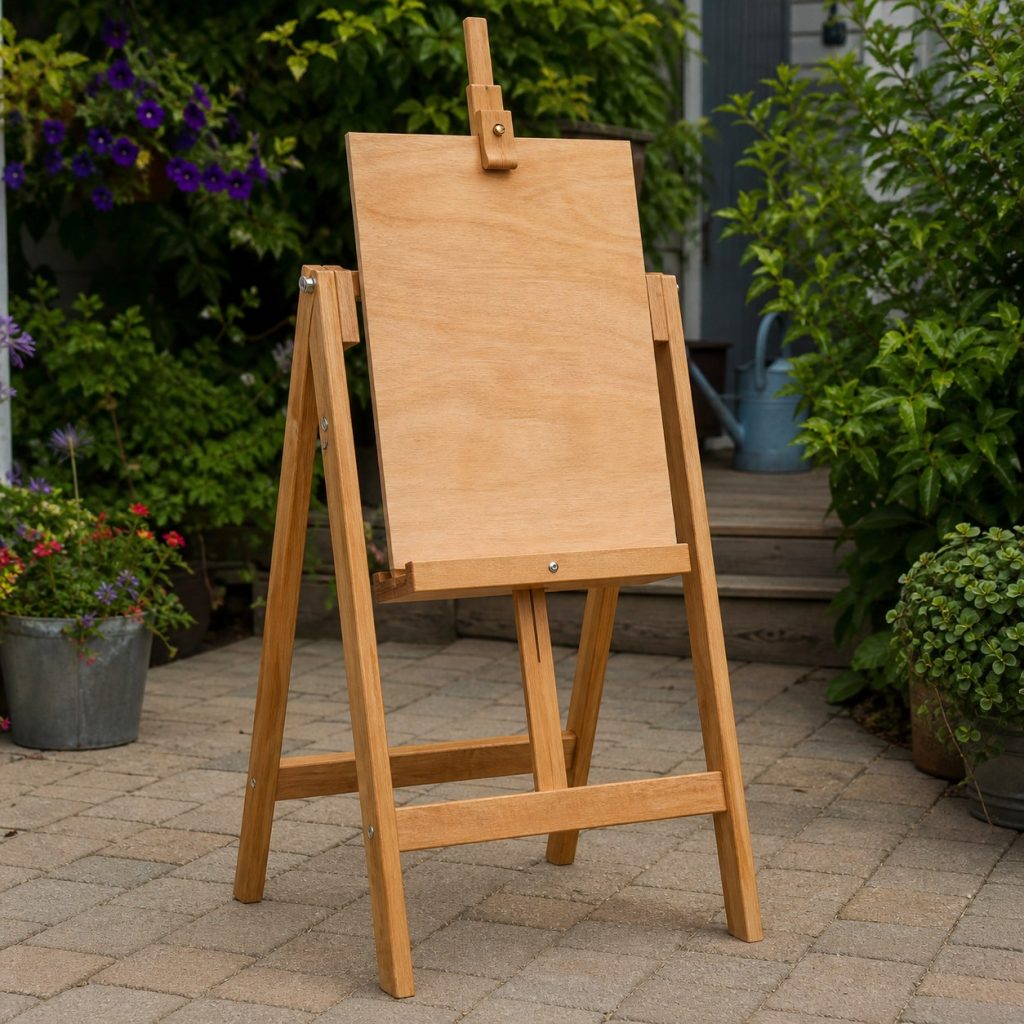
An H-frame offers broad bearing and vertical adjustment while needing cross-bracing against racking.
Tabletop Garden Easel
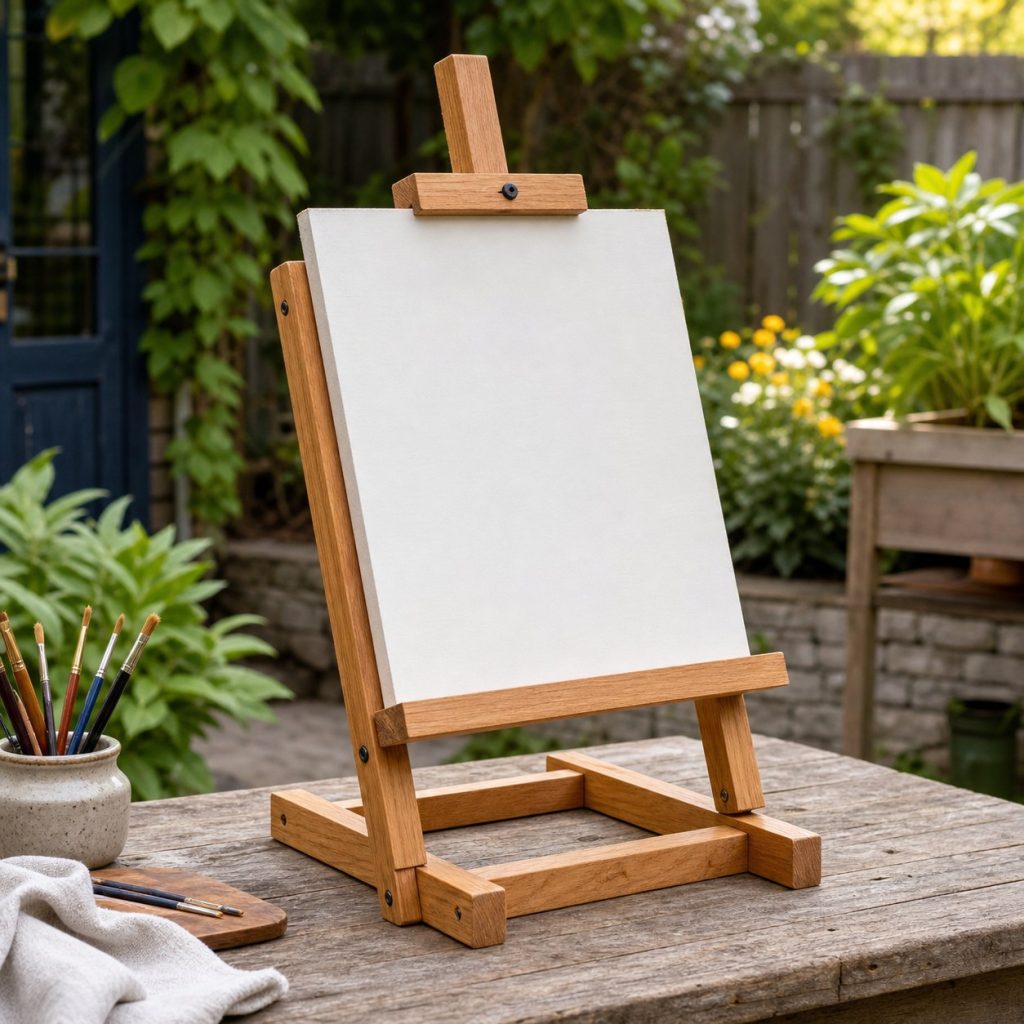
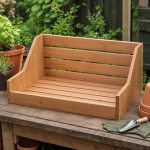
A low easel reduces wind area and should have nonslip feet and a restrained rear support.
Children's Double-Sided Easel
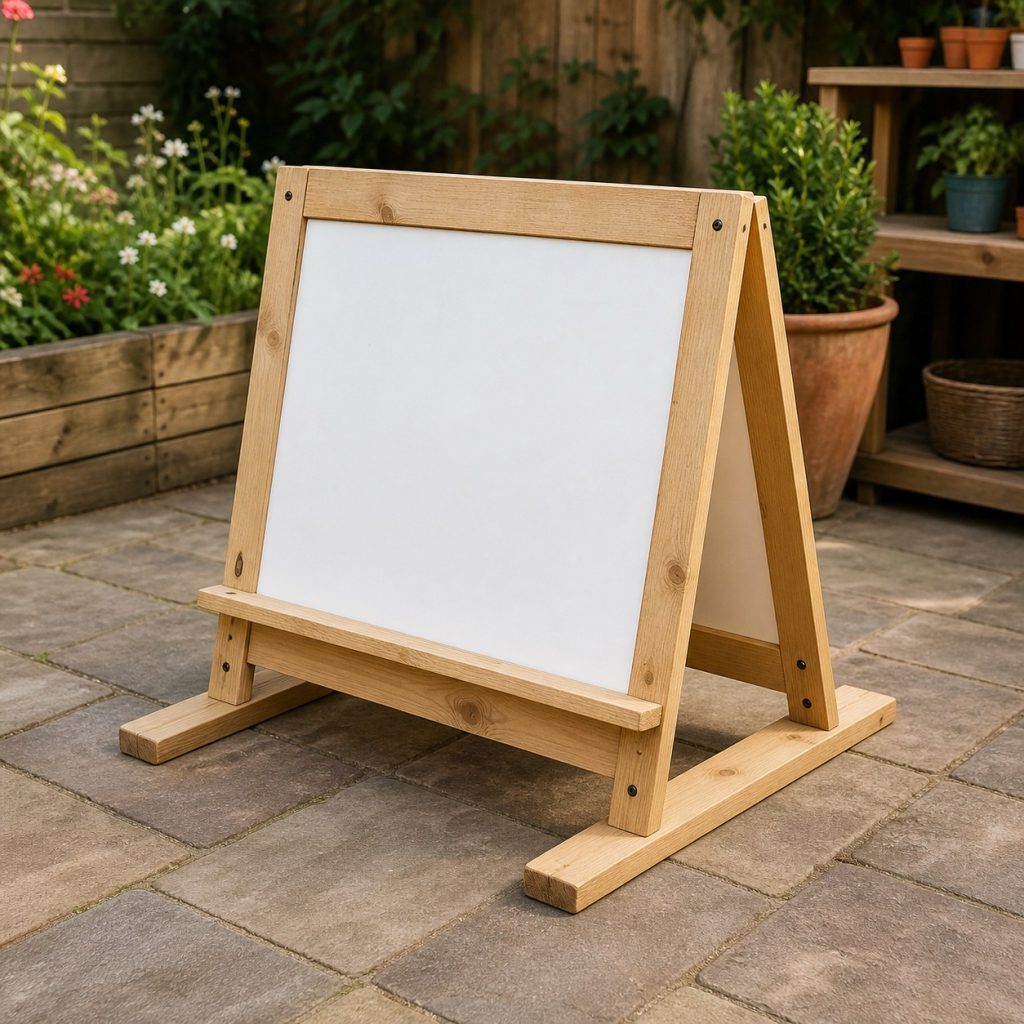
Child-use hardware must avoid sharp edges, cords, head openings, and accessible pinch points under supervision.
Folding Tripod Easel
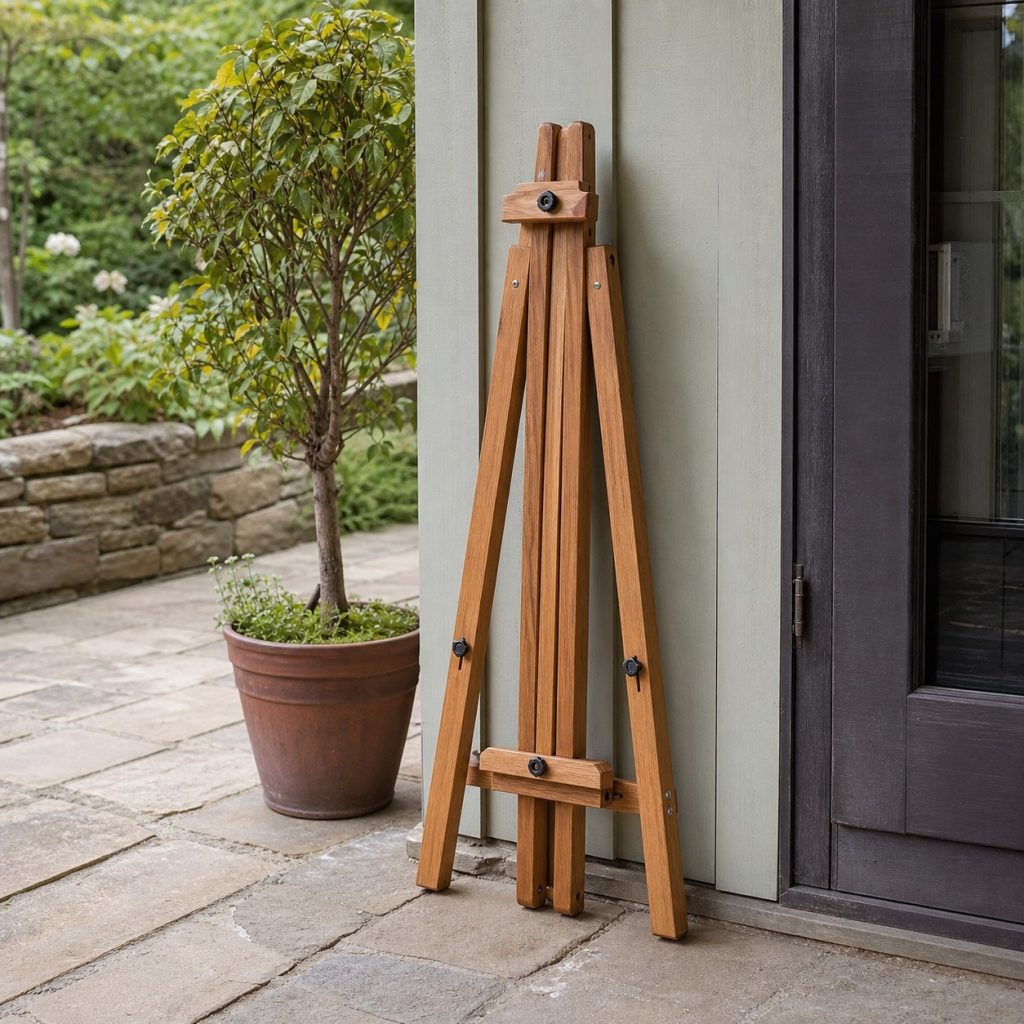
Tripod hinges and spread restraints should move predictably and lock without trapping fingers.
Planter-Side Display Easel
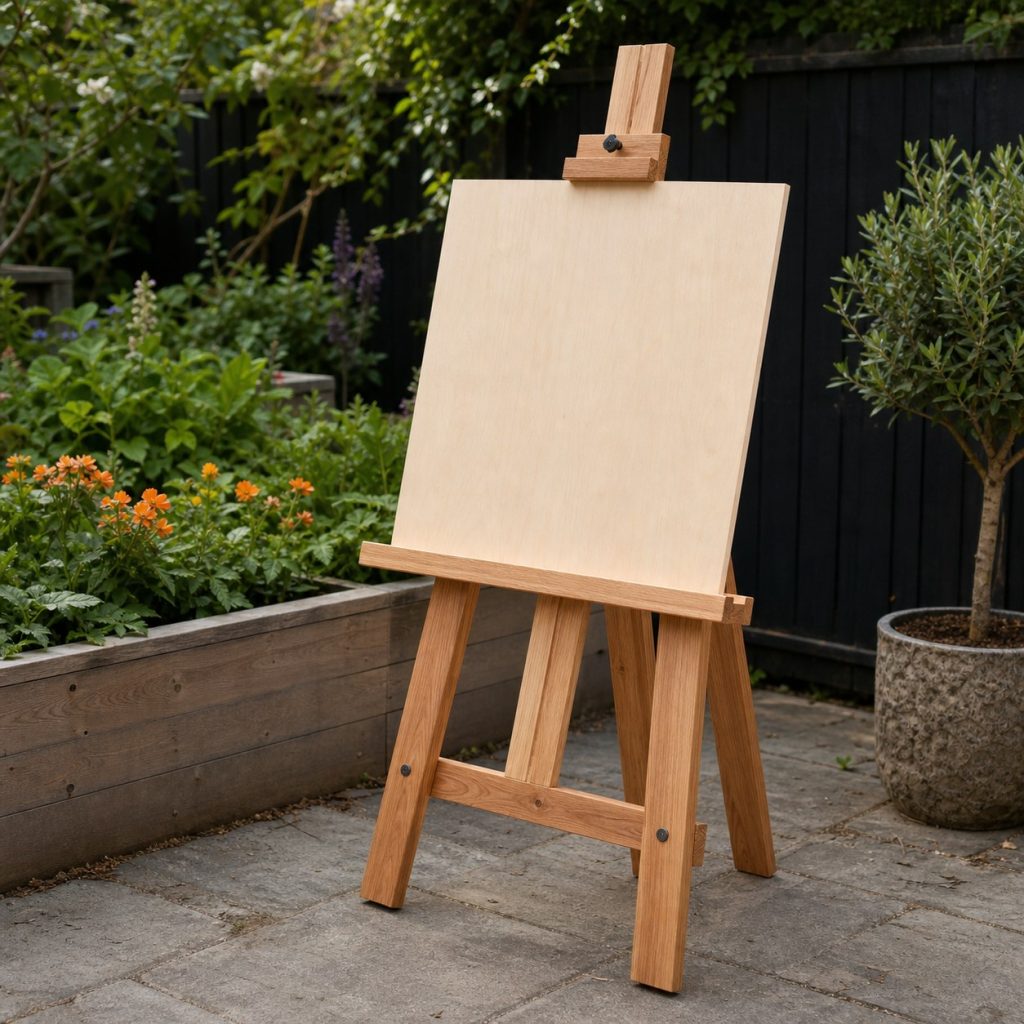
A decorative display still needs ballast or restraint appropriate to the panel area and wind.
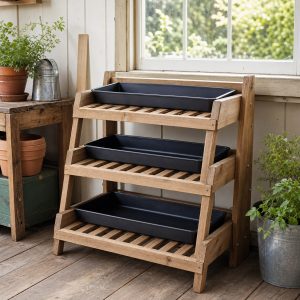
Adjustable Shelf Easel
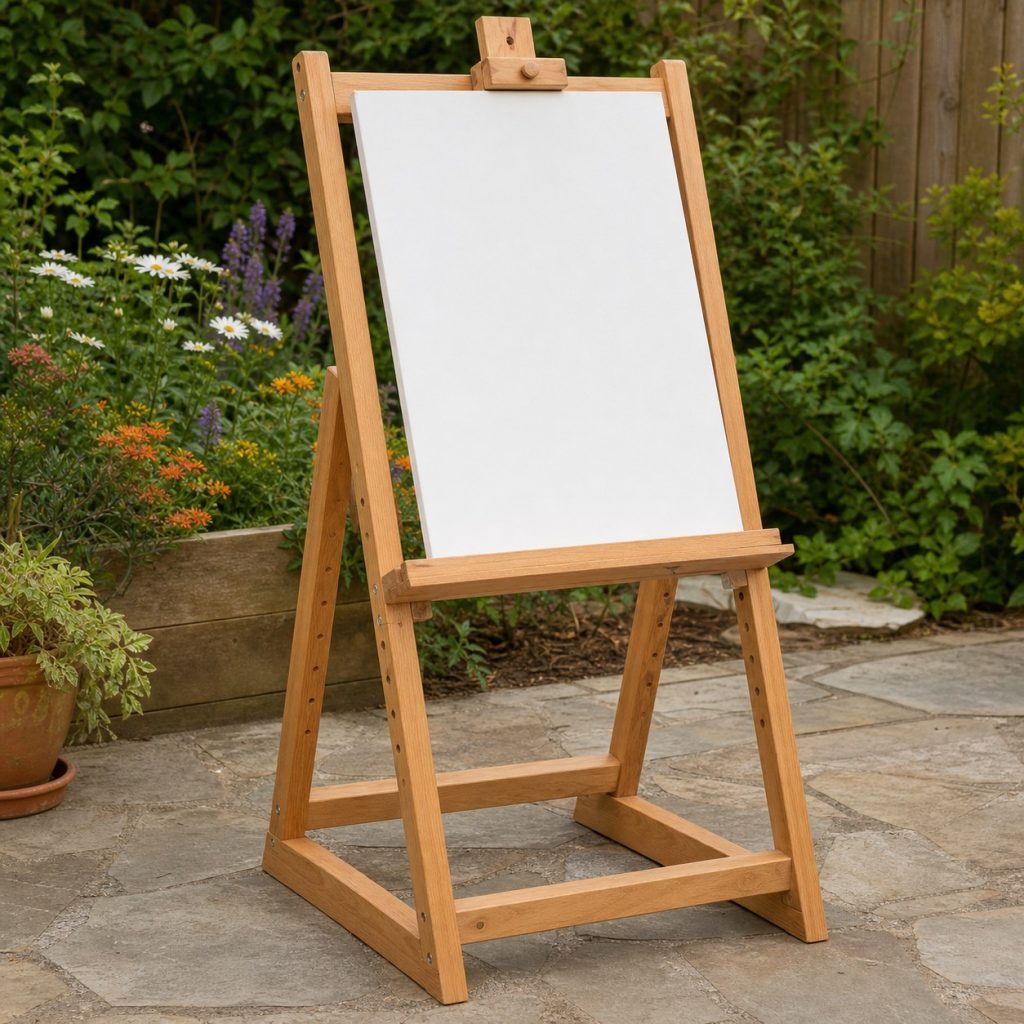
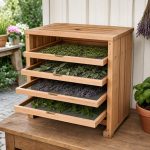
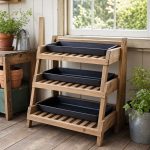
Matched holes or slots need adequate edge distance and positive support on both sides.
Hinge, Spread, and Shelf Details
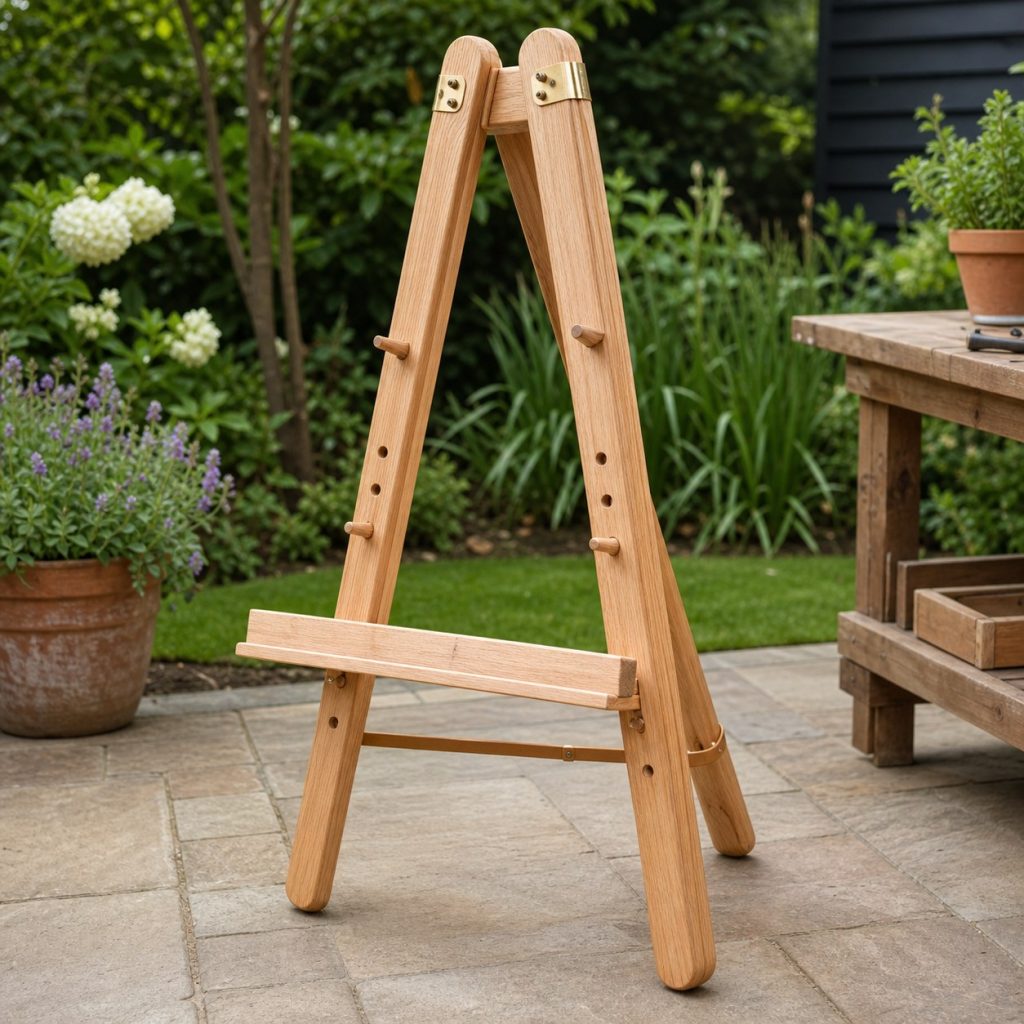
A dry fit reveals binding, leg splay, loose pegs, pinch zones, and inadequate panel retention before finishing.
Planning checklist
- Size the easel around the actual panel and intended user.
- Provide a broad footprint and positive spread restraint.
- Control pinch points and keep hardware smooth and inspectable.
- Secure the panel against sliding or lifting.
- Store the easel indoors during wind, rain, and unattended periods.
These woodworking concepts and generated images are planning inspiration, not measured drawings, cut lists, tested furniture plans, load ratings, engineered structures, accessibility designs, playground certifications, or utility instructions. Verify dimensions, ergonomics, lumber grade and treatment, grain direction, joint design, fastener and preservative compatibility, structural and wind loads, stability, sharp and pinch hazards, finish labels, equipment instructions, accessibility, permits, and local requirements for the actual project. Use appropriate personal protective equipment and qualified engineers, electricians, plumbers, accessibility specialists, and other licensed professionals where the work or hazards require them.
Frequently asked questions
Can an outdoor easel stay outside permanently?
Portable easels generally should be cleaned, dried, folded, and stored under cover; follow material and finish instructions.
Is a chain suitable as the spread restraint?
It may create pinch or entanglement concerns. Select a positive restraint appropriate to the users and keep it inaccessible where necessary.
How do I stop the canvas from blowing away?
Use a positive top and bottom restraint sized for the panel, and stop using the easel when wind exceeds safe conditions.