Project planning guide
Before you build
Use the reference image and planning notes as a starting point. Confirm dimensions, loads, materials, local codes, and site conditions before purchasing or cutting.
- Garden Projects
- 8 reference images
- Print-friendly guide
A seed-starting rack is a woodworking frame that supports wet trays and, in many setups, listed grow lights. The wood structure should remain stable and cleanable while electricity, water, heat, and load capacity are handled according to equipment instructions.
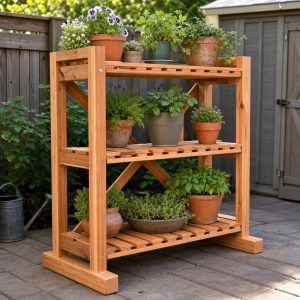
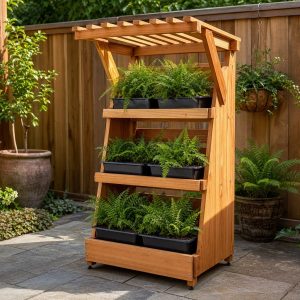
Three-Shelf Seed Rack
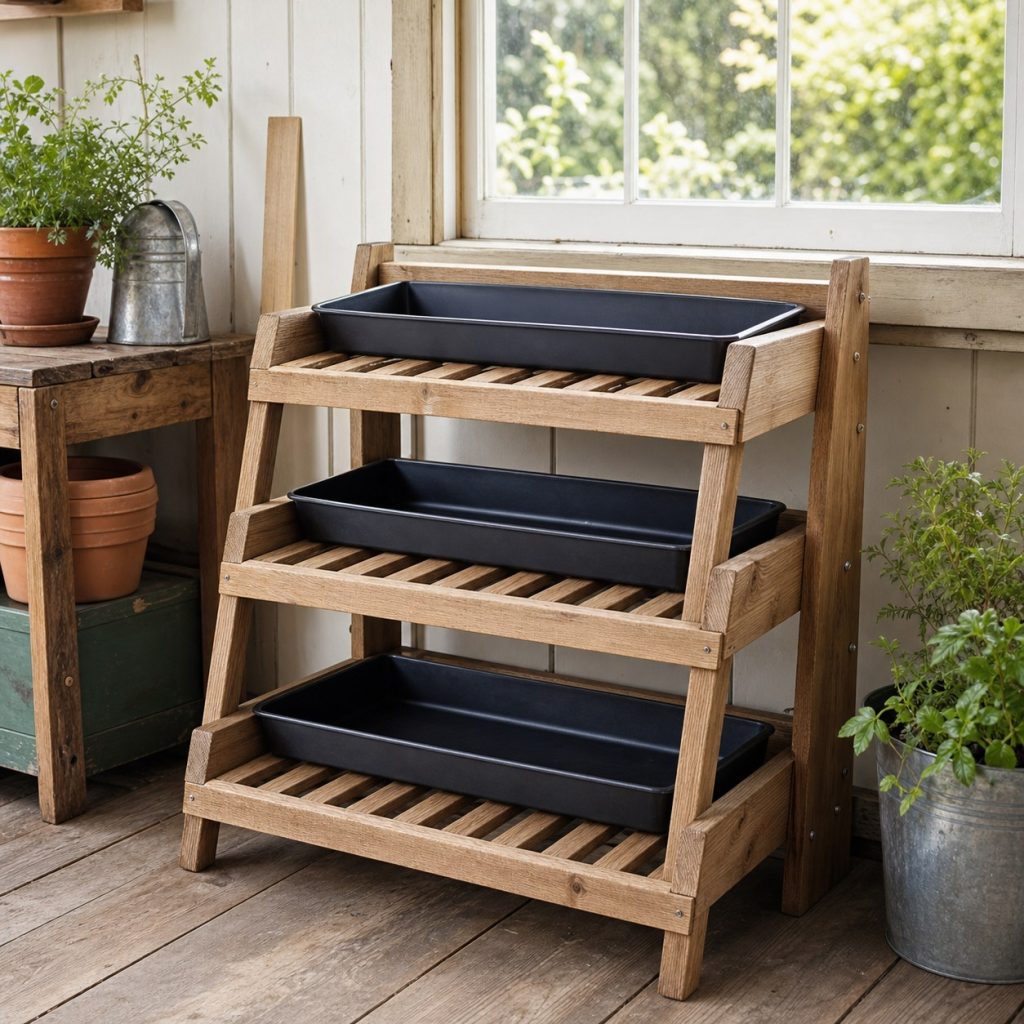
Repeated shelf frames simplify construction and share loads through continuous posts. Follow light, timer, heating-mat, and electrical instructions; use required GFCI protection, keep water away from connections, and obtain qualified electrical help where needed.
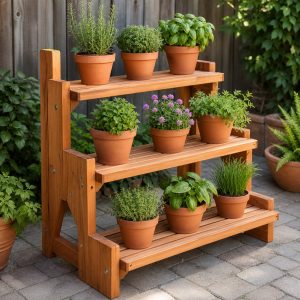
Adjustable Shelf Rack
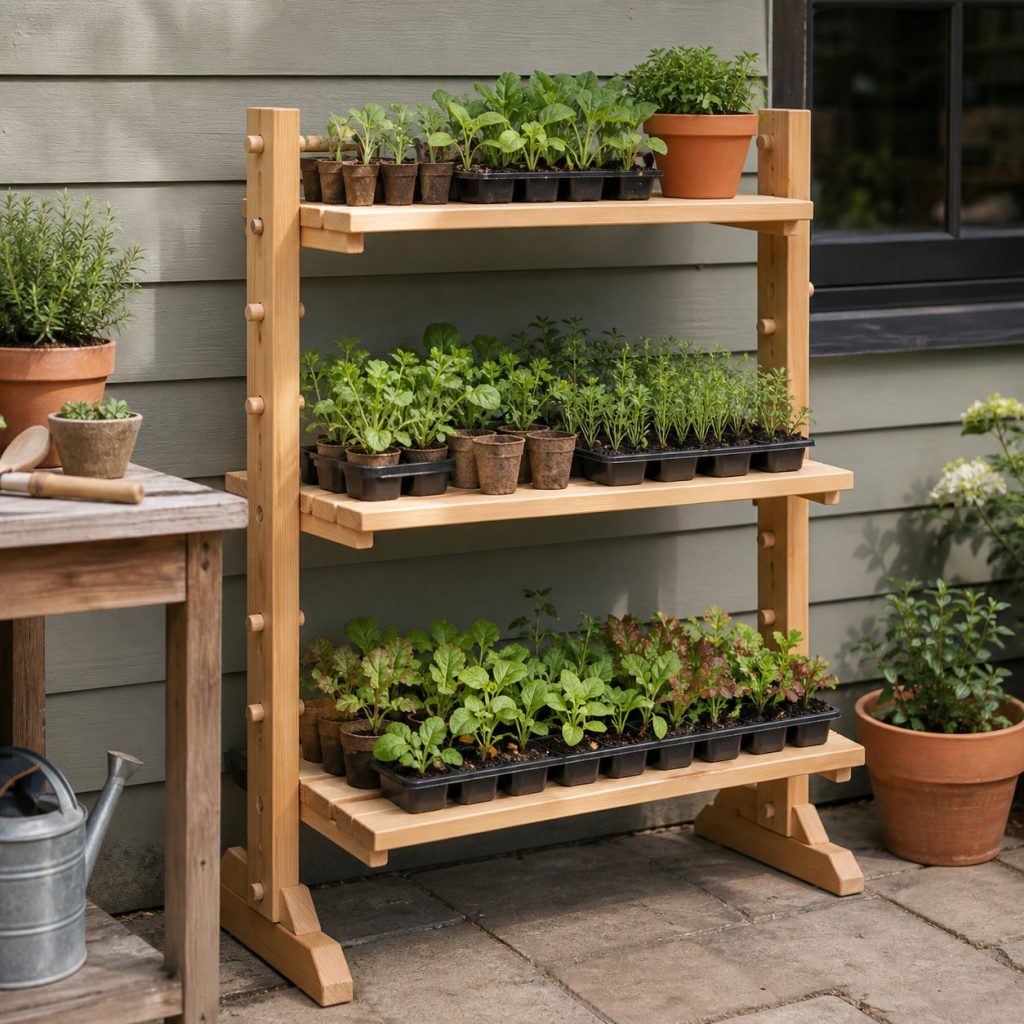
Adequate hole edge distance and positive shelf capture prevent accidental lifting or collapse.
Light-Ready Seed Rack
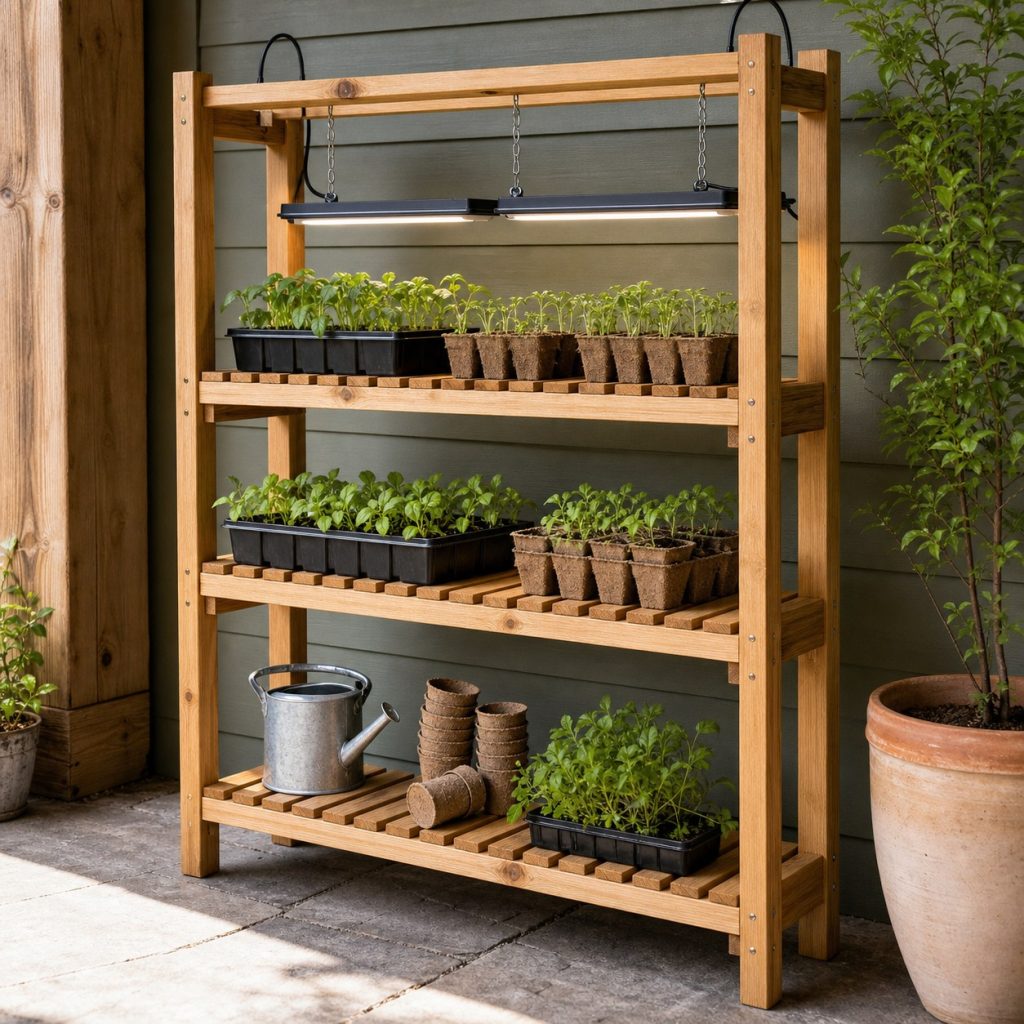
Independent light supports keep fixtures secure while cords remain visible and separated from water.
Compact Window Rack
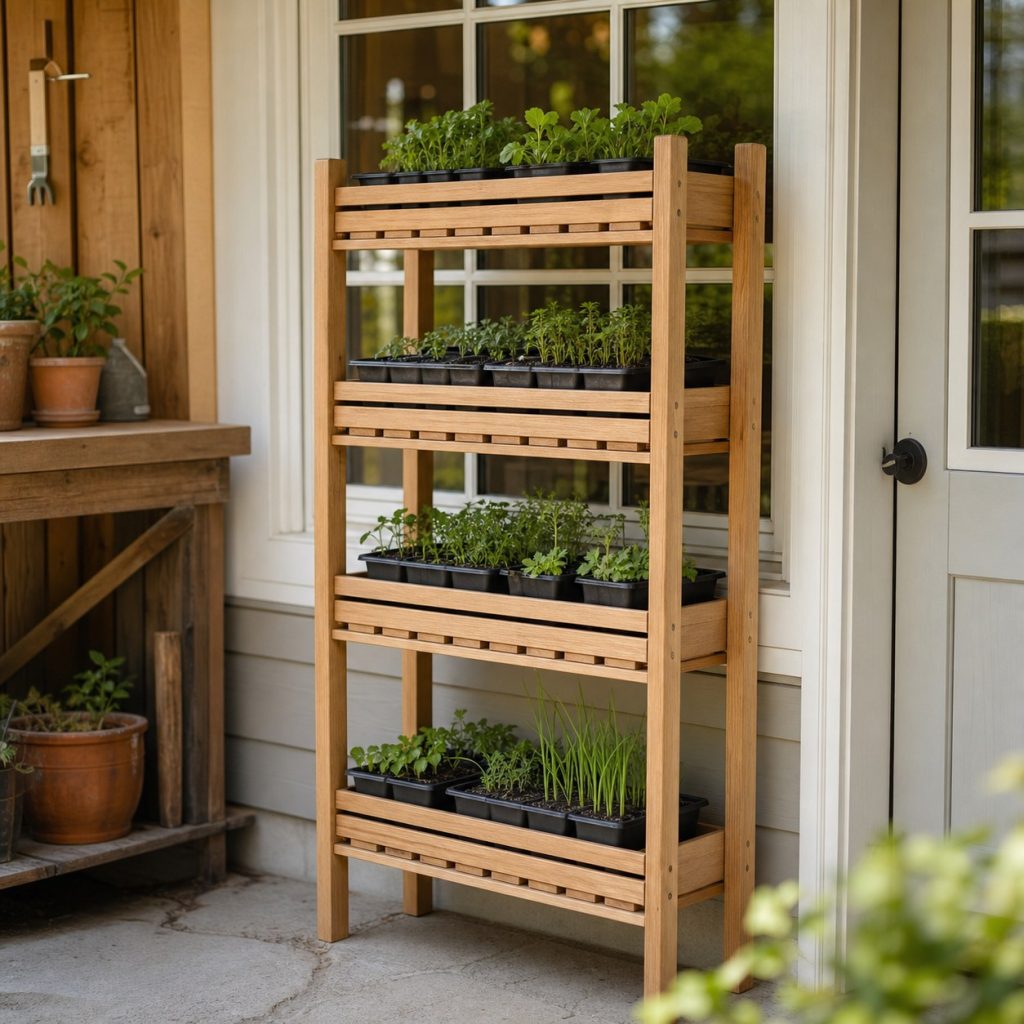
A narrow rack needs anti-tip planning and must not obstruct doors, heat sources, or required egress.
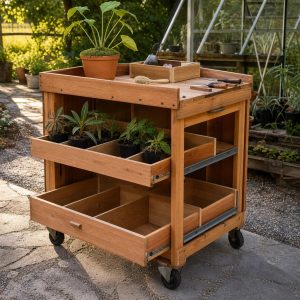
Rolling Seed Rack
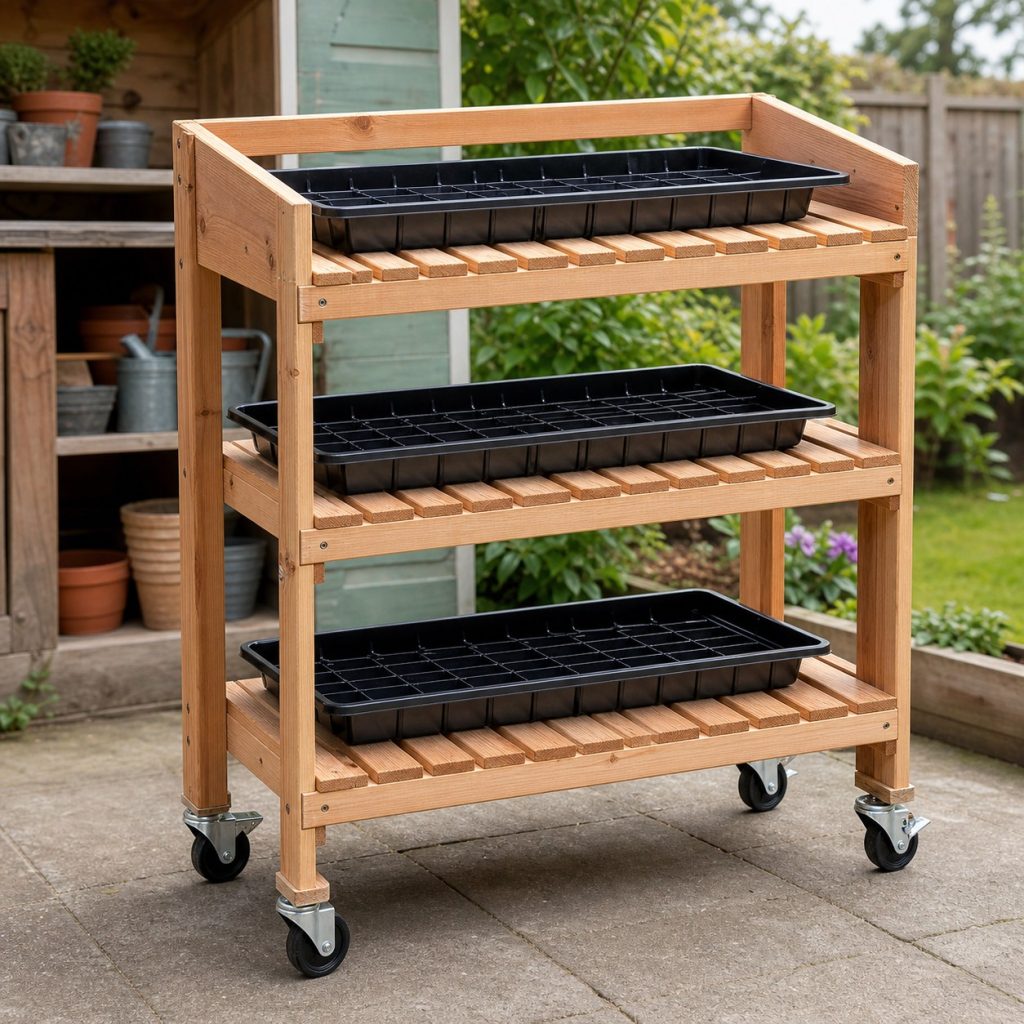
Rated locking casters and a wide base support repositioning only when water and loose items are secured.
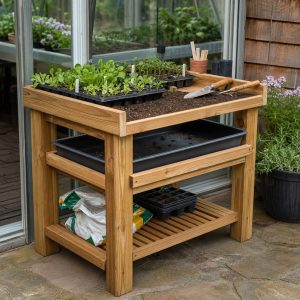
Tabletop Propagation Shelf
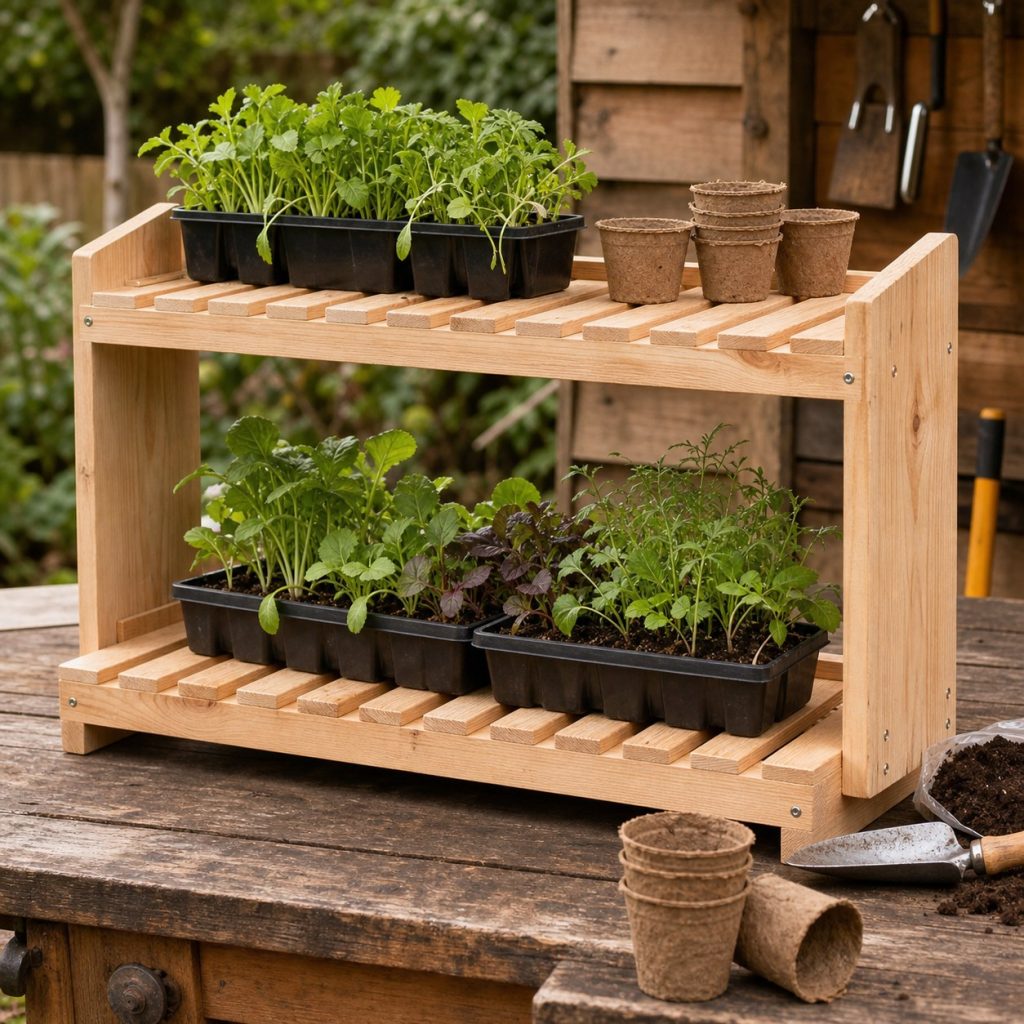
A low tabletop rack keeps loads modest when it cannot slide or overload the bench.
Covered-Porch Seed Rack
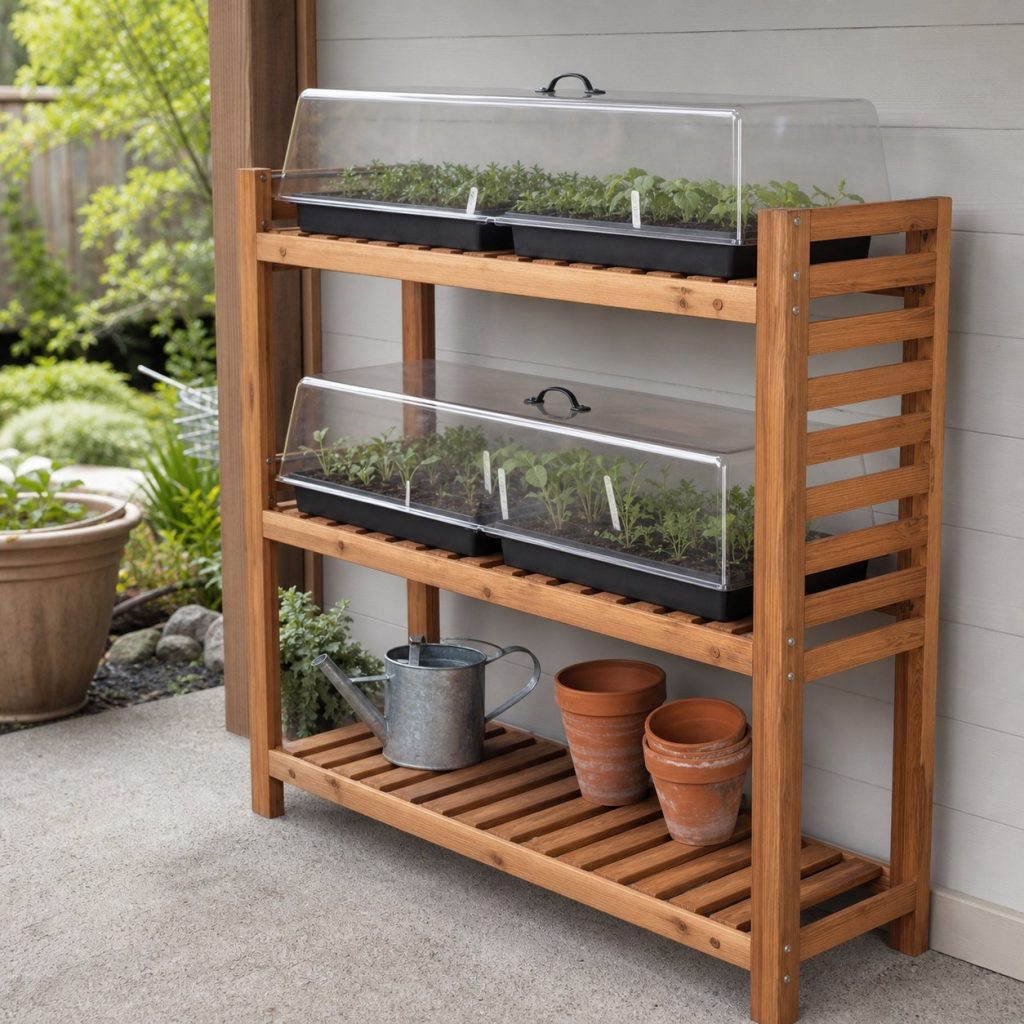
Outdoor use needs frost, wind, sun, pests, and electrical exposure managed separately.
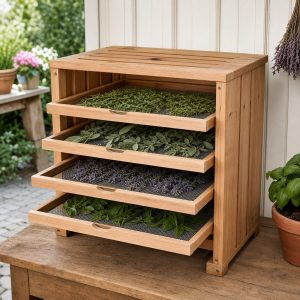
Shelf, Tray, and Light Details
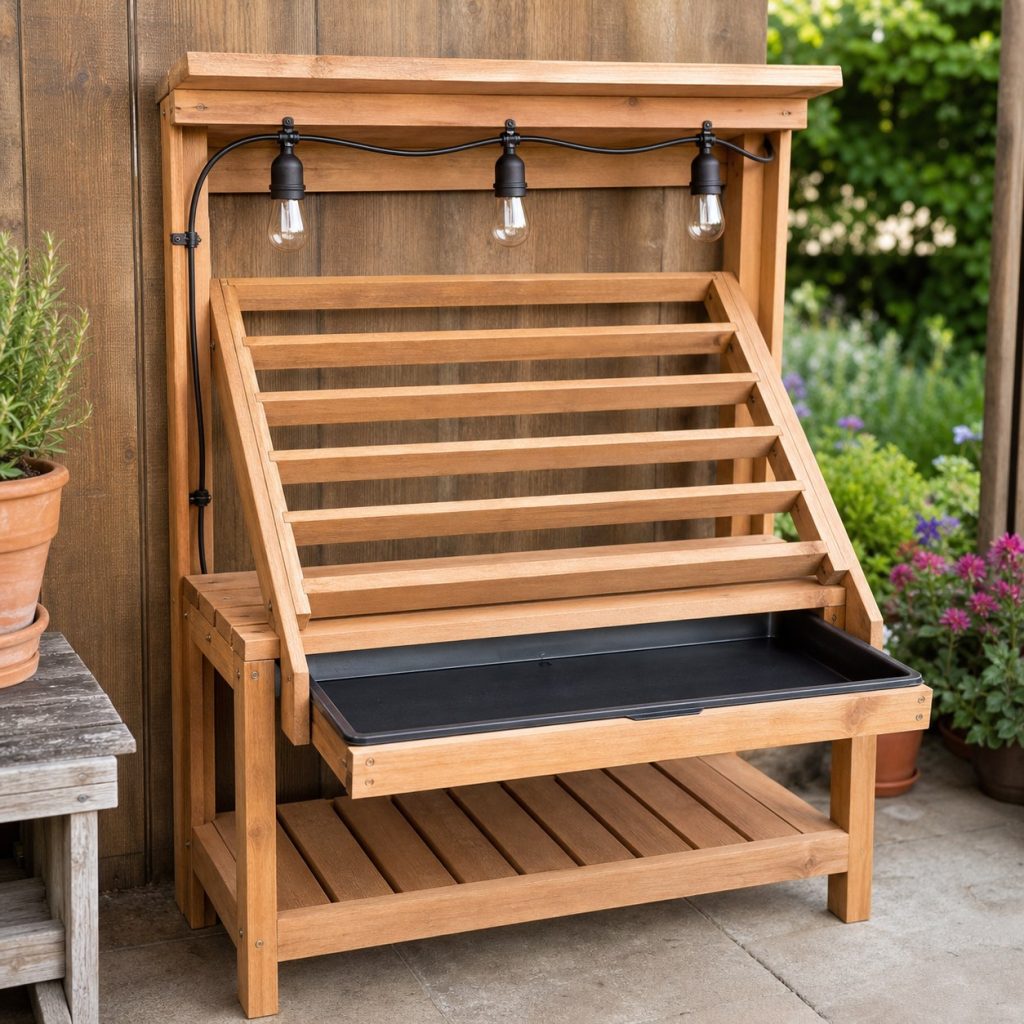
Dry fitting actual equipment reveals heat, water, cord, reach, and clearance conflicts.
Planning checklist
- Measure actual trays, covers, lights, and mature seedling height.
- Brace the rack and verify wet-tray shelf loads.
- Use removable waterproof trays with controlled drainage.
- Keep electrical equipment listed, visible, and separated from water.
- Provide stability, ventilation, and easy inspection.
These woodworking concepts and generated images are planning inspiration, not measured drawings, cut lists, tested furniture plans, load ratings, engineered structures, accessibility designs, playground certifications, or utility instructions. Verify dimensions, ergonomics, lumber grade and treatment, grain direction, joint design, fastener and preservative compatibility, structural and wind loads, stability, sharp and pinch hazards, finish labels, equipment instructions, accessibility, permits, and local requirements for the actual project. Use appropriate personal protective equipment and qualified engineers, electricians, plumbers, accessibility specialists, and other licensed professionals where the work or hazards require them.
Frequently asked questions
Can grow lights attach directly to wood?
Only use the mounting method and clearances specified by the listed fixture manufacturer.
Does the rack need waterproofing?
Use a suitable finish plus removable waterproof trays; finish alone should not contain standing water.
Can I put it outside?
Only when the rack, plants, trays, lights, cords, wind restraint, and climate protection are all suitable for that exposure.